Blog
Why Blue Light is Used in Phototherapy

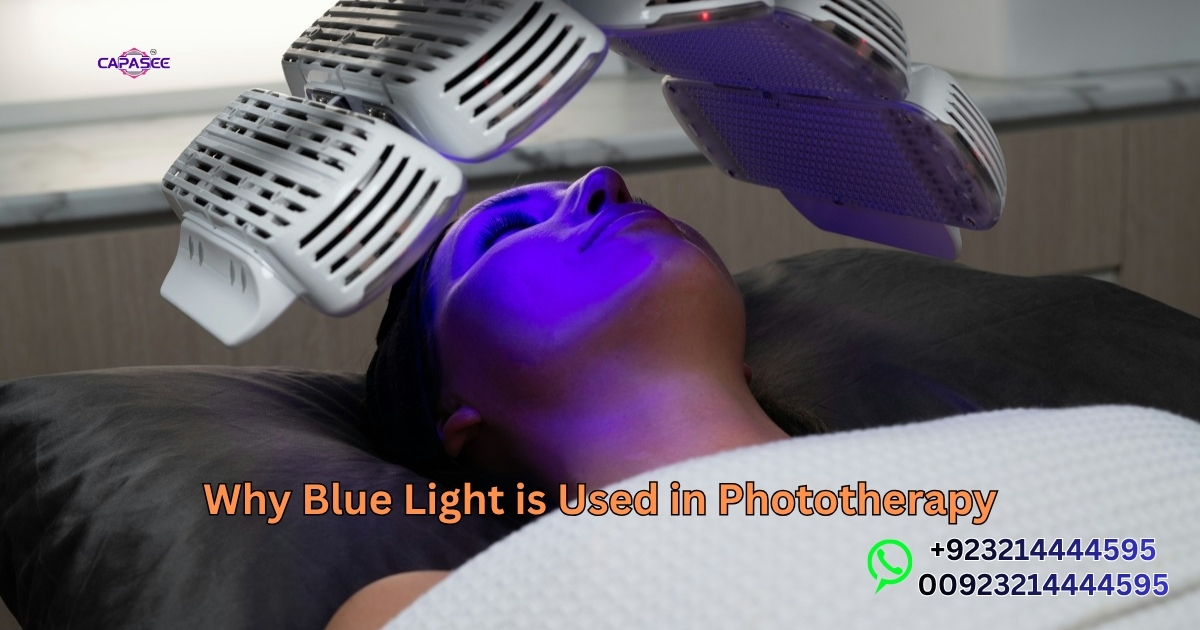
Have you ever wondered why blue light is applied in phototherapy and not any other color, and why blue light is used in phototherapy? Perhaps you have seen one in a hospital with bright blue lights, or your doctor has told you about it in case of a skin problem, and now you wonder or are even a little concerned. It is a confounding experience when no one can explain things in simple terms. All you want to do is to find out what is really happening and whether it is safe.
In this blog, you will have a clear and simple explanation of why blue light is applied in phototherapy and how it actually works in the body, including why blue light is used in phototherapy. You will also know when physicians apply it, its benefits, and what you can expect. No complicated vocabulary, no emphasis, only useful solutions that would make sense. The result is that you will feel more confident and knowledgeable about this treatment.
Why Blue Light is Used in Phototherapy
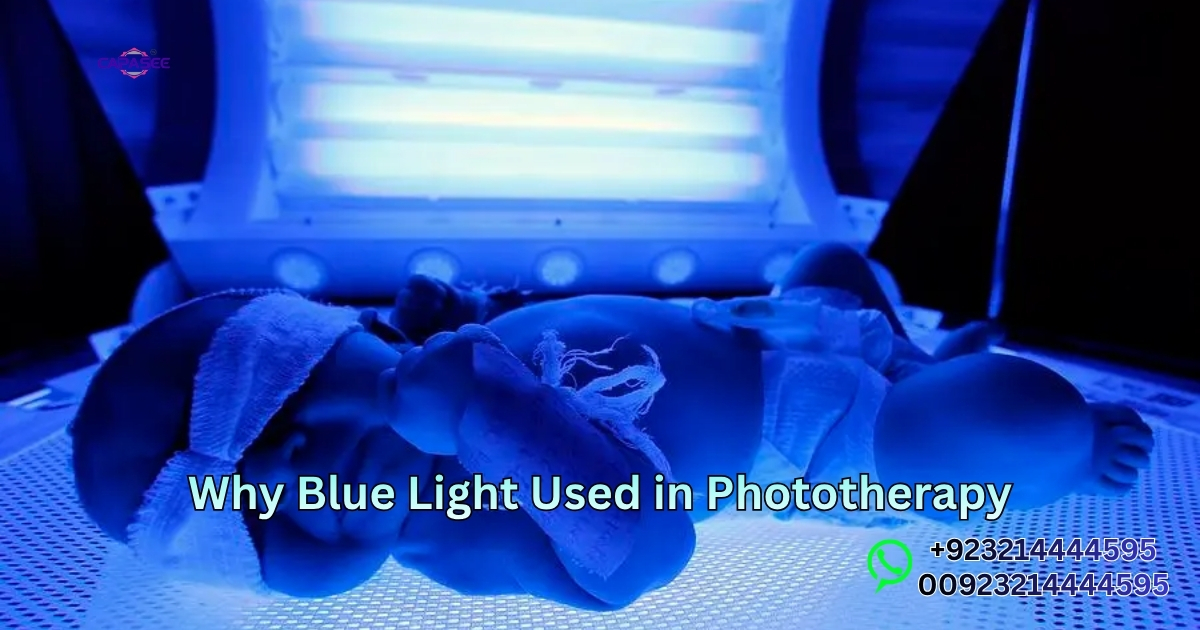
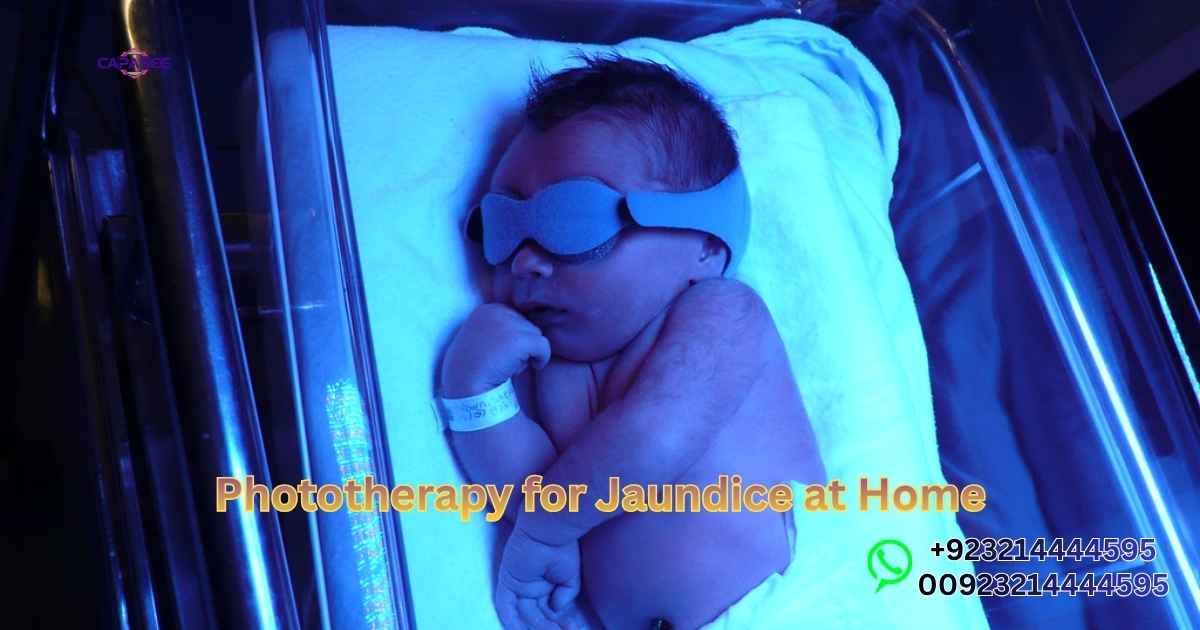
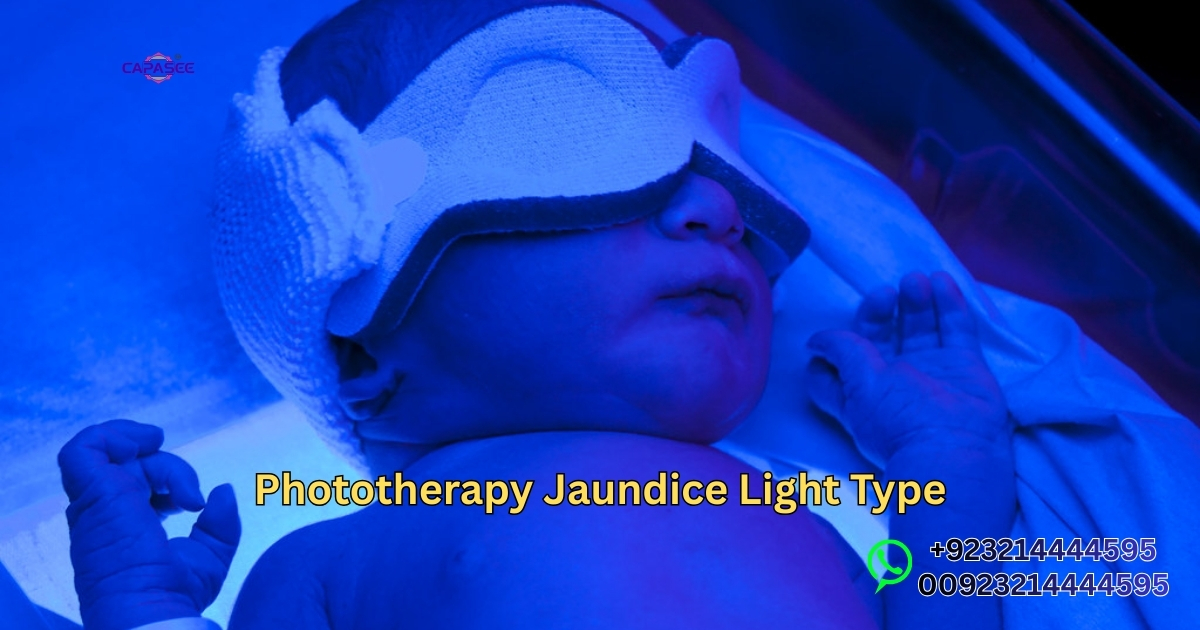
The reason behind the application of blue light in phototherapy is that the harmful substances in the blood are targeted by the blue light in a safe and fast way, which explains why blue light is used in phototherapy. In Pakistan, physicians use it to treat neonatal jaundice and hyperbilirubinemia. Infants react quickly, and families experience results in a few hours. Hospitals guarantee adequate levels of phototherapy and safe treatment of each newborn.
Blue light operates within the visible spectrum of light with a wavelength of 400-490 nm. This is a light that enters tissues easily and reacts with endogenous photosensitizers, which assists in the reduction of bilirubin. Its antimicrobial action is also a factor in the safe recovery as babies sleep under supervised care, further supporting why blue light is used in phototherapy.
Science Behind Blue Light
Blue light phototherapy is a science that involves the use of electromagnetic radiation to convert harmful unconjugated bilirubin in the skin, showing why blue light is used in phototherapy. The highest wavelength of 460 nm activates the formation of lumirubin, which is easily eliminated by the body. It is a safe and efficient process of enhancing the health of newborns.
Porphyrin absorption in the light spectral region is important in the transformation of bilirubin into harmless forms. To ensure that each baby receives adequate tissue penetration to be cured, doctors employ calibrated equipment such as Capasee Electro Medical Engineering units to deliver uniform irradiance to phototherapy.
You May Also Read This Blog: What is Therapist
How Blue Light Breaks Down Bilirubin in Babies
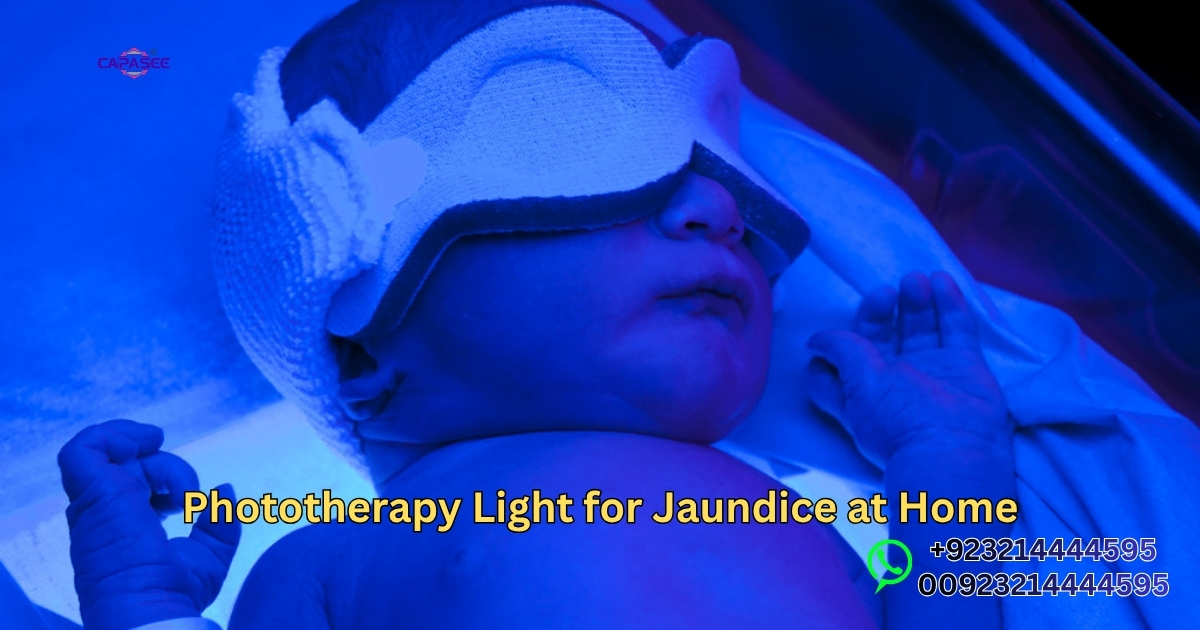
Phototherapy is applied to the treatment of neonatal hyperbilirubinemia with blue light in order to decompose unconjugated bilirubin in the skin, which is another reason why blue light is used in phototherapy. It changes bilirubin into lumirubin production, which leaves the body through normal means. This technique minimizes the risks of complications of jaundice in a short period.
Photodynamic effects are used in the process and combine with endogenous photosensitizers to increase the reduction of bilirubin. To achieve effective and safe jaundice therapy, light devices are used to maintain the correct peak wavelength of 460 nm and the intensity. Infants receiving treatment experience a progressive improvement in the number of hours.
Blue Light Phototherapy for Newborn Jaundice in Pakistan
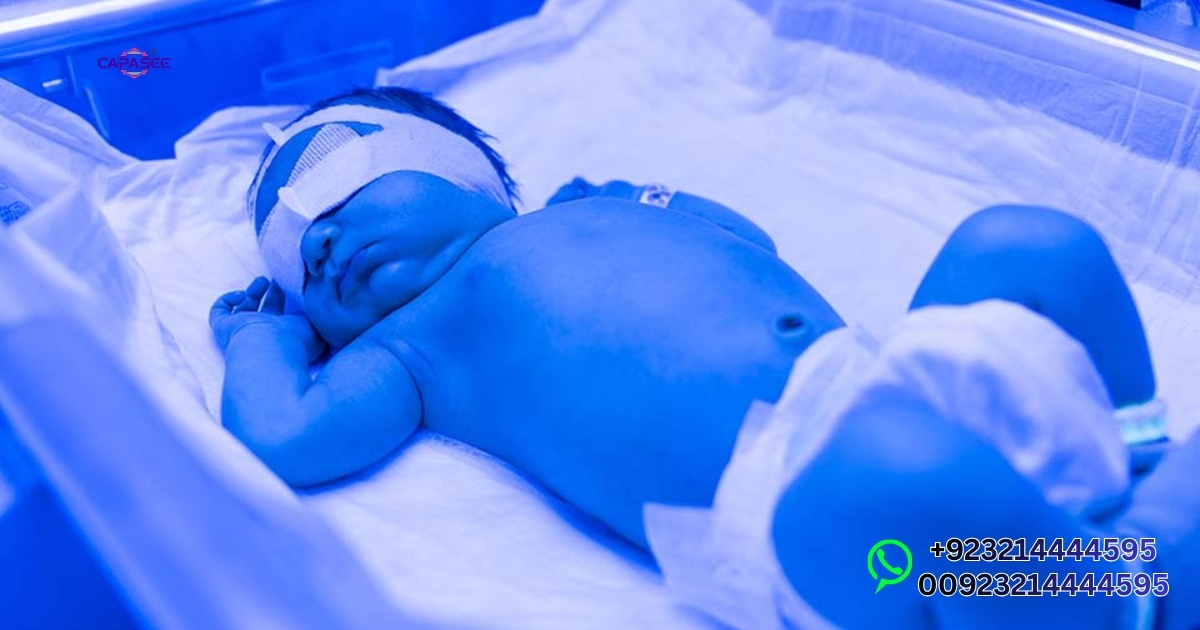
Blue light phototherapy is a treatment of neonatal jaundice that is a standard practice in Pakistani hospitals, reinforcing why blue light is used in phototherapy. The therapy is non invasive, safe, and affordable. The medical personnel are observant of the treatment of hyperbilirubinemia to avoid complications. This method is trusted by the families since babies heal fast.
Physicians are guided by specific guidelines with equipment that is meant to provide the correct irradiance used in phototherapy. The visible light spectrum is adjusted to achieve good penetration in tissues so that all babies receive proper attention. It is a common therapy in both urban and provincial hospitals in Pakistan.
Blue Light Therapy for Jaundice in Newborns in Pakistan
In Pakistani newborns, phototherapy is applied to the treatment of jaundice with blue light, which significantly reduces the level of unconjugated bilirubin and highlights why blue light is used in phototherapy. The treatment is non invasive, but efficient and enhances early life health outcomes.
The phototherapy irradiance, 400 nm to 490 nm, is measured by medical personnel, and the endogenous photosensitizers activity is optimized. The Capasee Electro Medical Engineering units are the hospitals that assist in the achievement of safe bilirubin reduction and assist in the adequate management of hyperbilirubinemia.
Effectiveness of Blue Light Phototherapy in Pakistan Hospitals
The application of phototherapy with blue light has been shown to be effective in Pakistan, demonstrating why blue light is used in phototherapy. Babies recover faster, and jaundice goes away with minimal side effects. Photodynamic effects and penetration of tissues are safe and guaranteed in hospitals.
The high success rates are achieved due to the maintenance of peak wavelength 460 nm, correct light spectral region, and lumirubin production by the doctors. This treatment is still the standard of hyperbilirubinemia in children, which is believed in by both families and caregivers in Pakistan.
Why Blue LED Light is Used in Phototherapy Lamps
Phototherapy employs blue light because it is efficient in lowering the unconjugated bilirubin in newborns, clearly showing why blue light is used in phototherapy. With a high phototherapy irradiance, it penetrates through the skin and helps in the rapid reduction of bilirubin, making babies safe from neonatal hyperbilirubinemia.
It is a treatment that acts in the visible light range and wavelength 400-490 nm and causes the development of lumirubin by photodynamic reactions. Pakistani doctors are fond of this method, as it is fast, safe, and reliable in the treatment and management of neonatal jaundice and hyperbilirubinemia.
Benefits of Blue LED Technology
LED Blue light phototherapy is more energy efficient and offers uniform phototherapy irradiance. Its antimicrobial activity promotes healthier recovery, and tissue penetration ensures safe bilirubin elimination in newborns without harming them, as blue light is used in phototherapy for effective neonatal care.
LED lamps provide a constant peak wavelength of 460 nm, which contributes to the activity of porphyrin absorption and improved endogenous photosensitizers. The treatment of babies with jaundice in hospitals in Pakistan is improving faster, which makes the treatment of this condition safer and more dependable to the families, as blue light is used in phototherapy for consistent results.
Safe Wavelength for Neonates
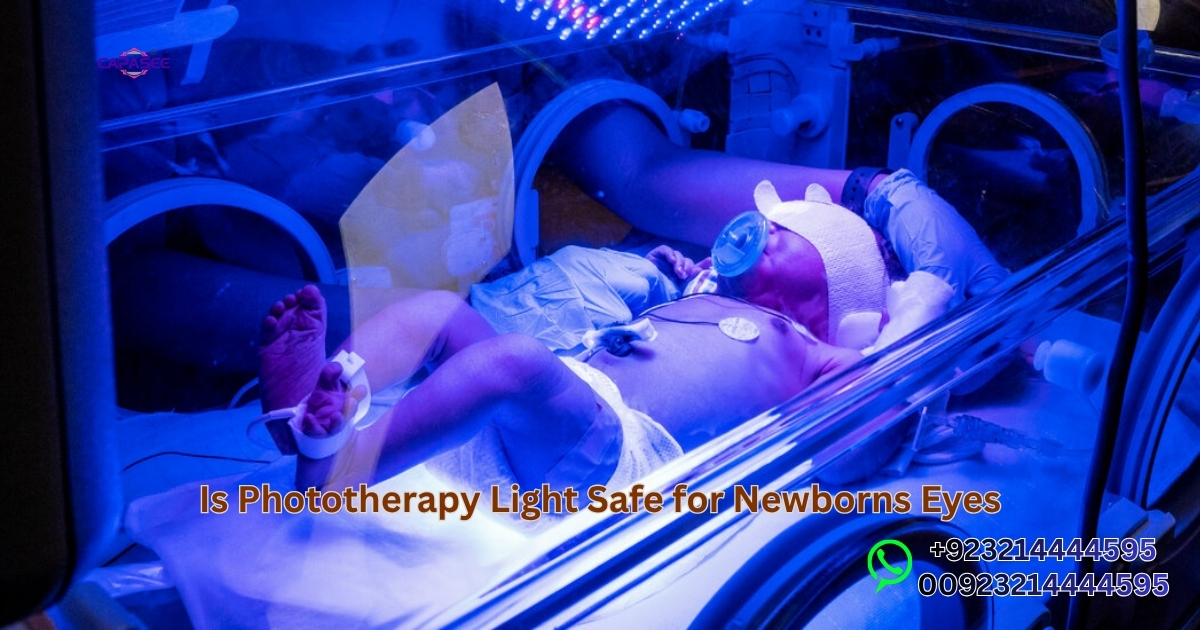
The phototherapy using blue light with a wavelength of 460 nm is safe because it is kept at the peak to prevent harm to the sensitive newborn skin, explaining why blue light is used in phototherapy. A good spectral area of light inhibits complications and successfully transforms unconjugated bilirubin into lumirubin production.
Physicians manage phototherapy irradiance and control hyperbilirubinemia. The risk is decreased through controlled electromagnetic irradiation and tissue penetration, which makes neonatal jaundice treatment both safe and effective in Pakistani hospitals.
Check More & Purchase: Our Products
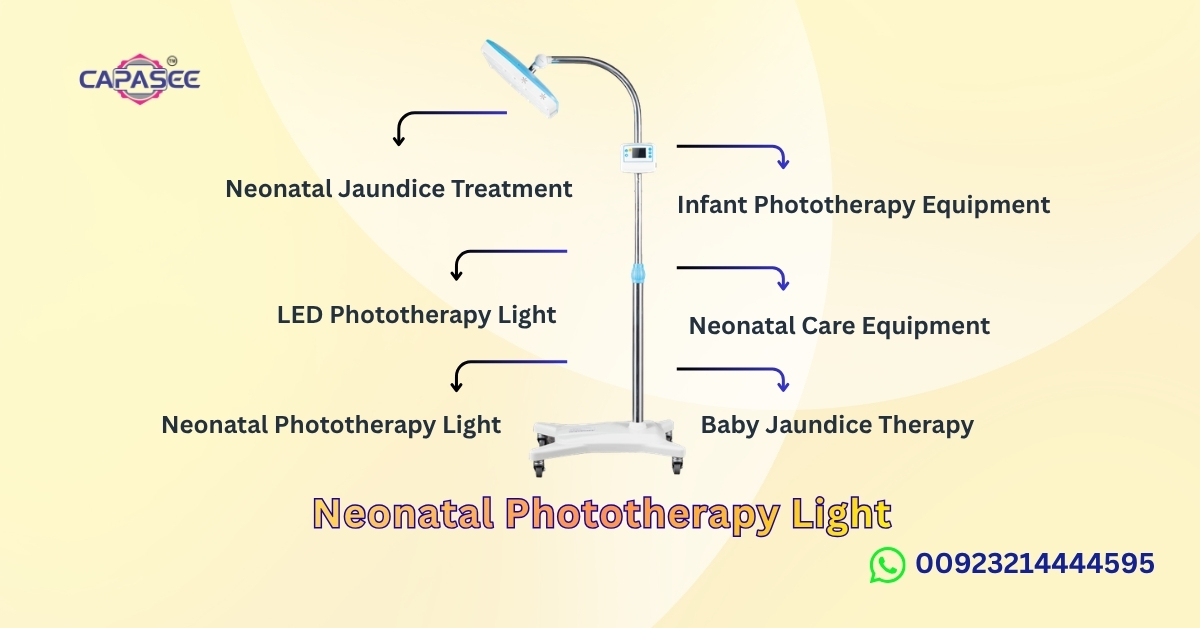
Capasee Electro Medical Engineering Phototherapy Solutions
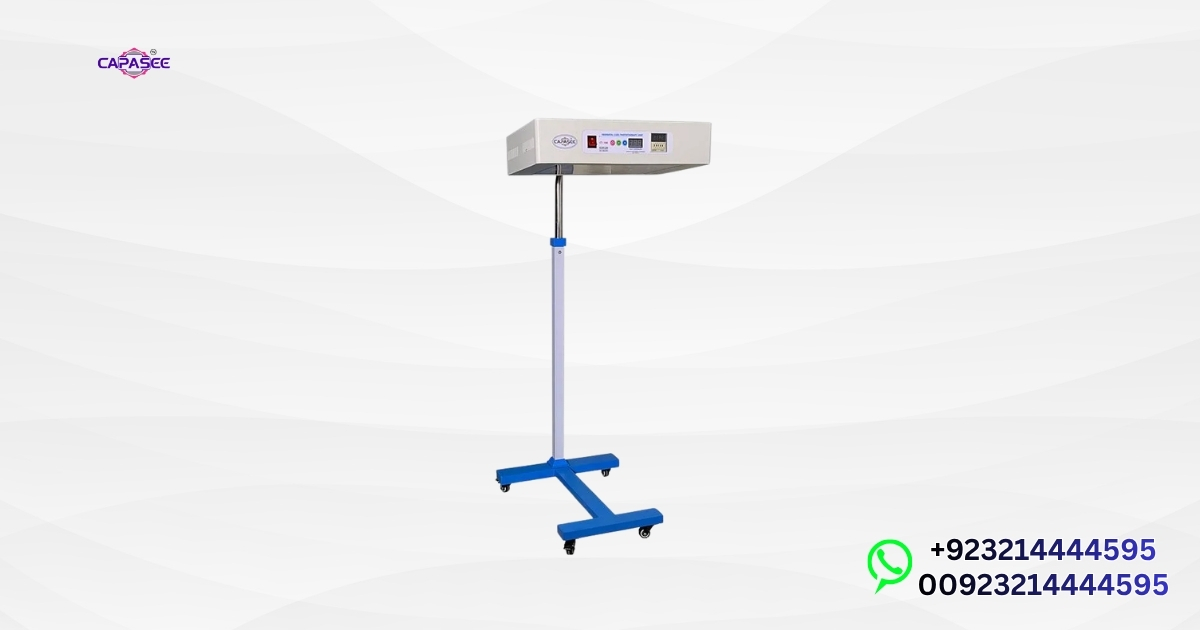
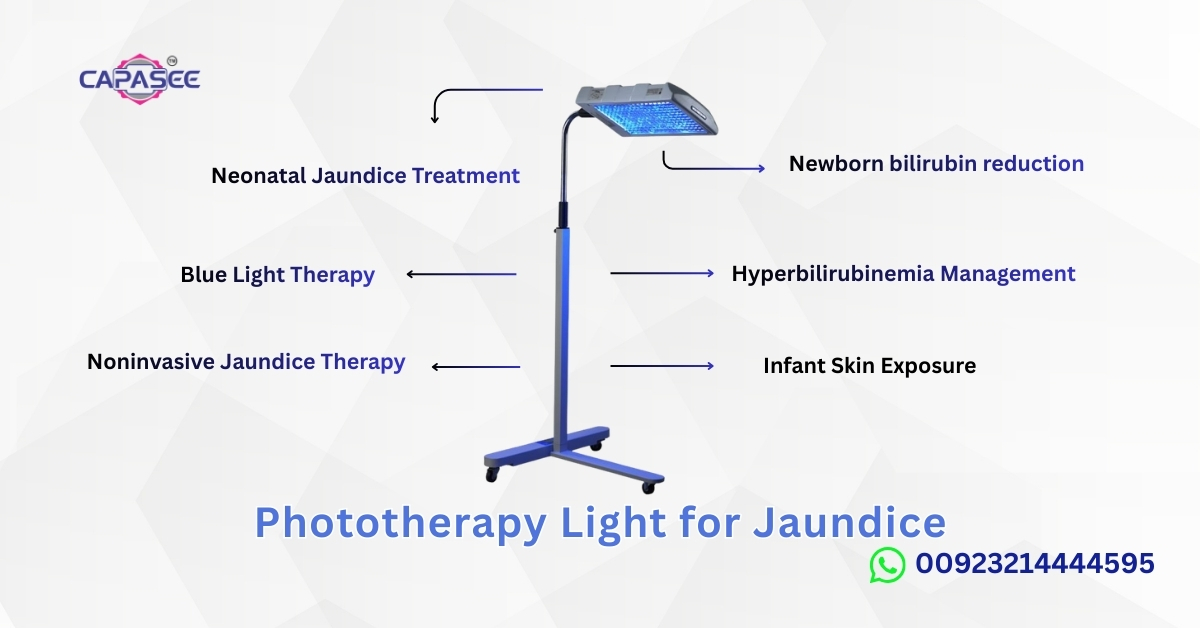
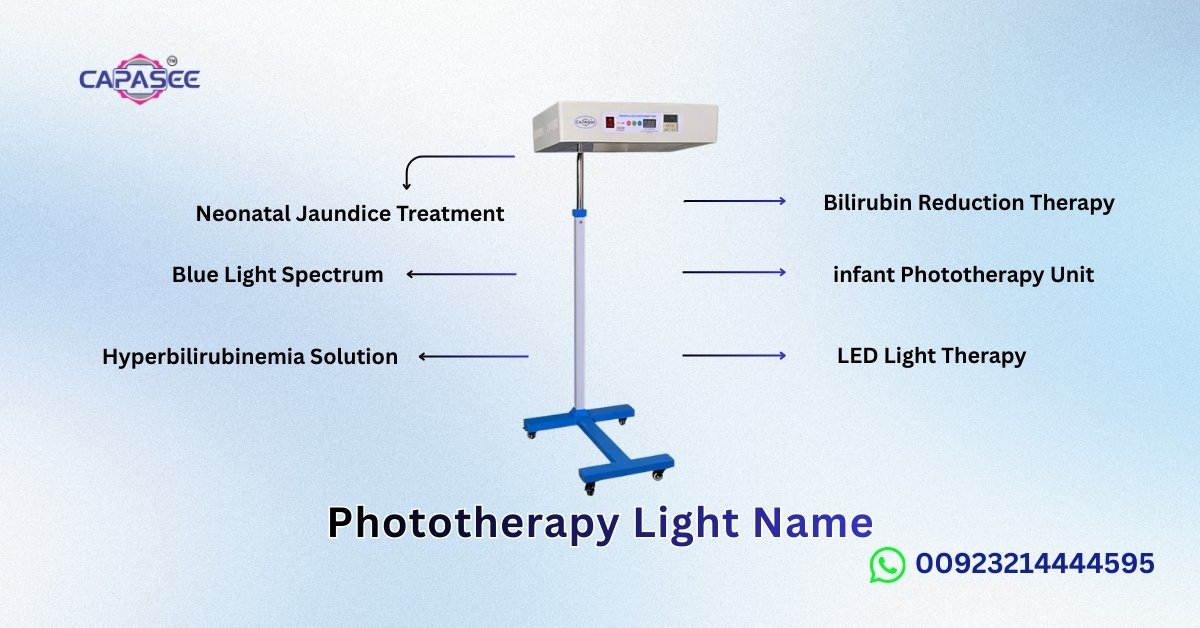
Capasee Electro Medical Engineering is an organization that offers newborn care in blue light phototherapy units in Pakistan. Their systems provide accurate phototherapy radiation and safe bilirubin clearance in infants with neonatal hyperbilirubinemia, where blue light is used in phototherapy to enhance treatment outcomes.
Their instruments operate with wavelengths 400 nm to 490 nm and the visible light spectrum to form lumirubin. The Capasee units have been used in a consistent manner in hospitals to ensure that jaundice therapy and hyperbilirubinemia are well managed in order to enhance the neonatal outcomes in Pakistan.
Blue Light Phototherapy Unit for Neonatal Jaundice in Pakistan
The neonatal hyperbilirubinemia is treated effectively by the Capasee unit used to administer blue light phototherapy. They offer regulated phototherapy irradiance, safe tissue penetration, and proper peak wavelength 460 nm, which ensures that bilirubin is reduced without damaging the fragile skin, as blue light is used in phototherapy for safe reduction.
Photodynamic effect is employed in these units, and the endogenous photosensitizers activity is maximized. They are relied upon by hospitals in Pakistan as a source of reliable treatment of jaundice, rapid recovery, and safer treatment of jaundice in newborns.
Advanced Neonatal Care by Capasee Electro Medical Engineering
Capasee Electro Medical Engineering improves the care of the premature babies by providing accurate blue light phototherapy. Their devices ensure the most favored light spectral region, lumirubin formation, and safe phototherapy irradiance, which makes treatment of neonatal jaundice effective and reliable, demonstrating how blue light is used in phototherapy.
Capasee promotes quicker recovery in infants with developed electromagnetic irradiation and absorption of porphyrins. Pakistan hospitals rely on their technology to maintain hyperbilirubinemia, safer bilirubin reduction, and contemporary jaundice therapy.
FAQ’s
Why is UV light used to treat jaundice?
UV is not commonly used anymore, physicians use blue light as it is safe to decompose bilirubin in babies without damaging the skin.
What is blue light phototherapy?
Blue light phototherapy is an efficient, non invasive therapy and involves the use of blue light to lower the level of bilirubin in a jaundiced newborn.
Why do NICU babies get blue light?
Babies in NICUs are provided with blue light to cure neonatal jaundice, which enables their bodies to eliminate surplus bilirubin in the safest and shortest time possible.
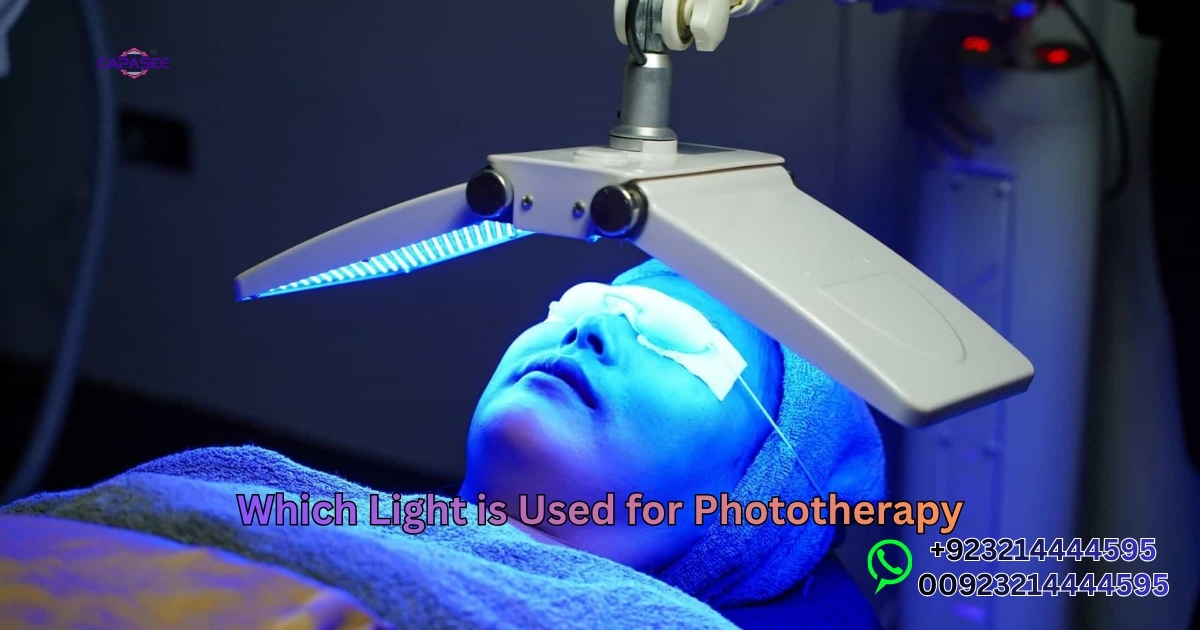
Which color light is used in phototherapy?
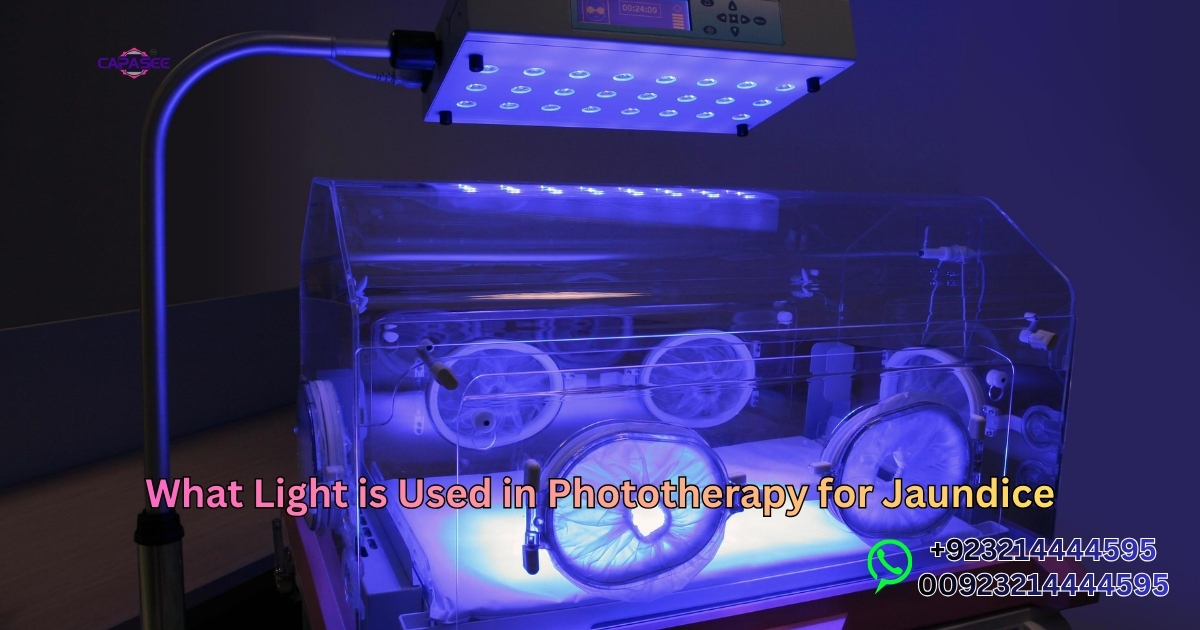
The reason behind using blue light is that it effectively reduces bilirubin in babies, and its wavelength is between 400 nm and 490 nm.
Why is blue light used in phototherapy?
The reason behind the use of blue light is that it is safe in converting bilirubin into a form that can be excreted by the baby systematically.
Conclusion
Understanding the purpose of blue light in phototherapy will make families and health care providers understand the importance of blue light is used in phototherapy in the care of newborns. The treatment is safe and reduces unconjugated bilirubin, aids in the treatment of neonatal jaundice, and ensures quick recovery. It is reliable and effective because of its specific wavelength, 400 nm to 490 nm, effective phototherapy irradiance, and lumirubin formation. In Pakistan, hospitals have sophisticated equipment to offer quality and regulated care. All in all, blue light is used in phototherapy due to its safety, effectiveness, and trust, which provide newborn babies with the most optimal beginning in life.