Blog
Neonatal Phototherapy Equipment for Hospitals

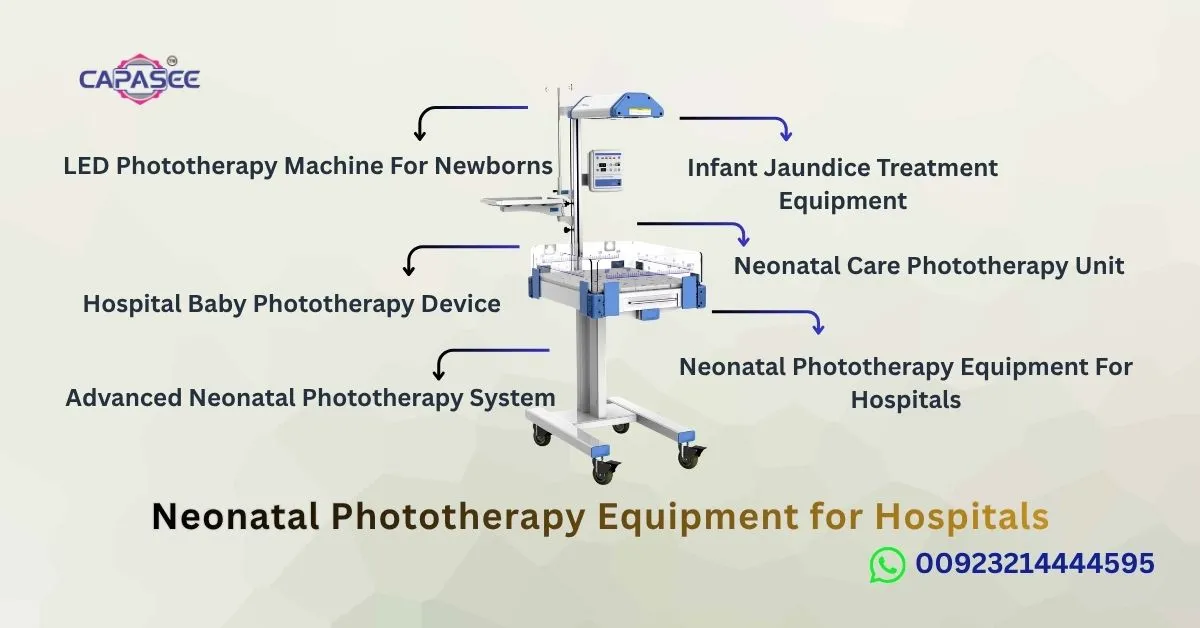
In countries with NICU infrastructure lagging in most cities, the right treatment equipment is a clinical necessity, not a luxury, and will cure jaundice in 60% of full term newborns and up to 80 percent of preemies. This challenge centers on neonatal phototherapy equipment for hospitals available to hospitals; unless it is installed, it can take medical teams a short time to increase the bilirubin levels in the babies to dangerous levels, and leave medical teams with few safe options.
It is vital for a hospital procurement manager who has to evaluate their next NICU upgrade or a biomedical engineer who has to maintain equipment, to know what to look for in phototherapy equipment. Capasee Electro Medical Engineering has taken everything apart in this guide, including what all these devices do, as well as what specifications actually matter in the hospital setting in Pakistan, so that you can make informed, confident decisions.
Neonatal Phototherapy Equipment for Hospitals: Complete Buyer’s Guide
Using the correct phototherapy equipment begins with knowing precisely what part it will play within your facility. Those hospitals that fail to undertake this exercise tend to buy units that do not suit their ward configuration, patient mix, or severity of patient profile. A properly designed device saves on treatment time, aids in nursing workflow, and ensures that bilirubin cases do not escalate into more invasive interventions, especially when selecting neonatal phototherapy equipment for hospitals.
The market currently provides an extensive variety of choices in various technologies, cost, and support. What makes the difference between an intelligent procurement and a procurement that will be costly is the knowledge of the clinical and operational differences between such options.
What Neonatal Phototherapy Equipment Does in NICUs and Maternity Wards
Phototherapy units treat neonatal jaundice by exposing the infant’s skin to light in the blue green spectrum, typically between 460 and 490 nanometres. It is this particular wavelength that results in photo isomerization and thus converts bilirubin into a water soluble form that the body naturally excretes through urine and stool.
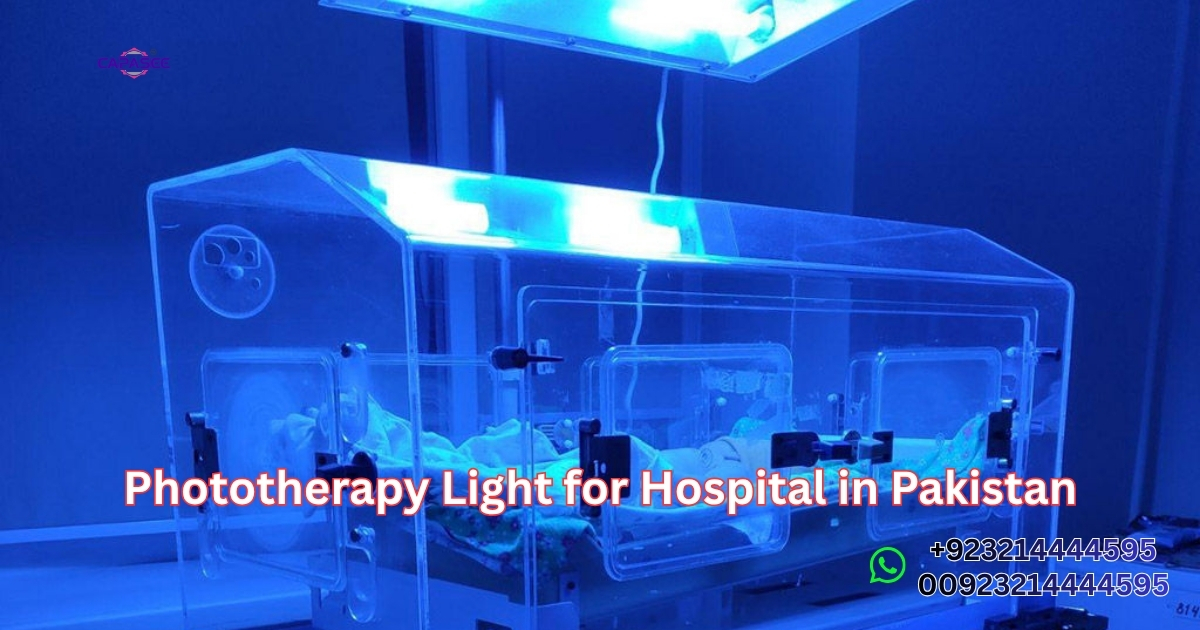
These machines are used in NICUs and are operated on a continuous basis or at periodic intervals with the warmers and incubators. They also treat milder physiological jaundice in term babies before discharge, where shorter treatment windows and ease of use among nursing staff are the most important.
You May Also Read This Blog: Narrowband UVB Lamp for Vitiligo in Pakistan
Types of Neonatal Phototherapy Equipment Used in Pakistani Hospitals
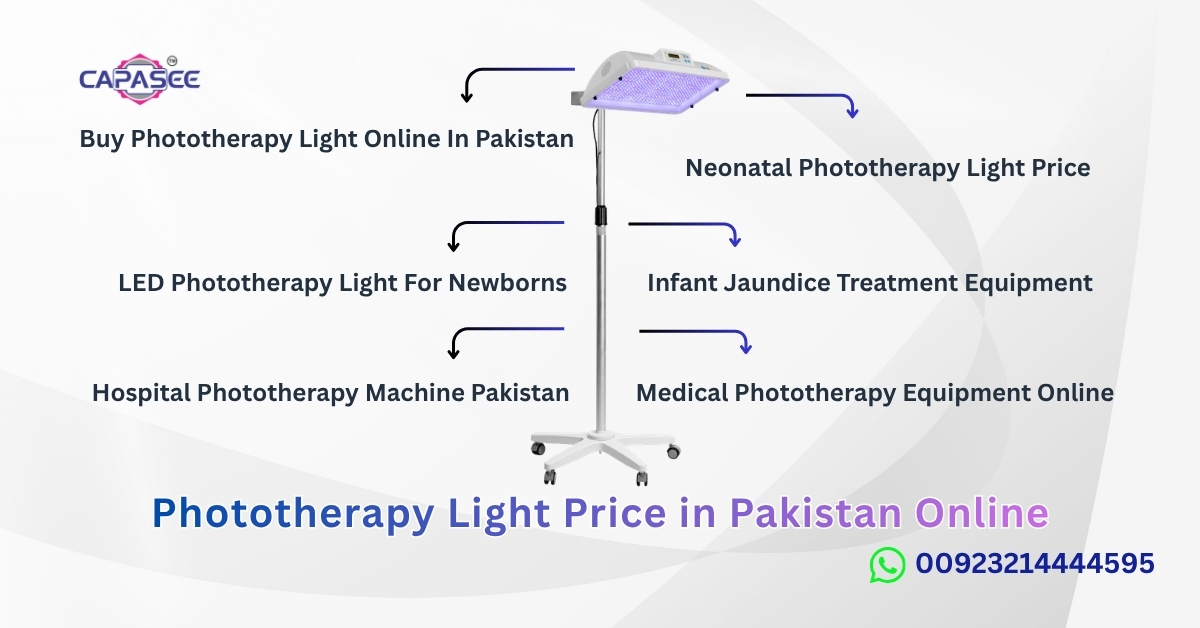
The current configurations of Pakistani hospitals include conventional fluorescent overhead units, LED single surface units, LED double surface units, and fiberoptic biliblankets. The common fluorescent units are still widespread in old government facilities, but LED based devices have become the standard in newly equipped or upgraded wards due to their much better irradiance consistency and much lower maintenance needs.
Level 2 and Level 3 NICUs that receive premature infants or a high bilirubin referral base would have double surface and fiberoptic units. In most of the secondary hospitals and district level hospitals in Pakistan, a clinical grade LED single surface unit will cover most of the cases to be observed in these facilities.
Neonatal Phototherapy Machine Features Hospitals Should Compare
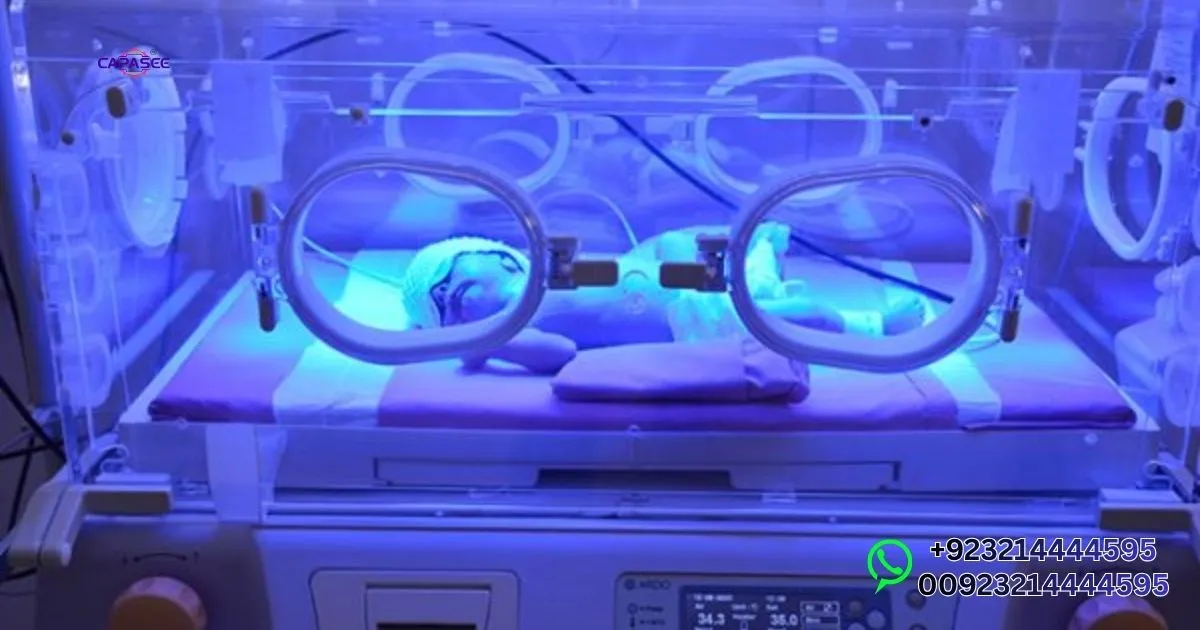
All phototherapy units available in the market do not provide what is stated on their specification sheets. The characteristics that have a real impact on clinical outcomes and daily functioning of the hospital are the irradiance output, wavelength accuracy, ease of maintenance, and safety compliance. Hospitals that base their buy of devices only on price and never revisit these parameters within 12 to 18 months of purchase are the ones that end up with underperforming units.
An organized comparison of major technical specifications provides your biomedical and clinical teams with a common framework for how to objectively appraise quotes. The following table summarizes the most critical areas of comparison that hospital procurement committees in Pakistan should consider.
| Feature | What to Look For | Why It Matters |
| Irradiance Level | Minimum 30 µW/cm²/nm at 35 cm | Below this threshold, treatment duration extends significantly |
| Wavelength Range | 460 to 490 nm (narrow band blue LED) | A broader spectrum reduces therapeutic efficiency |
| Light Source Type | LED preferred over fluorescent | LED lasts 10,000+ hours vs 1,000 to 2,000 for fluorescent tubes |
| Timer Function | Programmable cyclic timer | Enables feeding interval management without manual tracking |
| Heat Output | Low thermal emission (LED standard) | Excess heat risks hyperthermia in neonates |
| Eye Shield Alarm | Displacement alert system | Critical safety feature in high nurse to patient ratio settings |
| EMC Compliance | IEC 60601-1 certified | Prevents interference with monitors, ventilators, and other NICU devices |
| Portability | Lockable castors, adjustable arm height | Practical necessity in shared or multi bay ward layouts |
| Maintenance Requirement | LED minimal consumables needed | Reduces downtime and recurring costs over the equipment lifecycle |
| Warranty and AMC | Minimum 1 year warranty plus local AMC option | Especially important for facilities in secondary cities across Pakistan |
LED Intensity, Wavelength, Timer, and Temperature Control
The most crucial clinical specification on any phototherapy unit is irradiance. A device that cannot continue to deliver at least 30 ug W/cm 2/nm consistently throughout the treatment distance will generate slower rates of bilirubin removal, which will result in prolonged admissions and increased chances of bilirubin attaining exchange transfusion levels. No longer seek only a peak figure in the laboratory but a measured irradiance value at 30 to 35 cm when evaluating neonatal phototherapy equipment for hospitals.
The wavelength is as important as the intensity. Devices that are not within the 460 to 490 nm therapeutic window may pass a basic radiometer check but emit less phototherapeutically active light. Clinical value; A programmable timer that ensures that feeding break protocols are adhered to, and that stable thermal output of LED sources protects against incident hyperthermia during extended treatments.
Safety, Portability, and Maintenance Requirements for Hospital Use
Hospital grade equipment cannot compromise on safety compliance. IEC 60601-1 certification is required on units and is the standard that deals with the general electrical safety requirements of medical equipment. Electromagnetic compatibility is a real operational risk that uncertified devices bring to a busy NICU, where cardiac monitors, infusion pumps, and pulse oximeters are all operating simultaneously.
Disregarded factors of purchasing are portability and maintenance ease, which are especially important to hospitals located in small towns. A unit that is not easily manoeuvred between cots will create friction in nursing work patterns. The LED devices that can run 10,000 or more hours without consumable replacement reduce the dependence on maintenance, which is of the greatest concern in district hospitals where certified biomedical engineers are not always available in house.
How to Choose the Right Phototherapy Unit for Your Hospital
The right phototherapy unit is based on three factors; the location where the phototherapy will be administered, the number of cases that are handled in your facility every month, and the clinical severity profile of your patients. A maternity ward with routine physiological jaundice cases requires a device other than a Level III NICU that receives complex referrals by the surrounding districts, especially when investing in neonatal phototherapy equipment for hospitals.
The most frequent procurement error in neonatal care is to purchase the lowest priced unit available and find out the shortcomings only after the unit has been put into clinical use of neonatal phototherapy equipment for hospitals.
Single Surface vs Double Surface Phototherapy for Faster Jaundice Treatment
Single surface units send light above the baby and are suitable in cases of mild to moderate hyperbilirubinemia in term or near term babies. They represent the typical setup of maternity wards and Level I or II nurseries that maintain routine jaundice prior to discharge using neonatal phototherapy equipment for hospitals.
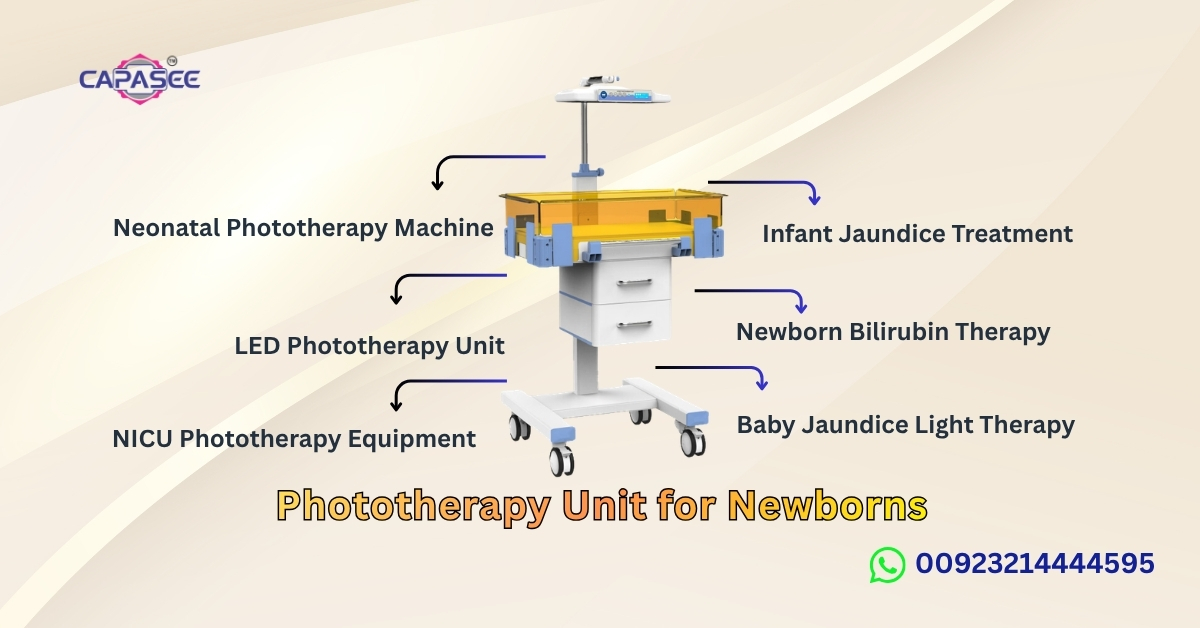
In double surface units, the light is provided at the same time above and below the entire baby, exposing a much greater percentage of the total body surface area of the baby. In clinical studies, it is demonstrated that double surface phototherapy decreases serum bilirubin by about 30% to 40% more rapidly than single surface therapy. This speed benefit directly leads to the reduction of the necessity of invasive intervention and shortens the NICU length of stay with advanced neonatal phototherapy equipment for hospitals.
Best Options for NICU, Pediatric Ward, and Maternity Setup in Pakistan
In tertiary hospitals, Level 3 NICUs are prioritized in terms of high irradiance LED double surface units that have IEC certification and well established local support. These facilities are the most acute and cannot afford equipment that fails to deliver in terms of irradiance, or equipment that may not run because of a shortage of spare parts in neonatal phototherapy equipment for hospitals.
Most clinical scenarios are included by using a clinical grade LED single surface unit containing at least one double surface unit to escalate to. Simple, durable, single surface, overhead LED lighting devices that nursing staff can use without extensive training are needed in maternity wards. Portable units that are easily moved within a bay to treat occasional admissions are of greatest benefit to pediatric wards without disturbing the layout of the ward, using neonatal phototherapy equipment for hospitals.
Check More & Purchase: Our Products
Neonatal Phototherapy Pricing, Purchase, and Support in Pakistan
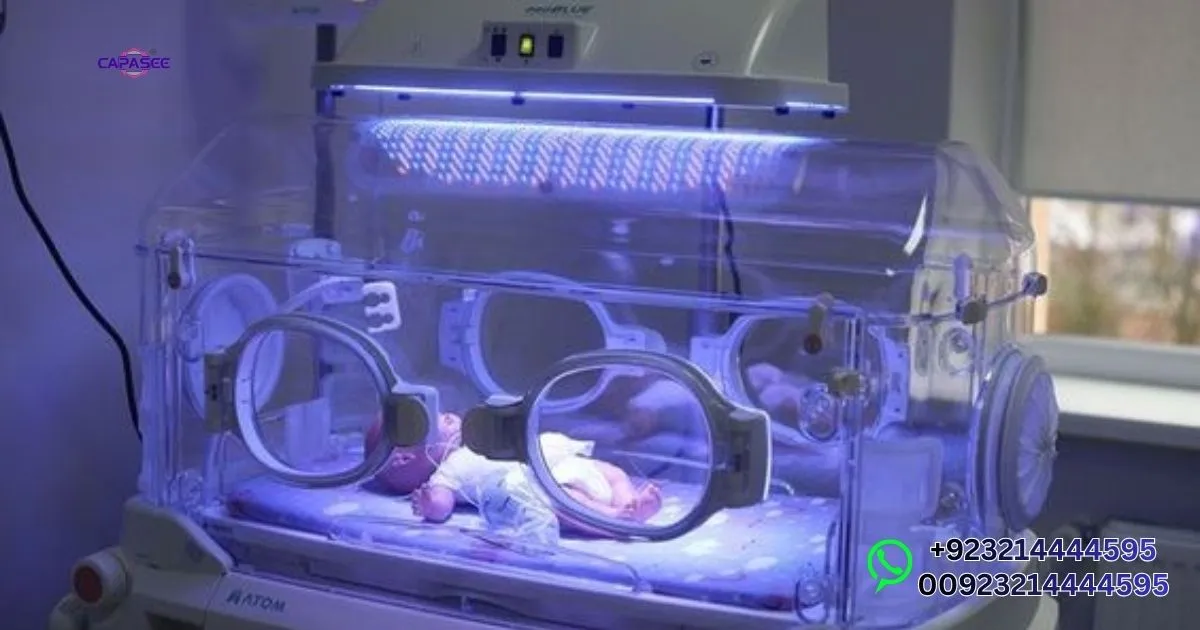
Procurement cost is just a single component of the actual financial outlay of neonatal phototherapy equipment for hospitals. Maintenance, replacement of consumables, cost of downtime, and availability of qualified technical support are included in the total cost of ownership over a five to seven year equipment lifecycle. The combination of all these factors in hospitals always makes better long term procurement decisions than those that are primarily concerned with the purchase price.
In terms of medical equipment procurement, the environment in Pakistan differs significantly between the categories of government, semi government, and private hospitals. The compliance of the PPRA, registration of the device in the DRAP, and the local after sales infrastructure all have an impact on which suppliers are eligible and which devices represent a genuine value throughout the operation period of neonatal phototherapy equipment for hospitals.
Neonatal Phototherapy Equipment Price Factors in Pakistan
Several variables contribute to the price variation between phototherapy units, which are offered in the Pakistani market. The largest single factor is unit type (single vs double surface), with the double surface models of LED lights typically priced 40% to 60% higher than the equivalent single surface models. The type of technology is also of great importance; LED units are more costly to purchase upfront, but will eliminate the recurring cost of tube replacement that makes fluorescent units more expensive over a three to five year period of clinical application in neonatal phototherapy equipment for hospitals.
Final landed cost is also influenced by import duties, the country of origin, and the DRAP registration status. PPRA regulations of government hospital procurement add compliance requirements that not all suppliers can satisfy, making the credibility of suppliers and documentation as significant as the specifications of the device itself in neonatal phototherapy equipment for hospitals.
Why Hospitals Choose Capasee Electro Medical Engineering for Supply and Support
Capasee Electro Medical Engineering has positioned itself as a reliable partner to the hospitals in Pakistan, not only as an equipment supplier but also as a long term technical support provider for neonatal phototherapy equipment for hospitals. The only consistent thing that distinguishes Capasee is the consultation that is undertaken before the sale; biomedical engineers work directly with hospital clinical teams to evaluate the configuration of the ward, the number of patients, and the compatibility of equipment before the sale is made. This helps it to avoid untenable purchases, which cause operational issues in the first year.
Post delivery, Capasee offers structured device training to nursing staff, calibration verification, and AMC options that maintain equipment functioning at clinical specifications throughout its entire functional life. It is not a luxury to have a responsive local partner with qualified biomedical engineering capability, in cities such as Multan, Bahawalpur, Rahim Yar Khan, and surrounding districts, where manufacturer direct support is seldom available. Capasee has been consistently meeting this requirement of clinical infrastructure reliably for neonatal phototherapy equipment for hospitals.
Frequently Asked Questions
What is the best phototherapy equipment for neonatal jaundice?
The most suitable phototherapy units in the treatment of neonatal jaundice are phototherapy units based on LED. They provide reliable irradiance at the therapeutic wavelength of 460 to 490 nm, with minimal maintenance needs, and better clinical performance and long term stability in hospital service.
How long should a newborn stay under phototherapy?
Newborns need 24 to 72 hours of phototherapy, depending upon initial bilirubin levels and response to treatment. These units have a reduction of up to 40% in this duration compared to other single surface devices. A neonatologist measures serum bilirubin at 4 to 12 hour intervals to ascertain when treatment can be safely withdrawn.
Is LED phototherapy better than conventional phototherapy for hospital NICUs?
Yes, LED phototherapy is clinically better in the hospital NICUs. It provides greater and more stable irradiance, generates much less heat, has up to 10 times the lifecycle of fluorescent tubes, and reduces the total maintenance cost over the equipment lifecycle. LED is the standard recommended choice in upgrading the neonatal phototherapy equipment used in any facility.
What features should a hospital check before buying a neonatal phototherapy unit?
The hospitals are to verify the irradiance output at the treatment distance, wavelength range (460 to 490 nm), IEC 60601-1 certification, timer functionality, heat output, and availability of after sales support. The accessibility of local maintenance is important just as much as the specifications in the devices, especially those in facilities in secondary cities in Pakistan, where technical support on site is a rarity.
Can phototherapy equipment be used in both NICUs and maternity wards?
Yes, but there are different types of units that are appropriate in different settings. NICUs with high bilirubin and pre term would prefer to use double surface LED units. Single surface overhead LED lights can be used in maternity wards where routine physiological jaundice in term infants is being treated before discharge. The device type and ward clinical profile correspondence enhances the outcomes and operational efficiency.
What is the price of neonatal phototherapy equipment in Pakistan?
The prices differ depending on the type of unit and technology. Entry level LED single surface units begin at about PKR 80,000, whereas clinical grade, two surface units start at PKR 280,000 to PKR 550,000. Phototherapy incubators of a combination can reach PKR 1,000,000. The ultimate price is also determined by the import taxes, warranty, and warranty package. Contact Capasee Electro Medical Engineering to get a correct current quotation that is specific to the needs of a hospital.
Conclusion
One of the most significant procurement decisions a hospital’s neonatal department makes is to get neonatal phototherapy equipment for hospitals right. A combination of the correct type of device, confirmed irradiance requirements, and reliable after sales support will either result in your ward treating jaundice effectively or in unnecessary delays and equipment downtime. With this knowledge applied in hospitals, patients are safeguarded, as well as their procurement budgets.Should your facility be considering evaluating, upgrading, or replacing phototherapy units, contact Capasee Electro Medical Engineering to have a needs assessment conducted regarding your ward setup and patient volume. Allow an experienced staff to assist you to make a certain informed choice. Since in neonatal practice, each hour of productive treatment is important.