Blog
Neonatal Jaundice Treatment at Home in Pakistan

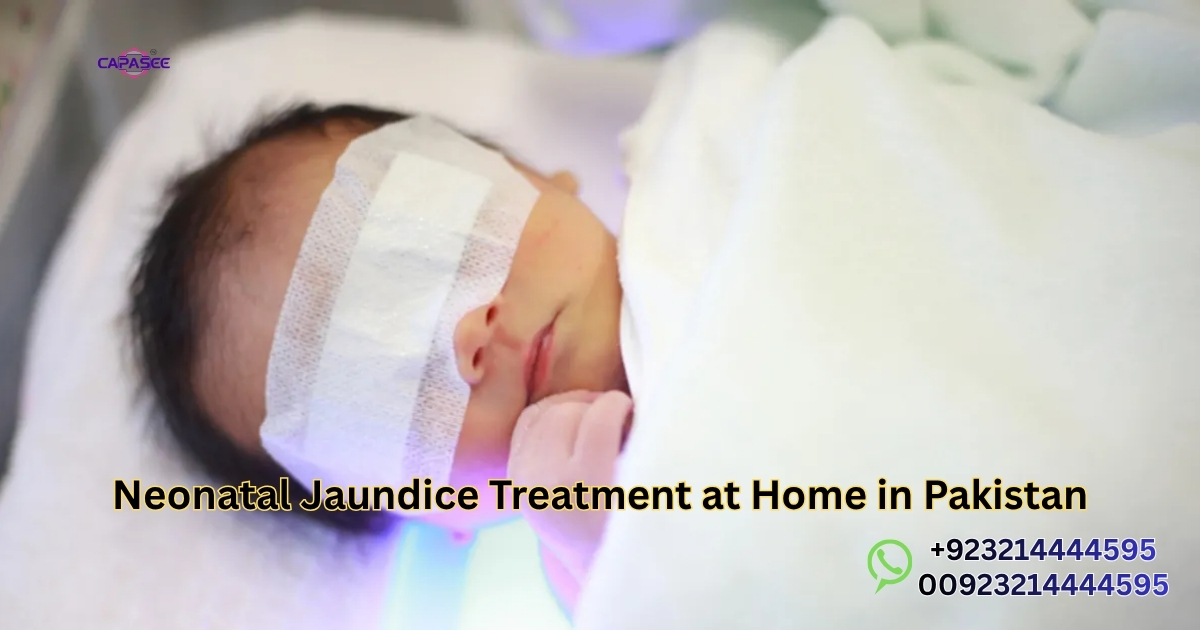
In fact, about 60% of all babies get jaundice in their first week of life, and in Pakistan, many families are caught off guard and have insufficient resources to help their baby. You see your baby turning yellow, noticing his eyes are different, and an instant panic strikes you. Unfortunately, most parents either need to head for the expensive private hospitals or use traditional remedies that have been passed down through the ages, both of which can have harmful consequences if the condition is severe.
Neonatal jaundice treatment at home in Pakistan deserves honest and medically sound information, particularly in urban and rural areas where access to neonatal care is limited. This guide is developed with clinical understanding and advice and will help you to monitor your baby safely at home, know the time you need to reach out for professional phototherapy equipment, and understand how Capasee Electro Medical Engineering has contributed to Pakistani families with trusted neonatal care solutions.
Understanding Neonatal Jaundice in Pakistani Newborns
Neonatal jaundice is one of the most common conditions in newborns, and early recognition of this condition can help you prevent any severe complications in your baby. It is caused by an increase in the level of bilirubin, a yellow coloured matter, which occurs when red blood cells are being broken down at a higher rate than the baby’s liver can cope with. In Pakistan, awareness regarding this condition is still not uniform, and hence, education on neonatal jaundice treatment at home in Pakistan is really lifesaving.
It’s not only a medical struggle for Pakistani families. It’s also a logistical challenge. City dwellers, such as those in Lahore, Karachi, and Multan, have a choice of hospitals, but in smaller towns and rural areas, early stage jaundice is usually treated at home without adequate supervision. It’s a matter of knowing the facts before it’s too late to prevent a tragedy from happening.
What Is Neonatal Jaundice and How Common Is It in Pakistan?
Neonatal jaundice is the yellowing of the skin and eyes of a newborn related to high levels of bilirubin and usually seen within the first 24 days after birth. It is thought to impact 60% of full term newborns around the world and almost 80% of premature babies. Studies in the hospital setting indicate the same prevalence in Pakistan, and physiological jaundice is the most frequently encountered type in neonatal wards of hospitals, both public and private, in Pakistan.
When mild, this condition is typically innocuous but should be monitored. If the levels of bilirubin increase rapidly or are not addressed, it can result in a severe condition called kernicterus that causes permanent brain damage. The early identification and timely action at home are important to the Pakistani parents because of this.
You May Also Read This Blog: Buy Medical Phototherapy Lights online Pakistan
When Is Home Treatment Possible and When Must You See a Doctor?
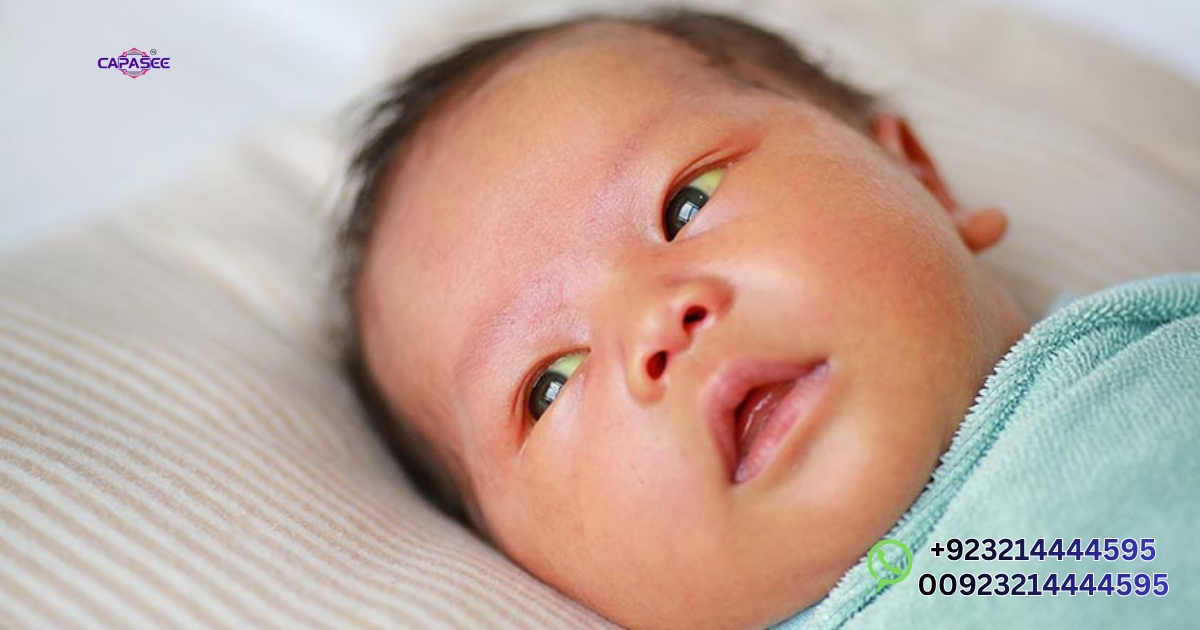
Home care should be considered only for mild, physiological jaundice in full term healthy infants who feed and are gaining well. When the yellowing occurs in the first 24 hours after birth, within 24 hours of the arms or legs, or if your baby is very sleepy or not feeding as expected, you should seek medical help. These are symptoms that need urgent medical attention.
A general guideline the Pakistani parents can use is if the baby is active and feeding, and the yellow tint can only be seen on the face and upper chest, it’s okay to keep a close watch on them at home with medical guidance. If the yellow colour spreads to the belly button or down, see a doctor right away. Don’t judge by appearance alone to make a diagnosis without a bilirubin blood test.
Safe Home Based Treatments for Neonatal Jaundice in Pakistan
The two fundamental concepts of the safe home treatment of neonatal jaundice in Pakistan are optimized feeding and using the phototherapy equipment from home when needed medically. Neither of these is recommended before being diagnosed with severe jaundice by a healthcare professional. Home care must be used as a support instrument and not as a replacement for clinical assessment.
These ways are often used together in families in Pakistan, depending upon the local resources and facilities available to them. The point is to make a plan, not take advice from anyone informally. For moderate cases that are doctor recommended, Capasee offers neonatal phototherapy solutions that are clinically sound and suitable for supervised home care so that families don’t have to stay in the hospital for the entire treatment.
How Frequent Breastfeeding and Proper Feeding Lower Bilirubin at Home
The most important home based way to lower your baby’s bilirubin levels is to do so by frequent breastfeeding. Breast milk is stimulating for the bowel to cause elimination of bilirubin in stool before it’s reabsorbed in the bloodstream. In the first week of life, newborns need to be fed 8 to 12 times in 24 hours to aid this process.
One of the most frequent problems observed in Pakistani households is that mothers are worried about the supply of milk or tiredness following childbirth; they tend to feed the children less frequently. This can, in fact, aggravate jaundice. A family doctor or midwife who is knowledgeable about breastfeeding can assist if it is proving to be difficult. The bilirubin flushing is similar for formula fed babies with proper feeding schedules.
Using Medically Supervised Phototherapy at Home in Pakistan with Capasee Devices
In Pakistan, home phototherapy is becoming a more common and convenient choice for babies with moderate jaundice who don’t need hospital treatment. The action of phototherapy is to provide a baby with a particular wavelength of blue green light that transforms bilirubin into a form that does not require liver processing by the baby. The treatment is available throughout Pakistan with Capasee Electro Medical Engineering phototherapy units, which are available for home use under medical supervision.
What makes using a Capasee phototherapy system so beneficial is that it offers clinical quality light output while also being easy to use for nonmedical caregivers. These devices have enabled parents to take care of doctor approved cases of jaundice at home, rather than in the hospital, thereby relieving them of the stress and expense of long term hospitalisation. If you plan to start any phototherapy at home, you must consult your child’s doctor first.
Common Home Based Jaundice Support Options in Pakistan
This is the corrected and final version of the above section:
| Method | When Suitable | Safety Notes for Parents in Pakistan | Role of Capasee Devices |
| Frequent breastfeeding | Mild physiological jaundice | Watch for dehydration and poor weight gain | Supports feeding plan guidance |
| Home phototherapy systems | Doctor approved moderate jaundice | Use only under medical guidance; avoid direct sun | Capasee phototherapy units for home use |
| Indirect natural light | Very mild cases, short durations only | No direct sunlight; no overheating, and observe baby closely | Not a replacement for Capasee phototherapy |
How to Set Up a Safe Home Phototherapy Environment in Pakistan
The correct setup of a home phototherapy environment is as crucial as the actual phototherapy device. The room should be warm, without drafts, and clean, and the baby should lie on a firm, flat surface directly below the light source. Eye protection should be on before the phototherapy lamp is turned on, and only the baby’s nappy should be worn for maximum skin contact.
The houses are diverse in Pakistan, both in space and ventilation. Room temperature control is important during the summer months, as it increases stress to the jaundiced newborn when it is too hot. Monitor the temperature with a thermometer and maintain the room temperature of 24℃ to 27℃ during phototherapy.
Positioning the Baby and Capasee Style Phototherapy Lamp Correctly
Place the baby on their back, face up, directly underneath the phototherapy lamp at the distance recommended in the phototherapy device’s manual for neonatal jaundice treatment at home in Pakistan. Capasee phototherapy units are built to adjust the distance between the light source and the skin, so caregivers don’t have to guess the distance to ensure the correct distance. Every two hours, change the light on the baby’s body, ensuring that all parts of the body surface are exposed to light equally.
Do not put the lamp closer than usual, as this will not speed up results. Inappropriate distance compromises safety and has little effect on effectiveness. Strictly adhere to the manufacturer’s instructions and the doctor’s protocol for neonatal jaundice treatment at home in Pakistan.
Timing, Duration, and Monitoring During Home Phototherapy Sessions
Phototherapy is usually given at home 12 to 16 hours a day, interspersed with feeding, changing nappies and bonding time. The length of time will be determined by your baby’s level of bilirubin and will be prescribed by your paediatrician. Record session duration and any behavioural changes that occur, and discuss with all follow up visits related to neonatal jaundice treatment at home in Pakistan.
Take the baby’s temperature, response to feeding and urine output each session. If stools become pale or urine becomes dark, bilirubin processing is improving. If the baby appears extremely drowsy, refuses to eat or has a fever, end the session and call the doctor.
Check More & Purchase: Our Products
Warning Signs, Risks, and When to Stop Home Treatment
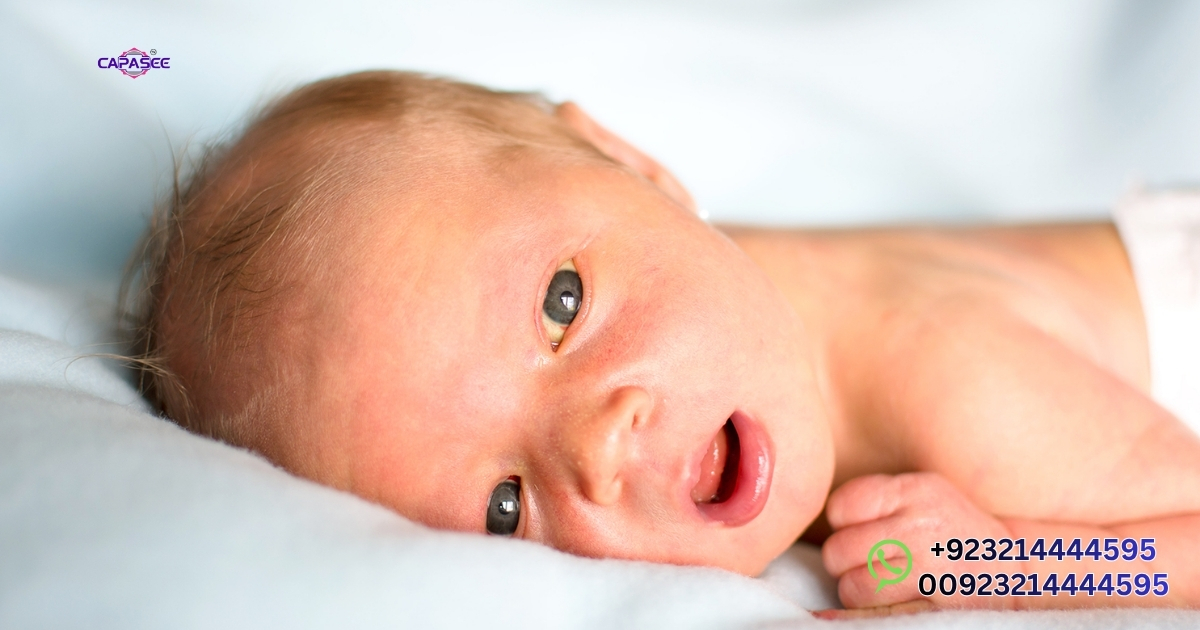
Treatment of neonatal jaundice treatment at home in Pakistan must have a definite exit; jaundice conditions must worsen, and hospital treatment must be started at once. The key to a safe outcome is early recognition of the warning signs that could lead to a medical emergency. If a baby is distressed, then Pakistani parents should never be embarrassed to seek further treatment.
All families who use home phototherapy devices at home are encouraged by Capasee Electro Medical Engineering to regularly test their bilirubin as recommended by their child’s paediatrician. Home treatment complements clinical treatment. It’s not a substitute for it. Hospital admission is required if bilirubin is not falling after 24 to 48 hours of home phototherapy.
Danger Signs That Mean Neonatal Jaundice Must Be Treated in Hospital
Some symptoms suggest the jaundice has progressed to a level of care that can only be provided at the hospital level. Signs of this are yellowing of the palms and soles of the feet, a baby that refuses to wake for feeding, a high pitched cry or a bilirubin level higher than 20 mg/dL in a full term baby. Many parents do not like to visit the emergency ward of the hospital at night or at weekends in Pakistan. This may prove to be fatal in serious jaundice.
Other warning signs are jaundice in the first 24 hours after birth, evidence of infection, a baby who is born too early, before 35 weeks, or a blood group incompatibility between the baby and the mother. In all cases, they need to be treated with hospital phototherapy or, in severe cases, exchange transfusion. None of the home devices or remedies is suitable as a first line of response in these situations involving neonatal jaundice treatment at home in Pakistan.
Common Mistakes Parents Make When Treating Jaundice at Home in Pakistan
One of the most common errors in Pakistani homes is letting the jaundiced baby get direct sunlight, exposing it, which is believed to be the same as phototherapy. Newborns can be overheated, sunburnt or dehydrated by direct sunlight, and the light spectrum emitted by direct sunlight is not the same as that emitted by medical phototherapy equipment. Although it is culturally acceptable, this should be avoided.
Other frequent mistakes include the omission of follow up bilirubin checks when the baby appears visually normal, decreasing feedings because the baby has trouble breastfeeding, and administering untested, unproven herbal “bile remedies” prescribed for jaundice. These can delay the proper treatment and camouflage a deteriorating situation. Even if home light therapy is recommended, always follow a paediatrician’s plan and use certified equipment, such as Capasee phototherapy units for neonatal jaundice treatment at home in Pakistan.
Frequently Asked Questions (FAQ’s)
Can neonatal jaundice be treated at home in Pakistan?
Yes, mild neonatal jaundice can be treated at home in Pakistan with the supervision of a doctor. Treatment involves frequent breastfeeding and doctor prescribed phototherapy devices. Before beginning any home care, though, always consult with a paediatrician to determine the seriousness of the condition. More severe cases should be taken to the hospital.
Is it safe to use sunlight to treat jaundice in newborn babies in Pakistan?
No, direct sunlight is not a safe medical treatment for newborn jaundice. It could burn, get too hot, and dry out. Indirect filtered light is not very effective. Only medical grade phototherapy equipment can provide the appropriate wavelength and transmittance safely and effectively, such as the medical phototherapy equipment provided by Capasee Electro Medical Engineering.
How long does it take for jaundice to go away with home treatment in Pakistani infants?
In full term Pakistani newborns, mild jaundice will pass in 5 to 7 days with proper feeding and doctor supervised home phototherapy. It can take longer for premature babies. Hospital treatment is required immediately if the bilirubin doesn’t decrease within 48 hours after home treatment begins.
What is the best phototherapy machine for treating newborn jaundice at home in Pakistan?
Capasee Electro Medical Engineering provides only the phototherapy units, which are specially designed for home use with supervision in Pakistan. They provide clinical grade blue green light at the right intensity and wavelength. Prescribed by a paediatrician, they are designed to be safely used by non medical carers, thus providing a trusted option for Pakistani families with moderate jaundice at home.
When should you stop home treatment and go to the hospital for neonatal jaundice in Pakistan?
If your baby develops any of the following symptoms, discontinue home treatment right away; yellowing on the palms or soles, difficulty waking, refusing to eat, fever, or high pitched crying. The following are indications of severe jaundice; at this stage, the patient must be referred to the hospital level for phototherapy or emergency care without delay.
Can breastfeeding alone cure jaundice in a newborn in Pakistan?
If the baby is eating at least 8 to 12 times a day and gaining weight appropriately, mild physiological jaundice can be fixed with breastfeeding alone. It excreted bilirubin in the stool. It is not adequate for moderate or severe jaundice, though. In those situations, Capasee Electro Medical Engineering phototherapy equipment can be used in conjunction with medical guidance for feeding.
Summary
Home management of neonatal jaundice treatment at home in Pakistan can be achieved and is safe as long as three conditions are met; the treatment is medically confirmed to be mild to moderate, a feeding plan has been established, and the treatment is undertaken with the use of certified phototherapy equipment. You can use this knowledge at an early stage to prevent your newborn infant from facing all these dangerous effects of untreated jaundice.
Thanks to this information, Pakistani families are able to give their babies a great start. If your paediatrician has recommended home care, look into one of Capasee Electro Medical Engineering phototherapy options and begin treatment with confidence, supported by clinical assistance for neonatal jaundice treatment at home in Pakistan.
You can’t wait for your newborn’s health. Make the right move now, and rely on guidance and equipment for Pakistani families just like your own.