Blog
Infant Phototherapy

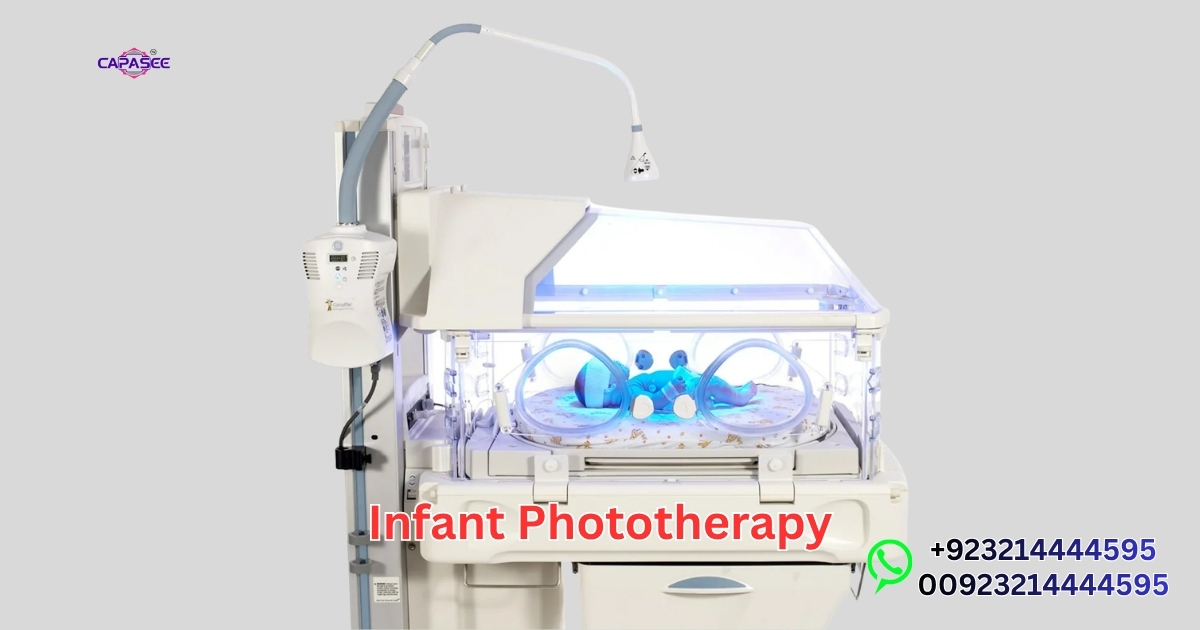
In Pakistan, thousands of babies are born with neonatal jaundice each year, a condition that, if not treated, can lead to irreversible brain damage or death. But not all hospitals and clinics have access to efficient phototherapy units. Enter the infant phototherapy system. With its focus on targeted light delivery and clinical performance, it’s considered one of the hottest pieces of equipment in neonatal care. But with dozens of systems now flooding the Pakistani market, how can you ensure you’re getting a system that will deliver when needed?
This guide covers all you need to know, from the basics of how infant phototherapy works, to the clinical specifications you should consider, to the reason why Capasee Electro Medical Engineering is the preferred supplier of this technology in Pakistan. This article is for you, whether you are a neonatologist setting up a new NICU or a hospital administrator making an important purchase.
What Is Infant Phototherapy and Why Newborns Need It
Infant phototherapy is the most common and effective treatment for jaundice in newborns, when the baby’s skin and eyes appear yellow due to high levels of bilirubin. The impact of elevated bilirubin levels can be profound, with devastating effects such as brain injury or kernicterus. Bilirubin is broken down by phototherapy using a particular type of light so that the baby can excrete it.
Newborn jaundice is one of the most common causes of hospitalisation in Pakistan, especially in areas where maternal health care is in transition. Baby phototherapy systems offer a safe and effective way to treat babies in NICUs, district hospitals and even home environments with parental supervision.
Understanding Newborn Jaundice in Pakistan
Globally, 60% of full term and 80% of preterm babies are affected by newborn jaundice, and this is no less true in Pakistan. Jaundice is often not diagnosed early in many urban and rural areas of Pakistan, due to early discharge, lack of follow up and breastfeeding support.
Jaundice usually manifests between 24 and 72 hours old. If not treated in time using effective phototherapy devices, increasing bilirubin levels can cross the blood brain barrier and cause permanent brain damage, a devastating consequence that can be prevented with the right medical equipment.
You May Also Read This Blog: Medical LED Lights
How Phototherapy Safely Reduces Bilirubin Levels
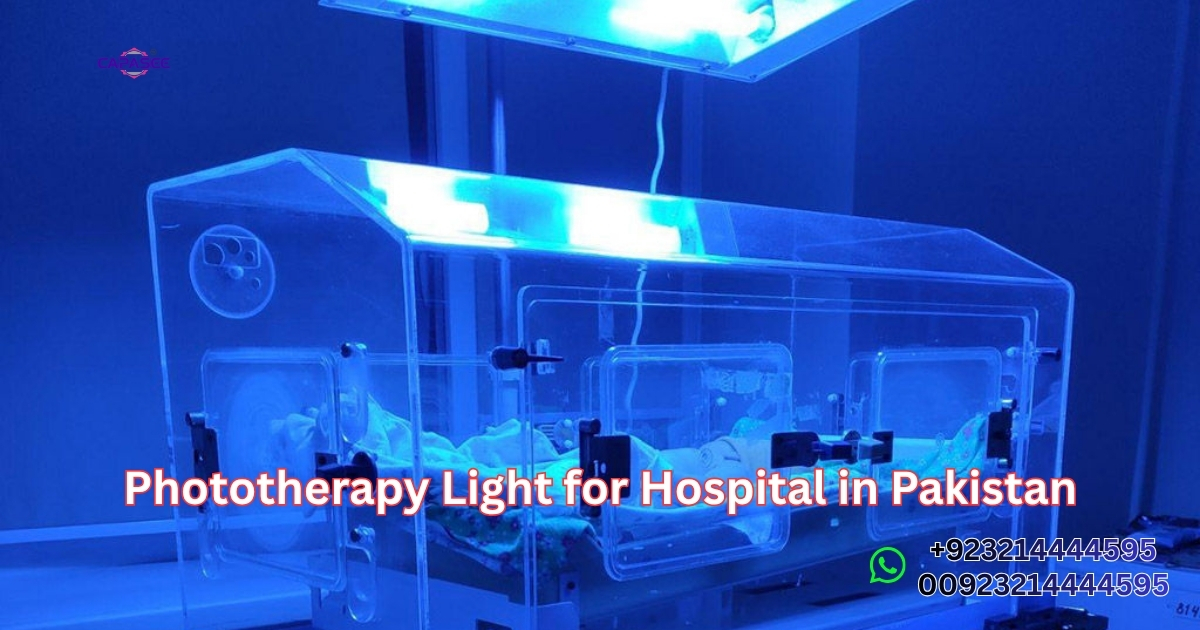
Phototherapy involves photooxidation. Blue green light between 460 nm and 490 nanometres nm is applied to a baby’s skin, which the bilirubin molecules absorb and are converted into water soluble compounds that can be excreted via the baby’s urine and stools, bypassing the need for the liver to process bilirubin.
Today’s LED phototherapy equipment, such as that produced by Capasee Electro Medical Engineering, emits this wavelength with accuracy and uniformity. LEDs also emit very little heat, making the treatment safer and more comfortable for newborns during prolonged therapy.
Best Infant Phototherapy Equipment from Capasee Electro Medical Engineering
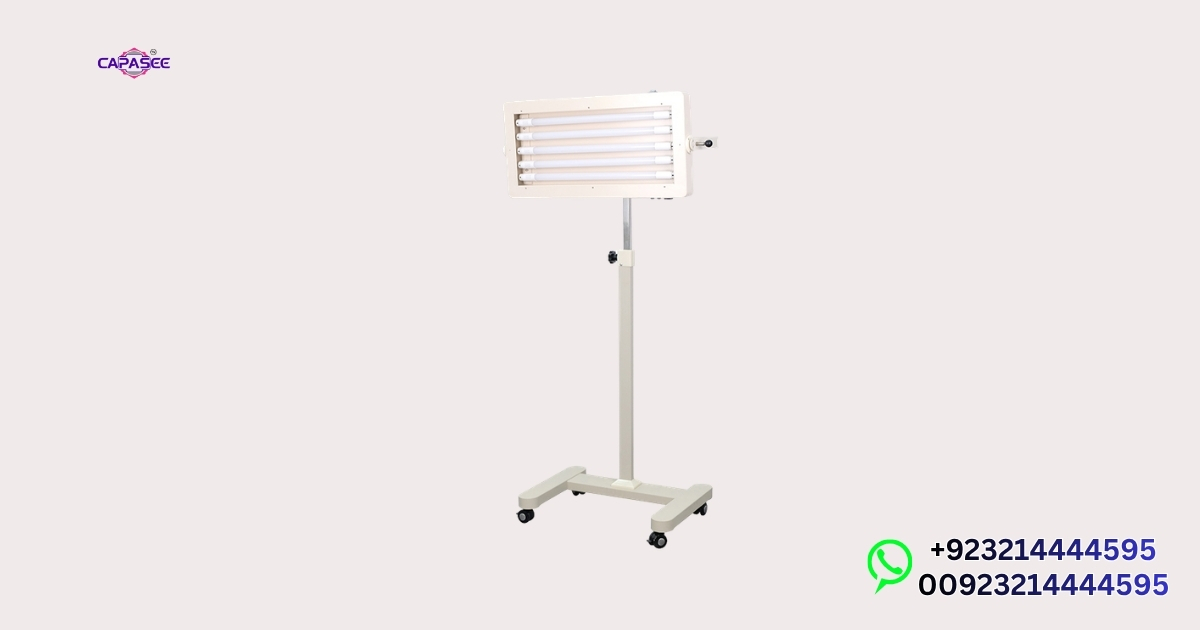
When it comes to the procurement of quality neonatal phototherapy equipment in Pakistan, Capasee Electro Medical Engineering is a preferred supplier to hospital procurement and neonatologists alike. They provide evidence based LED phototherapy units that adhere to global neonatal standards, yet are suitable for the Pakistani hospital setting.
Capasee phototherapy units are designed to work in the Pakistan health care environment, from managing electricity fluctuations to being easy to use for nursing staff. Whether you’re equipping a 10 bedroom NICU in Lahore or a district hospital in Multan, Capasee delivers equipment that works well in the clinical use environment.
Key Features of Capasee LED Phototherapy Units
Capasee LED phototherapy units emit the clinically recommended 460 nm to 490 nm blue green light for the most efficient conversion of bilirubin from the start of therapy. The devices have variable irradiance settings to enable tailoring of the treatment intensity according to the infant’s age and bilirubin concentration.
Other features include a timer and treatment counter for precise therapy management, a low heat LED panel to minimise dehydration and hyperthermia risks, and a robust frame for long term use. Capasee units also include protective eyewear for newborns and setup guidelines, facilitating the use of the unit even in resource limited settings.
Capasee Phototherapy vs Traditional Methods for Pakistani Hospitals
Selecting a phototherapy unit is both a clinical and economic choice. The table below illustrates the difference between Capasee LED phototherapy devices and the halogen based phototherapy devices used in many older hospitals in Pakistan:
| Feature | Capasee LED Phototherapy | Traditional Halogen Units |
| Light Wavelength | 460–490 nm (optimal blue-green) | Broader spectrum, less efficient |
| Energy Efficiency | Low power, cost-effective for Pakistan | High electricity use |
| Treatment Speed | 30–50% faster bilirubin reduction | Slower, longer sessions |
| Safety for Infants | Eye protection & skin-friendly | Higher heat risk |
| Availability | In-stock via Capasee Electro Medical Engineering | Limited local service |
As the table illustrates, Capasee LED phototherapy units have tangible benefits. For Pakistani hospitals concerned about energy costs and patient flow, LED phototherapy is not only a clinical improvement, but it’s also a cost effective one.
Infant Phototherapy Treatment Guidelines in Pakistan
Pakistan’s neonatal guidelines, which closely follow World Health Organisation WHO and American Academy of Paediatrics (AAP) guidelines, recommend that phototherapy be initiated based on the infant’s total serum bilirubin (TSB) level, the time of the infant’s birth (gestational age) and the time of referral for phototherapy (age in hours). For instance, a baby born at 35 weeks’ gestation must be treated with phototherapy at a lower bilirubin threshold than a full term healthy baby.
Healthcare providers in hospitals in Karachi, Rawalpindi and Faisalabad use threshold based phototherapy charts to guide their decisions. Infants also need access to safe and effective infant phototherapy equipment to ensure timely, safe, and effective phototherapy once the decision to start treatment has been made.
When to Start Phototherapy for Pakistani Newborns
The decision to start phototherapy should be based on a newborn’s bilirubin level reaching a threshold based on age and other factors: 12-17 mg/dL for full term babies in the first 48 to 72 hours of life. Infants with clinical signs of jaundice for less than 24 hours should be triaged as urgent cases.
Late diagnosis is still a problem for home and rural births in Pakistan. According to paediatricians, all babies should have a bilirubin check before being discharged from the hospital and at 3 to 5 days of age. Timely availability of phototherapy units, e.g. from Capasee Electro Medical Engineering, can prevent ongoing neurological complications.
Step by Step Home and Hospital Setup
In hospitals, the Capasee phototherapy unit should be placed 30 to 45 cm above the baby, who must lie undressed (except for a nappy) under the light. Eyeglasses need to be placed before starting the phototherapy, and the infant should be turned over every 2 to 3 hours to allow exposure to light on all skin surfaces.
Home phototherapy under a doctor’s supervision is increasingly common in urban Pakistan for infants with mild to moderate jaundice. The first step is to confirm the bilirubin count with a paediatrician and receive written instructions on how to set up the equipment. The Capasee team provides after sales service and advice to families renting or buying units for home phototherapy to ensure safe and effective treatment at home.
Check More & Purchase: Our Products
Benefits, Risks, and Buying Capasee Phototherapy in Pakistan
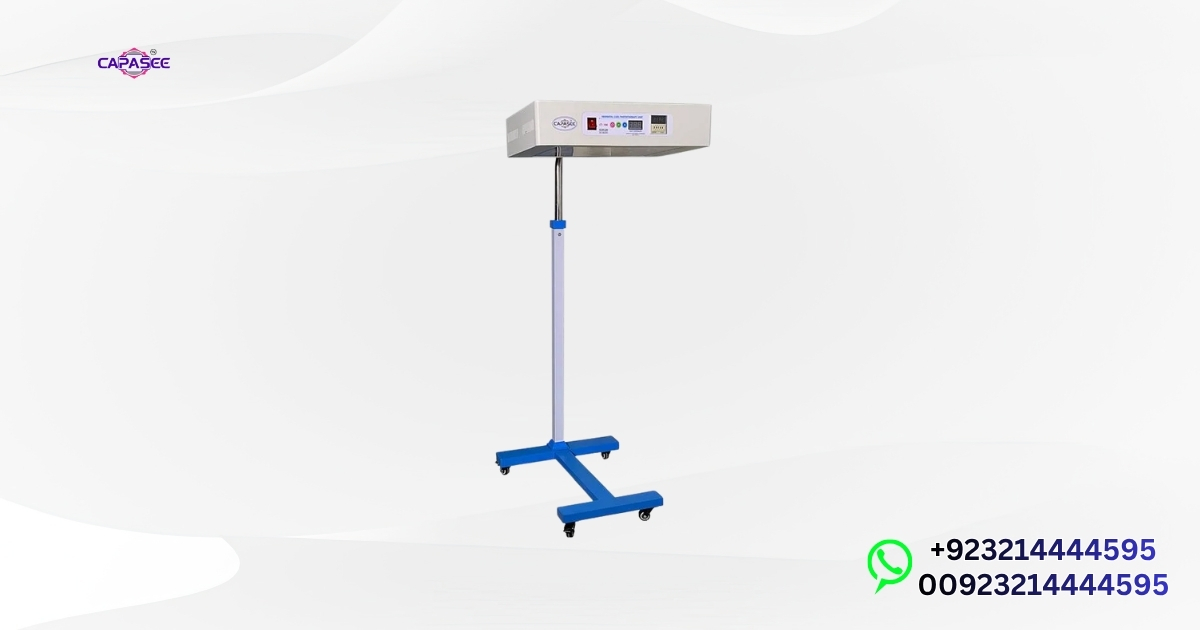
When used properly, phototherapy is a highly safe and effective non invasive treatment for neonatal jaundice and the preferred method of treatment worldwide. The advantages of phototherapy are clear: the rapid lowering of bilirubin levels, preventing the need for blood transfusions in moderate jaundice, and the reduction of infant deaths from untreated jaundice.
For Pakistani families and hospitals, working with Capasee Electro Medical Engineering adds a layer of comfort. You are not only getting a device, but technical support and a warranty, and a supplier who has a proven history in the Pakistani medical equipment industry.
Proven Benefits and Common Side Effects
The main benefit of phototherapy is lowering of the blood bilirubin level at a rate of 1 to 2 mg/dL per decilitre per hour during the first several hours of treatment with a good quality LED phototherapy device. The majority of infants improve substantially within 24 hours, and many will avoid the need for exchange transfusion.
Minor side effects include green diarrhoea, mild rash, rarely bronze baby syndrome, and increased dehydration (can be managed with close monitoring and increased feeding). They are temporary and disappear after treatment. Capasee phototherapy equipment, using low heat LED panels, also further reduces the risk of dehydration, compared to the traditional halogen units.
Why Choose Capasee for Affordable Phototherapy Solutions
Infant phototherapy equipment from Capasee Electro Medical Engineering combines efficacy with affordability, a critical consideration for the public and private healthcare markets in Pakistan. They offer units at competitive prices that don’t sacrifice the irradiance and wavelength accuracy needed for effective phototherapy.
Beyond their products, Capasee offers installation, user training, and maintenance, taking pressure off the hospital’s biomedical engineering unit. When procurement managers are looking for sustainable phototherapy solutions in Pakistan, Capasee is a name that’s not just cheap, but delivers.
FAQ’s
What is infant phototherapy used for?
Infant phototherapy is used to treat neonatal hyperbilirubinemia or jaundice by exposing a baby to specific light wavelengths, which break down excess bilirubin in the bloodstream. This is the most well established non invasive therapy for hyperbilirubinemia and is commonly used in newborn intensive care units (NICUs) and maternity wards in Pakistan.
How long does infant phototherapy take in Pakistan?
The average time is between 24 and 72 hours, depending on the newborn’s bilirubin level and the unit’s irradiance. Newborns treated with high performance phototherapy units, such as infant phototherapy, require less time because of high irradiance and target specific wavelengths.
Is infant phototherapy safe for newborns?
Infant phototherapy is safe to use. It is delivered via the LED blue light of a particular wavelength, which selects only bilirubin and not the tissue. Infants’ eyes are covered with shields, and phototherapy units have temperature monitoring to avoid overheating.
Can infant phototherapy be done at home in Pakistan?
Phototherapy can be done at home in Pakistan if the infant has mild jaundice and is under the supervision of a pediatrician. Infant phototherapy units of hospital grade from Capasee are preferred for moderate to difficult situations where clinical monitoring is required for safe and effective therapy.
What are the costs of infant phototherapy units from Capasee?
Costs vary based on model, specifications and bulk orders. Capasee Electro Medical Engineering provides cost effective quotes to hospitals, clinics and procurement offices throughout Pakistan. Reach out to the Capasee team for the latest quote, discounted price for large orders, and post sales service.
When should I contact Capasee for phototherapy equipment?
Contact Capasee Electro Medical Engineering early on in the planning process for the installation of a new NICU, replacement of an old unit, or when replacing a broken machine. Timely contact enables Capasee technical experts to understand what your ward needs and propose the ideal infant phototherapy setup for your hospital.
Conclusion
Jaundice is urgent, and the system you select impacts the baby’s outcome. Infant phototherapy is the clinical precision, LED efficiency, and proven successes of neonatal wards in Pakistan. With the right system, your infants spend less time in treatment, are healthier, and can go home earlier. If you are planning a NICU, renovating a maternity room, or considering a purchase for a hospital, it’s time to make the decision. Contact Capasee Electro Medical Engineering now for professional advice, technical details and price quotes for your hospital. In Pakistan’s expanding healthcare market, investing in neonatal equipment is not just an equipment investment; it’s a life saving intervention.