Blog
Wavelength of Phototherapy Light

You have likely heard that light therapy can only work with skin issues, pain, or mood. Then some are discussing the wavelength of the phototherapy light, and suddenly it becomes confusing. Is it mere marketing rhetoric or actually so? When you are investing your time and money in treatment, you would like to know whether it works or not. And that begins with a simple explanation of the wavelength of phototherapy light.
Your post will be a revelation of the wavelength of phototherapy light that you are probably already aware of, and why this is a significant factor in outcome. You will find out how various wavelengths will have effects on your skin and body in one way or another. We shall also dissect what range suits best to popular concerns. The wavelength of the phototherapy light will no longer sound technical at the end. It will be logical and will enable you to make the correct choice.
Key Phototherapy Light Wavelength Range
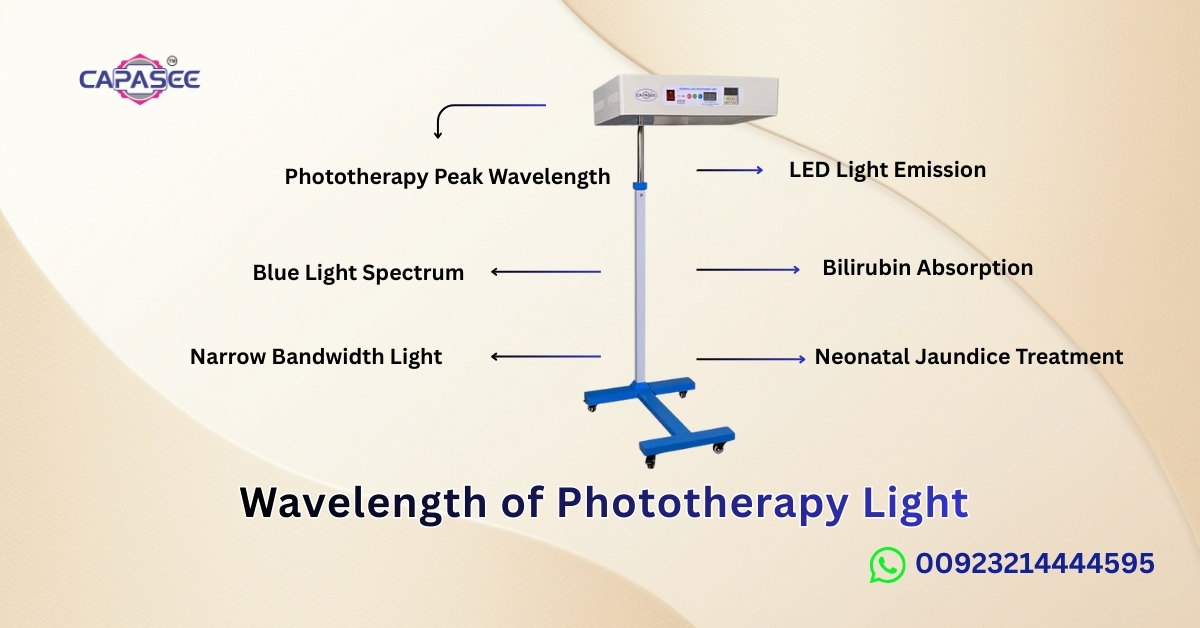
The strength and safety of phototherapy light are determined by the wavelength of phototherapy light. The doctors use the best phototherapy range to align the skin and blood requirements. The majority of devices operate in 450 nm to 470 nm and 470 nm to 490 nm. This zone is conducive to high photoisomerization efficiency and large absorption of bilirubin. Quantum yield and recovery acceleration in Pakistan hospitals is enhanced by the use of the right phototherapy peak wavelength of phototherapy light.
Light irradiance is also monitored, and narrow bandwidth light output is controlled in the clinics. Bright LED light emission minimizes the waste of energy and prevents the scattering of light on the skin. The Bilirubin action spectrum is close to 460 nm and 478 nm. These are values that determine harmless device configuration. Stable performance and equipment are maintained within 390 nm to 470 nm ranges in use with modern units, using reliable equipment.
Phototherapy Light Essentials 450-470 nm
The 450 nm to 470 nm band provides specific energy to accelerate the breakdown of bilirubin. This spectrum promotes blue green activity of light and enhances lumirubin. This band is more preferred by doctors because it is more effective in the absorption of bilirubin in the blood. Limited exposure minimizes hazard and ensures continuity of treatment. Neonatal care is a very reliable band that most Pakistani clinics are choosing for the wavelength of phototherapy light in neonatal therapy.
You May Also Read This Blog: Double Light Phototherapy
Blue Light Phototherapy 460 nm Benefits
At 460 nm, treatment coincides with the action spectrum of bilirubin. This enhances the efficiency of photoisomerization and helps to eliminate unconjugated bilirubin faster. The blue light spectrum has secure depth and high response. High quantum yield is a guarantee that the result is better in less time. This environment is reliable for many hospitals in Pakistan using the proper wavelength of phototherapy light standards.
Neonatal Phototherapy Wavelength Standards
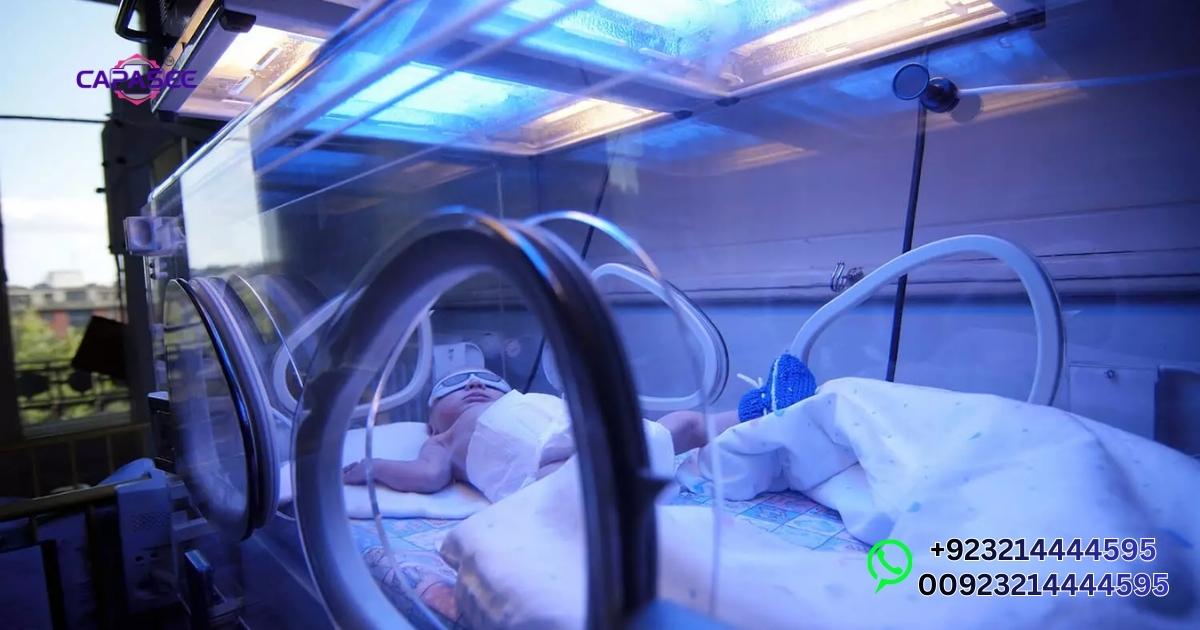
To treat neonatal jaundice safely, physicians observe strict standards of the wavelength of phototherapy light. Studies indicate the highest response at 460 nm and 478 nm. These values enhance the efficiency of bilirubin uptake, and lumirubin is safe to make. The optimum range of phototherapy is usually 450 nm to 470 nm. Adequate exposure to light ensures that the newborn’s skin is not under stress.
The contemporary systems depend on sophisticated LED light production with less light scattering. Flat band light, stable narrow bandwidth light, enhances accuracy and reduces heat. The blue green light zone enhances the process of photoisomerization. Hospitals in Pakistan upgrade their equipment to the neonatal safety standards of the world. The best recovery speed is achieved by monitoring exposure time and intensity daily by care teams with respect to the wavelength of phototherapy light.
Optimal Wavelength for Jaundice Light in Newborns
Devices placed by doctors in the 450 nm to 470 nm range will decompose bilirubin reliably. This band facilitates high bilirubin uptake and corresponds with the natural action spectrum. Treatment response is enhanced by exposure at nm 460. Daily irradiance of light enhances security and comfort. The hospitals have calibrated systems to ensure improved neonatal outcomes through proper wavelength of phototherapy light usage.
LED Phototherapy Wavelength Pakistan Insights
In Pakistan, the clinics are more inclined to use energy saving LED in the 470 nm to 490 nm range. High LED light emission gives constant, narrow light emission regulation. Units that are tuned at an area close to 478 nm enhance quantum yield and treatment rate. The devices used are reliable and can improve the quality of neonatal jaundice treatment. Effective safe care in the country is done through proper training and adherence to the wavelength of phototherapy light standards.
Why Wavelength Matters in Capasee Systems
Treatment speed and safety in neonatal care are determined by the wavelength of phototherapy light. Capasee systems are based on the optimal range of phototherapy to enhance bilirubin uptake and safe treatment of jaundice in neonates. The phototherapy peak wavelength of phototherapy light is determined by engineers as near as 460 nm, which is the action spectrum of bilirubin. This environment enhances the photoisomerization and promotes rapid lumirubin synthesis by using unconjugated bilirubin. Constant emission of LED light in the 450 nm to 470 nm minimizes the scattering of light and shields sensitive newborn skin in Pakistani clinics.
Capasee Electro Medical Engineering units also regulate the light irradiance carefully and maintain output between 390 nm and 470 nm and 470 nm and 490 nm bands on demand. This design employs the narrow bandwidth light to provide focused energy in the blue light spectrum and blue green zone of light. A good quantum yield enhances better treatment outcomes without overheating. Consistently, the bilirubin breakdown depends on calibrated systems close to 478 nm, as required by the doctors. These guidelines promote safe practice in contemporary Pakistani hospitals through precise wavelength of phototherapy light control.
Capasee Electro Medical Engineering Precision at 460 nm
The Capasee Electro Medical Engineering produces systems that are fine tuned at 460 nm. This fitment into the spectrum of bilirubin action enhances the photoisomerization effectiveness and quantum yield. Regulated light emission of LED lights guarantees uniformity of light radiance and high absorption of bilirubin. Narrow bandwidth light that is focused enhances lumirubin formation and reduces light scattering. This accuracy reinforces confidence in high technology neonatal jaundice therapy through optimized wavelength of phototherapy light.
Check More & Purchase: Our Products
Choosing Best Wavelength for Effective Results
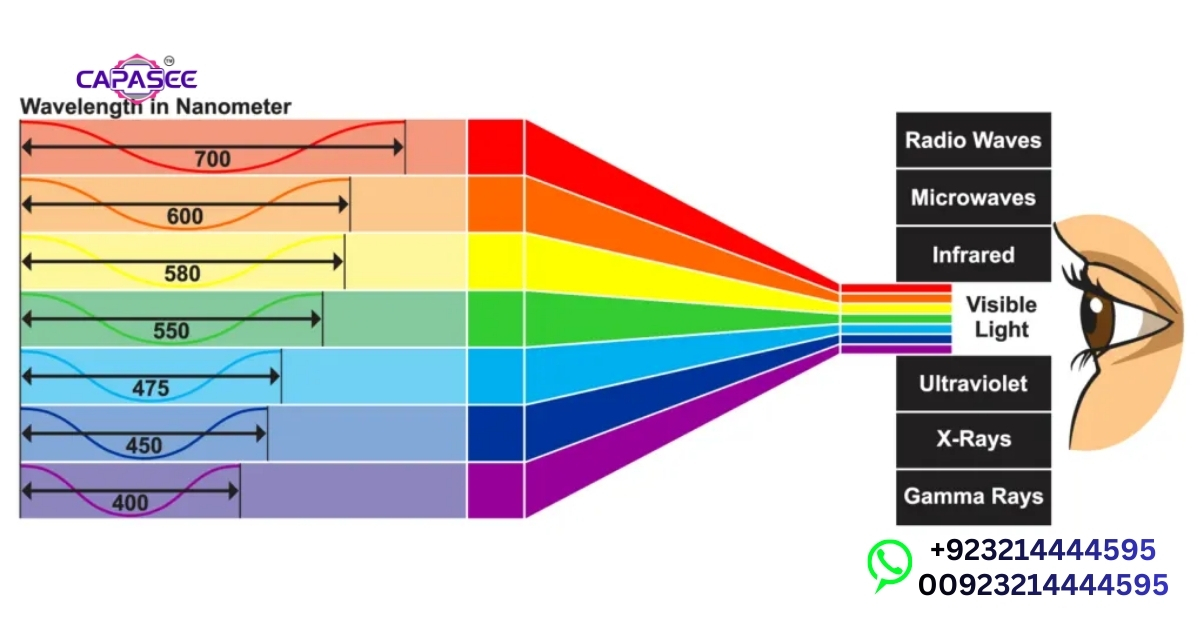
The choice of phototherapy light wavelength is better at enhancing safety and recovery speed. Physicians make comparisons of some ranges, like 450 nm to 470 nm and 470 nm to 490 nm, to correspond to the best phototherapy range. Light blue waves contain high bilirubin absorption and enhance photoisomerization efficiency. The systems adjusted close to 460 nm or 478 nm enhance quantum yield, and assist in converting unconjugated bilirubin to safe forms. The proper control of light irradiance eliminates overheating and provides constant care with accurate wavelength of phototherapy light monitoring.
Pakistan hospitals examine device charts during a purchase. They ensure the phototherapy peak wavelength of phototherapy light, LED light emission and stability of outputs in 390 nm to 470 nm bands. The presence of powerful blue green light in a narrow bandwidth light design minimizes the scattering of light. Effective treatment of neonatal jaundice with the fast formation of bilirubin is encouraged by reliable systems. The wavelength of phototherapy light choice provides a sense of long term clinical outcomes.
Phototherapy Light Wavelength Range Comparison
Safe and effective phototherapy of newborns is dependent on the wavelength of phototherapy light. In Pakistan, hospitals are considering the best phototherapy spectrum of 450 nm to 470 nm and 470 nm to 490 nm to increase bilirubin absorption. High emission of light in this blue spectrum of light enhances photoisomerization. Adequate light irradiance and a small bandwidth light assist in the development of lumirubin formation out of unconjugated bilirubin, minimize the scattering of light, and prompt, safe treatment of neonatal jaundice.
When comparing such ranges as 460 nm, 478 nm, and 390 nm to 470 nm, clinics can select the most appropriate devices. The maximum wavelength of phototherapy light influences quantum yield and is on a par with the bilirubin action spectrum. The blue green light band is the most stable and least risky treatment. Pakistan hospitals select equipment based on the choice to ensure safe light irradiation, accurate light emission in LED, and high treatment efficiency in the entire best phototherapy spectrum.
The following table depicts the popular wavelength ranges in hospitals and their clinical focus.
| Wavelength Range | Clinical Focus | Key Benefit |
| 450-470 nm | High bilirubin absorption | Strong photoisomerization efficiency |
| 460 nm | Matches the bilirubin action spectrum | Improved quantum yield |
| 470-490 nm | Extended blue green light band | Balanced light irradiance control |
| 390-470 nm | Broad coverage range | Reduced light scattering |
This comparison can be used to help medical teams in Pakistan select the right system to provide safe and effective care to the newborn.
Frequently Asked Questions(FAQ’s)
What is the best wavelength for phototherapy?
The most suitable wavelength in phototherapy is 450 nm to 470 nm, which is effective in breaking down bilirubin, probably and safely.
What is the wavelength of UV in phototherapy?
The phototherapy UV light is typically between 280 nm and 400 nm, though the blue photon is more typical of jaundice.
What is the wavelength of blue light for jaundice?
Jaundice blue light is most effective at 460 nm, which is the action spectrum of bilirubin.
What type of UV light is used in phototherapy?
Phototherapy is primarily conducted with narrow band UV or blue light and is targeted at the safe treatment of bilirubin in newborns.
What is the best light for phototherapy?
The most effective light is LED blue light in 450 nm to 470 nm, which provides high photoisomerization and low heat risk.
Final Thoughts
The wavelength of phototherapy light is important to understand to use in the safe and effective treatment of the neonate. To select the correct range of light, 450 nm to 470 nm is the most appropriate range to choose so as to maximize bilirubin uptake and quicker lumirubin generation. Light emission in LEDs and light irradiance control minimise light scattering and protect the skin of the newborn. In Pakistan, hospitals depend on the narrow bandwidth light and accurate phototherapy peak wavelength. Caregivers can enhance the treatment outcome of neonatal jaundice by ensuring that treatment is done at the right wavelength of phototherapy light; this makes therapies safer, quicker and more predictable for all newborns.