Blog
Phototherapy Light Wavelength


Have you ever asked yourself how light makes you feel? You may have heard about phototherapy if you have been looking for ways to enhance your skin, mood, or even sleep. It does not need to be applied only to people with skin conditions; phototherapy light wavelength is being used for a wide range of advantages. However, like most individuals, you are likely to say, How does this work and Is it as good as the hype?
We are going to explore in this blog what the light wavelength is in phototherapy and how phototherapy light wavelength can be the game changer in your health and well being. We will tell you how a specific wavelength can really make a difference, whether it is to make your skin brighter or to cheer you up. Be with us, and you will find out the answers you need to know whether phototherapy is the answer you are seeking.
Ideal Phototherapy Light Wavelength
In regard to phototherapy light wavelength, one has to know the impact of various wavelengths on the treatment. The correct wavelength is expected to greatly enhance the effectiveness of the treatment, particularly in such a disorder as neonatal jaundice. To ensure that bilirubin absorption occurs effectively, the light wavelengths have to penetrate the skin to dissolve excess bilirubin in the body.
The optimal light wavelength for phototherapy is between 450 nm to 490 nm. These wavelengths contain light energy, which aids in the decomposition of bilirubin into less destructive materials. This focused therapy plays a vital role in the treatment of such diseases as hyperbilirubinemia in newborns using the appropriate phototherapy light wavelength.
Best Wavelength for Bilirubin Phototherapy
The optimal wavelengths of bilirubin absorption are 450-470 nm, which define the effective phototherapy light wavelength range. Research indicates that blue LED light, having a peak wavelength of 475 nm, is very useful in the treatment of neonatal jaundice. The range of wavelengths penetrates the skin effectively and thus is the best when treating neonatal jaundice.
Phototherapy in the narrow spectrum blue light, 450 nm to 470 nm, would be optimal in lowering bilirubin concentration when the correct phototherapy light wavelength is applied. Doctors should make the right decisions about the wavelength that produces the best treatment results.
You May Also Read This Blog: Phototherapy UVB Light
Neonatal Phototherapy Light 460-490 nm
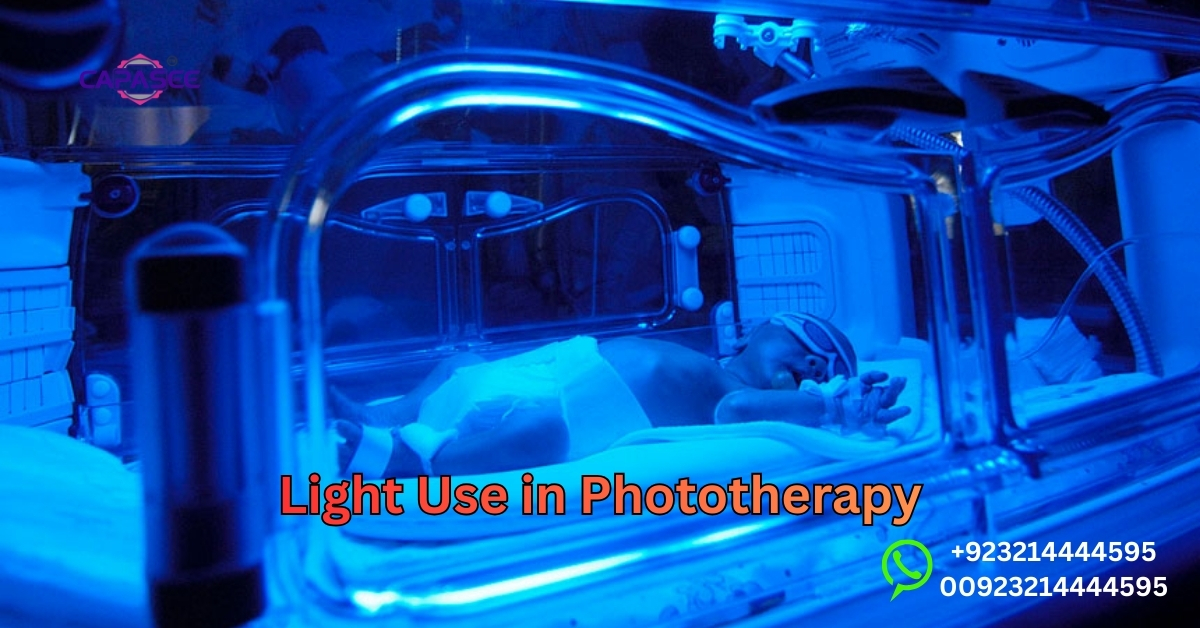
Light between 460-490 nm is very effective in the treatment of neonatal jaundice and represents a clinically proven phototherapy light wavelength range. The range of wavelengths most commonly applied in LED phototherapy is used to treat jaundice in newborns. The spectral irradiance produced in this spectrum is perfect for decomposing the bilirubin in the system of a baby.
Physicians usually use this phototherapy light wavelength for hyperbilirubinemia efficacy. Through specialized treatment using blue light, medical workers can ensure that babies overcome jaundice fast and prevent complications.
Blue Light Phototherapy Wavelength
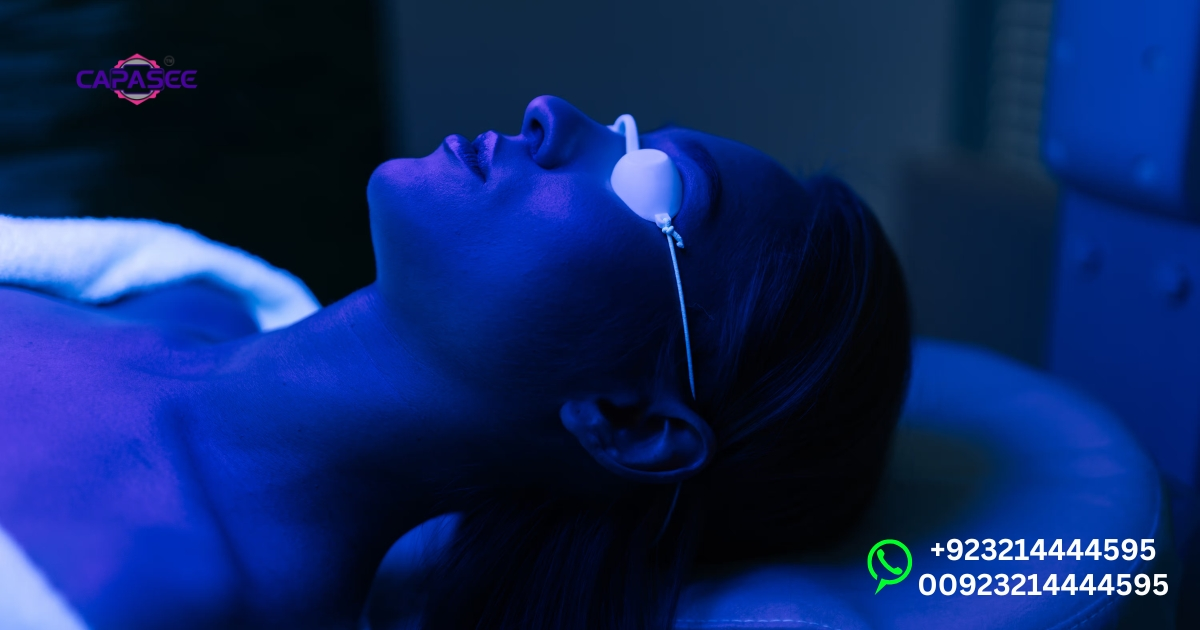
Jaundice is a condition that is treated using blue light phototherapy because it is effective at a specific phototherapy light wavelength. The wavelength of phototherapy blue light usually ranges between 450-470 nm, with a peak wavelength being 475 nm, giving the highest result. This frequency is optimal when absorbing bilirubin in the skin is required.
Narrow spectrum blue light used by physicians assists in concentrating energy on the decrease of bilirubin levels in the body through a targeted phototherapy light wavelength. The specific intensity level and wavelength used make the phototherapy safe and effective.
Blue Light Phototherapy Wavelength Breakdown
Blue light phototherapy wavelength has been known to be efficacious in treating jaundice in newborns, particularly when the phototherapy light wavelength is precisely controlled. This light goes through the skin to break bilirubin into water soluble isomers, which are removed by urine. The best range of wavelengths is 458 nm to 475 nm.
Combined with blue green light 478 nm, the treatment is even more powerful, which guarantees a quick absorption of bilirubin at the optimal phototherapy light wavelength. The spectral irradiance is an important factor in determining the success of such treatment.
Phototherapy Wavelength for Jaundice Explained
The wavelength of phototherapy used to treat jaundice is dependent on the correct phototherapy light wavelength to fix bilirubin. The blue LED light with the highest peak of about 475 nm is used to enhance the best results with neonatal jaundice. These wavelengths are selected particularly due to their clarity in disintegrating the molecules of bilirubin.
The process of treatment is aimed at the provision of the appropriate phototherapy light wavelength in order to safely and effectively decrease hyperbilirubinemia in newborns. This is a specific treatment that allows babies to get well fast so that they will not experience any additional complications, such as UVB 308 nm.
Table: Phototherapy Wavelength Comparison for Jaundice Treatment
| Wavelength Range | Effectiveness for Jaundice Treatment | Example Light Source |
| 450-470 nm | High efficacy in bilirubin absorption | Blue LED light |
| 460-490 nm | Effective for neonatal jaundice | Blue light therapy |
| 475 nm | Peak wavelength for bilirubin breakdown | LED phototherapy |
The guide is a summary of the application of the phototherapy light wavelength to treat such conditions as jaundice. Phototherapy with the appropriate wavelength will be an effective means of enhancing the health of infants.
Optimal Wavelengths for Newborns
The phototherapy light wavelength is important in the treatment of newborns with jaundice. The wavelength of 460 nm to 490 nm is specifically useful in the dissolution of bilirubin and has been widely applied in the treatment of neonatal jaundice. This wavelength is enough to absorb bilirubin and avoid complications in the infants.
Through the selection of the best wavelength spectrum of 460 nm to 490 nm as the preferred phototherapy light wavelength, the medical practitioners can effectively cure neonatal jaundice. The spectral irradiance that is emitted in the range assists in breaking down bilirubin and is thus safer and more efficient in the treatment of newborns.
Why 460-490 nm Excels in Neonatal Care
The wavelength of 460 nm to 490 nm is very active in treating neonatal jaundice and is considered the ideal phototherapy light wavelength. It assists in aiming bilirubin levels of newborns and guaranteeing bilirubin uptake. This wavelength infiltrates the skin at the most optimal depth to reduce bilirubin as fast as it is a risk without causing complications.
The range of wavelength is also highly efficacious in terms of hyperbilirubinemia when using the correct phototherapy light wavelength, which guarantees a quick recovery. This range of light therapy is very beneficial to newborns because it lowers the bilirubin levels, but it does not cause harm to them.
Bilirubin Breakdown: Peak Efficiency Range
The maximum wavelength of 475 nm is the best wavelength of bilirubin breakage in babies and represents the most effective phototherapy light wavelength. This wavelength is effective in bilirubin absorption, particularly in the 460 nm to 490 nm range. It is meant to make sure that the therapy is effective in reducing bilirubin within a small period of time, and the newborns will recover quickly.
The best results are obtained using a narrow spectrum blue light at 475 nm, which defines the peak phototherapy light wavelength. Such wavelength disaggregates bilirubin more effectively, making sure that hyperbilirubinemia is effectively treated in the treatment of neonatal jaundice.
Check More & Purchase: Our Products
LED Phototherapy Blue Light Pakistan

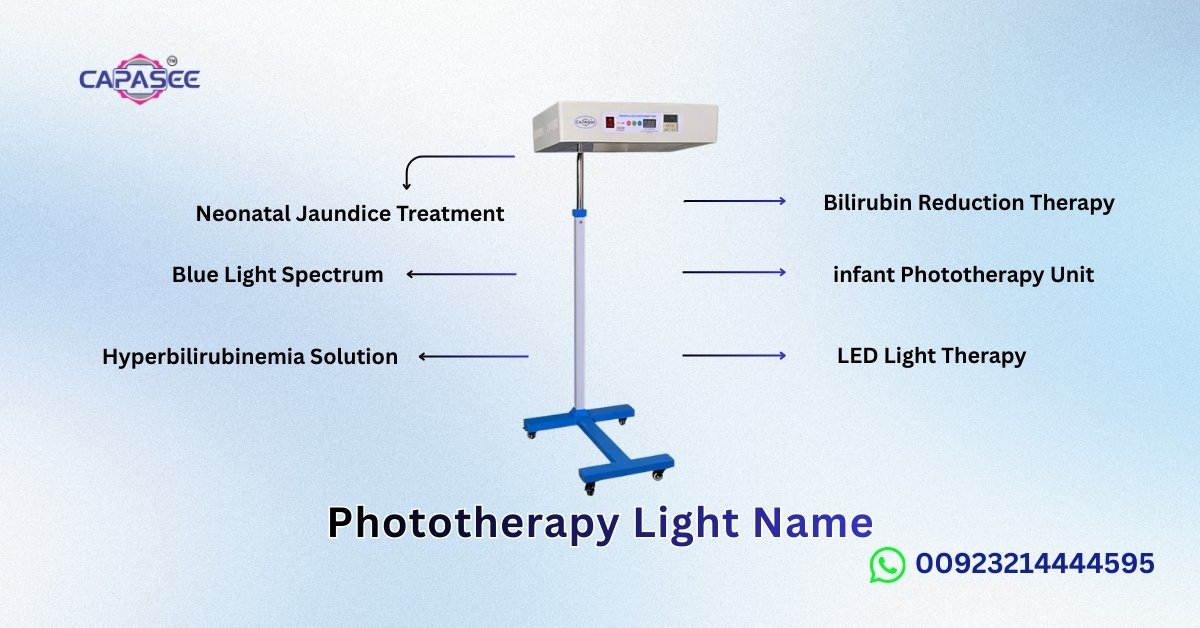
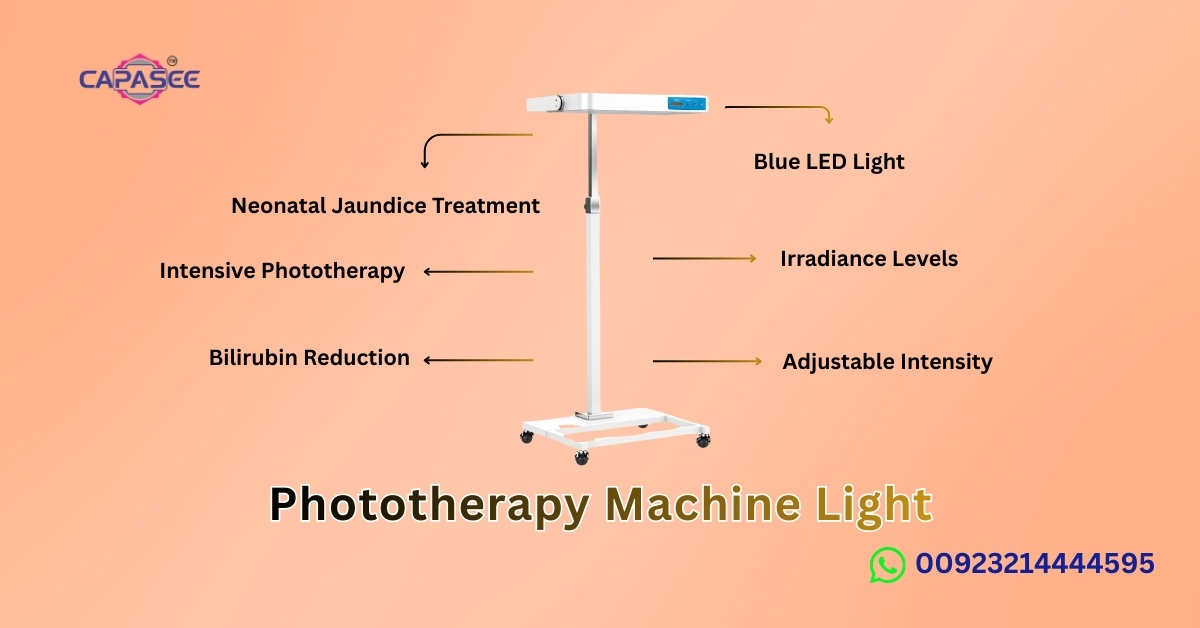
LED phototherapy blue ray is widely applied in the treatment of neonatal jaundice in Pakistan, where the phototherapy light wavelength plays a critical role. The bilirubin may be absorbed efficiently by devices that produce 450 nm to 470 nm wavelengths. This light has been a favorite choice in the treatment of hyperbilirubinemia in local clinics and hospitals.
The technology of blue LED light is becoming popular as it is safe and it is effective in decreasing the bilirubin levels, especially when the phototherapy light wavelength is precisely controlled. It can be particularly effective when applied in the 450 nm to 470 nm range, offering a sure and efficient treatment of neonatal jaundice in Pakistan.
Top LED Options in Pakistan
Some of the best LED phototherapy equipment in Pakistan comes with the light wavelengths of 450 nm to 470nm, which is considered the ideal phototherapy light wavelength for newborn care. The equipment provides an effective and noninvasive means of the treatment of neonatal jaundice. The technology assists in the assurance of the optimal absorption of bilirubin, as well as in the minimization of the factor of high levels of bilirubin in newborns.
The light systems of blue LED that are available in Pakistan are working at the wavelength of 460-490 nm, and thus they are effective in hyperbilirubinemia efficacy due to the optimized phototherapy light wavelength. The healthcare providers can provide efficient treatments to the infants and have reduced recovery periods with the help of these devices.
Wavelength Guide for Local Jaundice Devices
The wavelength guide is an important factor when choosing a phototherapy device to use in the treatment of neonatal jaundice in Pakistan, as the correct phototherapy light wavelength ensures safety and effectiveness. Lights emitting light at 450 nm to 470 nm are optimal in the degradation of bilirubin. The devices provide optimum care to the infants and reduce exposure to harmful radiations such as UVB 308 nm.
When selecting devices, it is important to choose those that have the optimal photoisomer wavelength so as to maximize the bilirubin absorption to allow the recovery to be faster, emphasizing the importance of the correct phototherapy light wavelength. In Pakistan, local healthcare providers use these blue LED light devices as an effective and safe treatment for neonatal jaundice.
Table: LED Phototherapy Device Comparison for Jaundice Treatment in Pakistan
| Wavelength Range | Effectiveness for Jaundice Treatment | Example Light Source |
| 450-470 nm | Best for bilirubin absorption | Blue LED light |
| 460-490 nm | Ideal for neonatal jaundice treatment | LED phototherapy |
| 475 nm | Peak efficiency for bilirubin breakdown | Blue LED light |
This guide shows the importance of phototherapy light wavelength in treating jaundice in newborns, particularly in Pakistan. Knowing the optimal wavelengths, healthcare providers will be able to select the optimal LED phototherapy devices that will guarantee successful treatment based on the correct phototherapy light wavelength.
Frequently Asked Questions
What is the best wavelength for phototherapy?
Phototherapy is most effective at 460 nm to 490 nm, which is the best range of wavelength that dissolves bilirubin in the treatment of neonatal jaundice.
What is the wavelength of UV phototherapy?
Phototherapy in the UV band, in the range of 308 nm, which is UVB, is normally used to cure skin diseases such as psoriasis.
What is the UV range for phototherapy?
The UV phototherapy range is usually 200 nm to 400 nm, with UVB (approximately 308 nm) being the most used in the treatment of skin disorders.
What type of light does phototherapy use?
Phototherapy involves blue light or narrow spectrum light, which is used in the breakdown of bilirubin in the treatment of jaundice.
Can LED light be used for phototherapy?
Yes, LED is commonly applied to phototherapy, particularly in jaundice management in the neonatal ward, and its application is effective and safe.
Final Thoughts
It is important to know the phototherapy light wavelength in order to achieve effective treatment, particularly in conditions such as neonatal jaundice, as the phototherapy light wavelength directly impacts outcomes. The correct wavelengths are used, that is, the best wavelengths of bilirubin of 460 nm to 490 nm, to enable the babies to heal easily and safely. Healthcare providers are able to provide specific and effective care with the development of LED phototherapy and the utilization of blue light. Patients have acquired quicker results by selecting the right phototherapy light wavelength, and this is a major determinant of the success or effectiveness of the phototherapy treatments.