Blog
Phototherapy Light Intensity

Have you ever wondered why your phototherapy sessions are not producing the desired results as you thought they would? One can find it frustrating to be working hard and yet not see the results that one wishes. You could even begin to wonder whether you are applying the appropriate equipment or settings. The phototherapy light intensity you are using may be one of the major considerations you are missing.
Here, we will deconstruct the intensity of phototherapy light and its possible effect on your outcomes in this blog post, particularly focusing on phototherapy light intensity. We shall tell you what it is, why it is important, and how to select the right level of intensity that fits your requirements. It is easy to get yourself better prepared to take the best out of phototherapy, whether you are new to the therapy or you just want to optimize your sessions. Let’s dive in.
Ideal Phototherapy Light Intensity
Light intensity is an important factor that determines the effectiveness of treatments when phototherapy is used, as proper phototherapy light intensity directly influences outcomes. The adequate phototherapy irradiance assists in the realization of superior results in a shorter amount of time, which is vital to reducing bilirubin. The patient can be treated more effectively and achieve better results by regulating the intensity of light according to the needs of the patient.
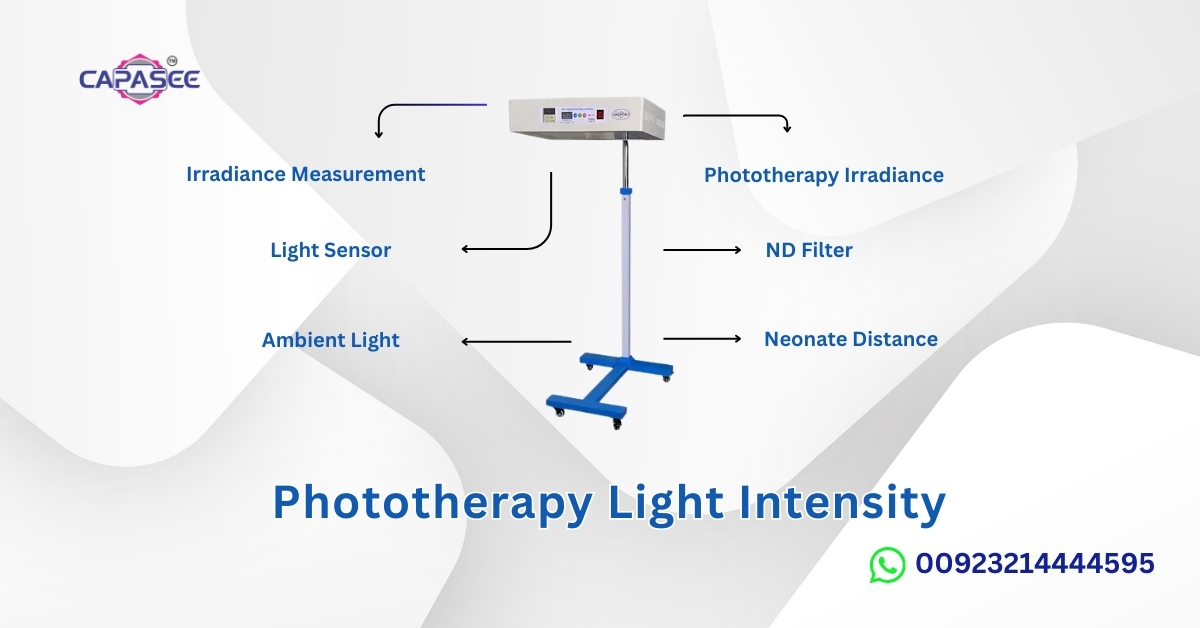
In order to make the perfect phototherapy light intensity, some factors such as ambient lighting, distance of the patient to the source of light, and the wavelength range of the light are crucial. A light intensity sensor or other instruments used to measure the irradiance could be used to determine whether the light levels are adequate. Bilirubin levels should also be checked regularly to make sure that the severity is within treatment expectations.
Phototherapy Irradiance Level Essentials
Precise tools such as an intensity meter and a light sensor are needed in order to measure phototherapy irradiance and maintain the correct phototherapy light intensity. The level of intensity should be maintained and set to achieve the bilirubin reduction rate. The effect of oxidative stress on the neonates may be harmful; therefore, regular monitoring is a way of avoiding such stress when it is too intense or too weak.
The irradiance reading normally comes in μW/cm²/nm, which makes sure that there is no excessive exposure to direct light at improper phototherapy light intensity levels. An appropriate ND filter will be able to ensure a type of consistency of the light and avoid any unwanted external light interference. These instruments lead you to the appropriate level of successful treatment.
You May Also Read This Blog: Phototherapy Light Range
Bilirubin Phototherapy Intensity Targets
The appropriate level of bilirubin phototherapy may be used to hasten the destruction of excess bilirubin in neonates with jaundice, provided the phototherapy light intensity is correctly maintained. The appropriate light emission and wavelength in treating result in reducing the bilirubin levels effectively, preventing the occurrence of health complications in the long term.
Intensive phototherapy can include the use of high intensity light therapy, as this may be required in the case of severe cases where higher phototherapy light intensity is necessary. Such a technique as blue light phototherapy and the distance between the light source and the neonate should be adjusted to provide the best outcomes, which will result in a faster recovery of the baby.
Boost Neonatal Phototherapy Light Efficiency

The light efficiency of neonatal phototherapy can be used to make a notable change in the success of the treatment when optimal phototherapy light intensity is applied. The phototherapy device is to be used in a balanced manner, with the light of the surroundings and the light of the apparatus. The appropriate intensity of light can be used to enhance the bilirubin reduction rate to accelerate the healing of jaundiced neonates.
It is also important to consider room ambient intensity, as it can interfere with phototherapy light intensity. In case of high light or uneven light in the surroundings, it may affect the success of phototherapy. Maintaining the light intensity of the right wavelength aids in decreasing the bilirubin levels in a shorter period of time and keeps the baby out of undue stress.
Neonatal Phototherapy Light Standards
Neonatal phototherapy light intensity has certain standards, defining safe and effective phototherapy light intensity ranges. These guidelines make the treatment effective and safe for the neonates. With such criteria, the caregivers will be able to keep track of the bilirubin levels and the phototherapy intervention within the most appropriate range to have the baby recover.
The standards assist in sustaining the levels of oxidative stress to a minimum so that the baby will gain the maximum benefits of the blue light phototherapy without any adverse effects related to incorrect phototherapy light intensity. Neonatal jaundice can be treated much more efficiently with the adequate neonatal jaundice control, and the chances of any complications are reduced.
Blue Light Phototherapy Pakistan Tips
Blue Light Phototherapy treatment has emerged as a popular option in the treatment of neonatal jaundice in Pakistan, with careful attention to phototherapy light intensity. In this approach, the distance between the neonate and the source of light should be kept to a minimum. This is to make sure that the rate of bilirubin minimization is optimal and there is no danger of overexposure to light.
Pakistan is currently experiencing a high level of phototherapy machines fitted with light intensity sensors so as to make them easier to adjust the phototherapy light intensity. Improved treatment process could be achieved through the proper light emission and monitoring of the light conditions of the ambient state, which enables the neonates to recover safely and in a short period.
Table: Common Phototherapy Intensity Measurements
| Device | Measurement | Typical Range | Effectiveness |
| Phototherapy device | μW/cm²/nm | 5–15 μW/cm²/nm | Suitable for mild jaundice |
| Intensive phototherapy | μW/cm²/nm | 20–40 μW/cm²/nm | Suitable for severe jaundice |
| Blue light phototherapy | μW/cm²/nm | 8–15 μW/cm²/nm | Effective in reducing bilirubin levels |
Top LED Phototherapy Unit Pakistan Picks
LED units are the best phototherapy equipment to be selected in Pakistan because of their efficiency and cost effectiveness while maintaining optimal phototherapy light intensity. These machines are used in controlling the amount of bilirubin in babies affected by jaundice. The correct light emission can lower the bilirubin rates more safely and quickly.
The phototherapy units that use LED have inbuilt light sensors and therefore the light irradiance of phototherapy and phototherapy light intensity will be precise. Such units are particularly applicable in clinics where the light in the atmosphere might be a problem. They have adjustable intensity that makes them useful in the treatment of jaundice.
LED Phototherapy Unit Pakistan Features
In Pakistan, LED phototherapy units are developed with high tech features such as light intensity sensors to monitor phototherapy light intensity in order to assure the correct measure of irradiance. They have the capability of measuring μW/cm²/nm, that allow clinicians to adjust the phototherapy light intensity according to the needs of the patients. The ND filter technology is useful in removing the unwanted light and keeping the required phototherapy light intensity to achieve the best results.
These units also pay attention to the distance to neonates to provide effective and safe direct exposure to light with optimal phototherapy light intensity. The rate of bilirubin reduction can be regulated by changing the distance between the light and the baby (in the presence of the caregivers). This plays a critical role in offering effective intensive phototherapy of neonates with jaundice by controlling phototherapy light intensity.
Check More & Purchase: Our Products
Phototherapy Light Unit Price Pakistan 2026
The prices of a phototherapy device to treat neonatal jaundice are dependent on the model and quality in Pakistan, including the accuracy of phototherapy light intensity output. Simplest units of LED begin at PKR 65,000 to PKR 95,000, and more sophisticated units with superior light output, stable phototherapy light intensity, and timers may cost more than PKR 165,000. These are prices that are indicative of the necessity of sound irradiance measurement and direct light exposure safety of babies in hospitals through controlled phototherapy light intensity.
To solve the problem associated with misplaced light sensors and the use of ineffective blue lights, which lower the rate of bilirubin reduction due to poor phototherapy light intensity, hospitals tend to purchase high quality units that have the correct light sensors and effective blue lights. In Pakistan, some premium units are sold online at a price of up to PKR 250,000, which have high phototherapy irradiance and stable phototherapy light intensity and can treat jaundice effectively. It is also necessary to pay attention to the conditions of ambient light and the adequate distance of the neonate in clinics to obtain the full benefit of therapy with proper phototherapy light intensity.
Maximize Results with Phototherapy Light Intensity
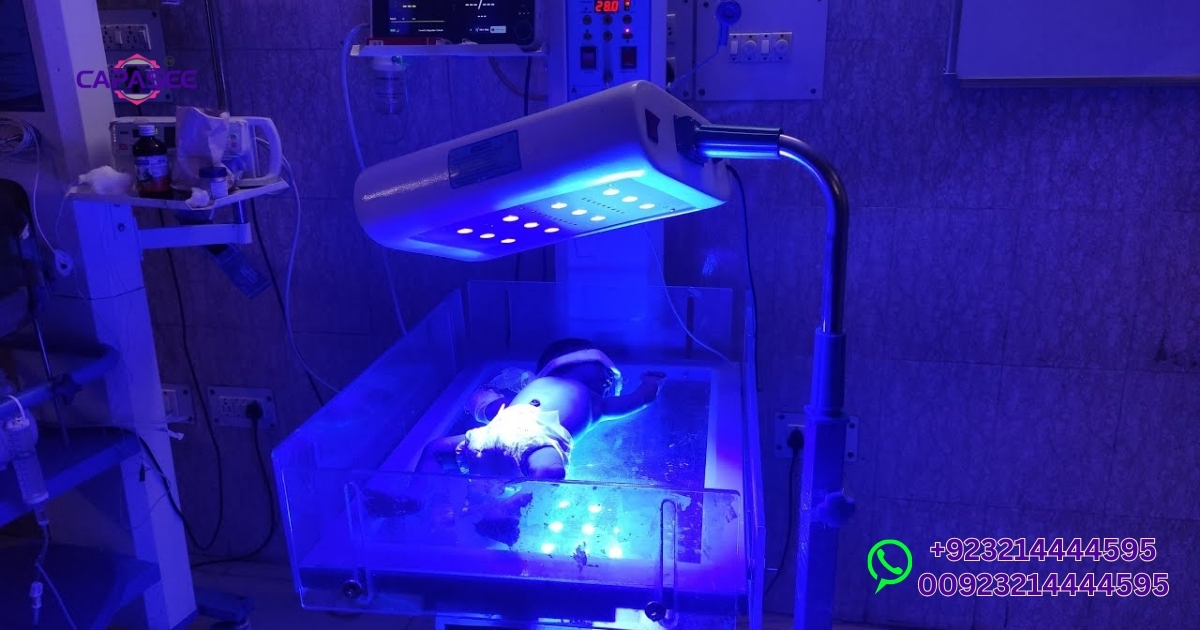
The phototherapy light intensity should be adjusted correctly to maximize the outcomes of phototherapy. The proper measurement of irradiance is a way of ensuring that the bilirubin reduction rate is optimal through controlled phototherapy light intensity. Intensity meters can be used to make these adjustments and monitor progress by the clinics in Pakistan when managing phototherapy light intensity.
This can be done by increasing the level of light in the right way to minimize the effects of oxidative stress on the neonates while maintaining safe phototherapy light intensity. It is important to be aware of the ambient intensity of the room because it may influence the effectiveness of the given treatment and the actual phototherapy light intensity received. Optical radiation of the correct phototherapy light intensity can be utilized in phototherapy to ensure a quicker healing process.
Safe Intensity Levels for Jaundice
In the treatment of jaundice, the phototherapy light intensity must be safe. High phototherapy light intensity may result in side effects such as oxidative stress, whereas low phototherapy light intensity may slow down treatment. The phototherapy irradiance and phototherapy light intensity must also lie within a given range of μW/cm²/nm to be safe and effective.
To measure this in Pakistan with the aid of a right light intensity sensor, accurate control of phototherapy light intensity helps prevent complications. Proper phototherapy light intensity also facilitates a decrease in the bilirubin level, will decrease successfully achieved without causing any harm to the newborn. Periodic measurements by use of an intensity meter ensure that the phototherapy light intensity level is ideal to treat.
Measuring & Adjusting in Pakistan Clinics
The control and calculation of the phototherapy light intensity are crucial in the treatment of jaundice in newborns in Pakistani hospitals. With the help of such tools as a light intensity sensor, it is possible to control the correct measurement of irradiance and phototherapy light intensity. This is also influenced by how the neonate is adjusted in relation to the source of light, affecting phototherapy light intensity.
The ambient light in the treatment room should also be taken into consideration at the clinics because it may alter effective phototherapy light intensity. Excessive lighting may affect the performance of intensive phototherapy. An accurate sensor that is properly calibrated to a phototherapy device can be used to maximize the rate of reduction of bilirubin and make the treatment safe by maintaining proper phototherapy light intensity.
Table: Ideal Phototherapy Light Intensity Ranges
| Phototherapy Device | Intensity (μW/cm²/nm) | Recommended Use | Key Features |
| Basic LED Unit | 5–10 μW/cm²/nm | Mild Jaundice Treatment | Cost effective, Adjustable intensity |
| Advanced LED Unit | 15–20 μW/cm²/nm | Severe Jaundice Treatment | Includes light intensity sensors, ND filter |
| Intensive Phototherapy | 25–40 μW/cm²/nm | Critical Jaundice Cases | High irradiance measurement, intensity meter |
FAQ’s
What is the intensity of phototherapy?
The strength of the phototherapy is the strength of the light being used during the treatment, which is normally measured in irradiance levels such as μW/cm²/nm to effectively treat the jaundice.
What is the light level for phototherapy?
In the case of phototherapy, the level of light is usually adjusted to 10-30 μW/cm²/nm, which is the best level to break down bilirubin in newborns.
What is the most effective light for phototherapy?
Phototherapy is most effectively done using blue light, particularly around the 460-490 nm wavelength, as this is the wavelength that breaks bilirubin down best.
What is the UV range for phototherapy?
Phototherapy is done using the visible blue light and not the UV light because the UV light can cause harm to the infants.
Why is blue light used in phototherapy?
The reason it has to be blue is that the yellow color is not effective in the breakdown of bilirubin, and therefore, the baby’s body finds it easier to rid itself of bilirubin.
Conclusion
Phototherapy light intensity is very important in the effective management of neonatal jaundice. The correct intensity, which is sensibly determined with light intensity sensors, can make a major contribution to decreasing bilirubin and mitigating the possibility of complications. Caregivers can achieve maximum treatment results by regulating the measurement of irradiance and taking into account such aspects as ambient light and the distance of the neonate. Regardless of the blue light or other devices, it is important to know and check the intensity of phototherapy light so as to offer the safest and most effective treatment of newborns with jaundice.