Blog
Phototherapy Chart

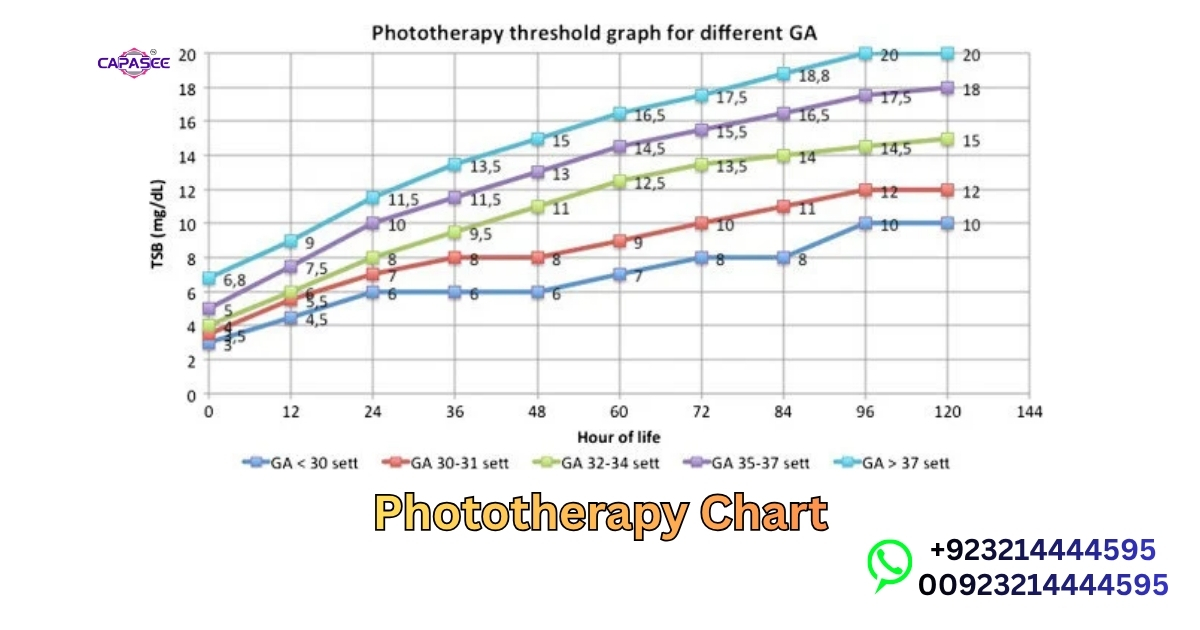
The initial look at a phototherapy chart may be confusing. You may be asking yourself whether you are getting it in proper order or if you are missing out on something vital. A lot of parents and even new healthcare workers are somewhat lost at this. Lines and numbers are not always sensible, so it is easy to become stressed when a baby’s health is at stake.
This blog will present the phototherapy chart in a clear, simplified manner. You will know how to read it, the meaning of the numbers, and when to take action. To give you an idea, we shall go through real scenarios to know it step by step. At the end, you will be more relaxed and prepared to apply the phototherapy chart without doubting yourself.
Phototherapy Chart Basics
The phototherapy chart assists doctors and nurses in monitoring newborn jaundice in an organized manner. It indicates safe levels with the Neonatal jaundice chart and the Bilirubin levels graph in an attempt to provide improved care. This chart justifies the Phototherapy treatment protocol and provides adequate Serum bilirubin monitoring at the initial stages of treatment.
Doctors rely on the phototherapy chart to make decisions on the safety levels of treatments to be given to babies. It incorporates the dosage of Light therapy, the risk areas of Jaundice, and Phototherapy protocols to achieve improved outcomes. The method is based on the Jaundice management chart and the enhancement of the Phototherapy effectiveness curve with proper monitoring of the Bilirubin threshold levels.
What is a phototherapy chart?
A phototherapy chart is a visual type of guide that helps to control bilirubin. It contains the Newborn bilirubin nomogram and Risk assessment nomogram to ensure safe care. Indirect hyperbilirubinemia guide is observed and used to lower the bilirubin levels using Neonatal light exposure by the doctors.
Intensity measurement scale and Wavelength exposure plan are also evident in this chart about the treatment accuracy. Health care workers adhere to Dosage adjustment factors and preclude such risks as Hypocalcemia in treatment. The constant Hypobilirubinemia control guarantees the safe recovery and stable state of the newborn.
You May Also Read This Blog: Phototherapy for Jaundice at Home
Neonatal jaundice phototherapy chart explained
A phototherapy chart is used to describe the variation in the jaundice levels in newborn babies over time. It relies on the Treatment duration table and the Bilirubin levels graph to help in care guidance. Phototherapy treatment protocol is observed by doctors in order to control the safe level of the Bilirubin threshold.
The chart can also be used to monitor the progress with the help of Serum bilirubin tracking and Phototherapy effectiveness curve. It helps to make better decisions by using some supports like the Jaundice management chart, and also maintain safe treatment with the help of the Risk assessment nomogram and Neonatal light exposure planning.
Phototherapy Chart for Newborns Pakistan
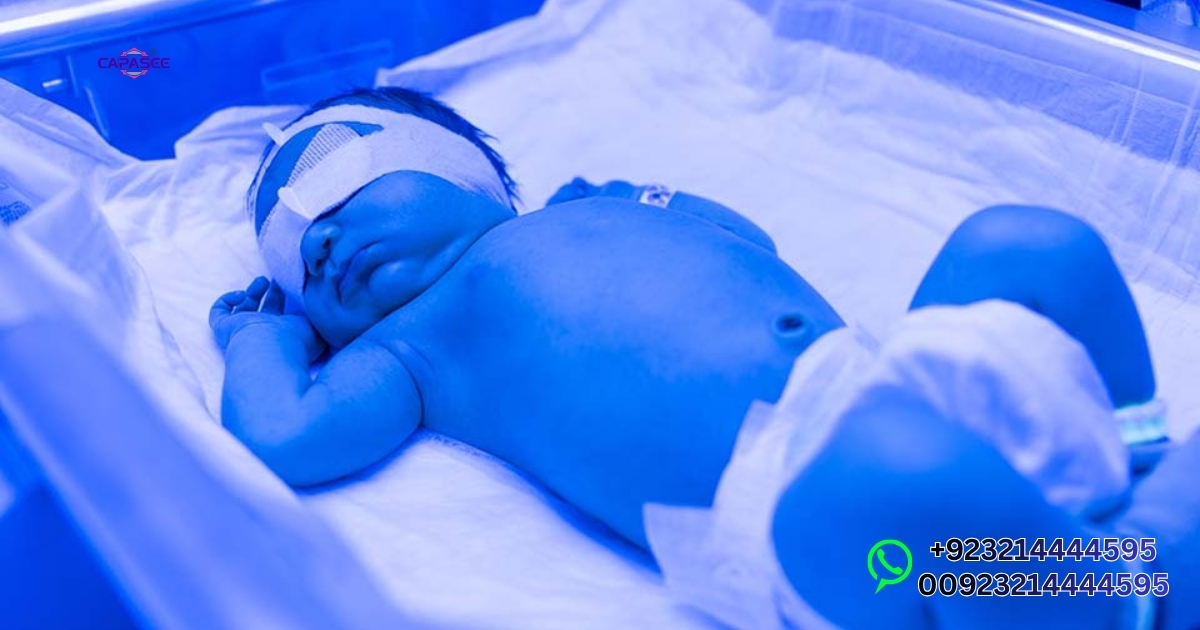
A phototherapy chart assists hospitals in Pakistan in handling newborn jaundice. The neonatal jaundice chart is a tool used by doctors to treat patients using Jaundice risk zones. This is in favor of the Indirect hyperbilirubinemia guide and proper Phototherapy treatment protocol in local healthcare setups.
Light therapy dosage is a safe measure of Phototherapy in hospitals. Other features that are supported by the phototherapy chart include tracking of Serum bilirubin and enhancement of the outcomes through the phototherapy effectiveness curve and Dosage adjustment factors on newborn safety.
Phototherapy chart for newborns Pakistan essentials
Pakistan has a phototherapy chart that contains the essential data regarding safe newborn care. It plans the treatment by using the Newborn bilirubin nomogram and the Treatment duration table. The Jaundice management chart is adhered to, and Bilirubin threshold levels are monitored by doctors.
The following is a basic table that is applicable in hospitals:
| Age (Hours) | Bilirubin Level | Action |
| 24 | 10 mg/dL | Start phototherapy |
| 48 | 12 mg/dL | Continue treatment |
| 72 | 15 mg/dL | Intensive care |
This table is justified by the Risk assessment nomogram, and it is also necessary to have correct Hypobilirubinemia monitoring and safe exposure to Neonatal light.
Bilirubin phototherapy nomogram Pakistan guide
In Pakistan, a phototherapy chart has a nomogram that is used to implement treatment procedures. It consists of a Bilirubin levels chart and an Intensity measurement scale, as long as it is accurate. The Phototherapy treatment protocol is adhered to by doctors, and the care is altered by modifying Dosage adjustment factors.
Wavelength exposure plan and Wavelength bilirubin tracking are also used in this guide. It minimizes risks such as Hypocalcemia in treatment and enhances the results via the phototherapy effectiveness curve and the indirect hyperbilirubinemia guide to safe newborn recovery.
Bhutani Phototherapy Chart Guidelines
The Bhutani phototherapy chart can be used to monitor jaundice safely in newborns. It monitors the tracking of Serum bilirubin through the Neonatal jaundice chart, Bilirubin levels chart, and Newborn bilirubin nomogram. The chart advocates a Phototherapy treatment plan, safe lighting exposure of the Neonates in hospitals in Pakistan.
The Bhutani phototherapy chart is used by doctors to access Phototherapy instructions and the jaundice management chart. They review the Bilirubin threshold, Intensity measure scale, and Treatment duration table to change the Light therapy dosage. Care in proper Hypobilirubinemia monitoring is to guarantee the safety of newborns.
Bhutani phototherapy chart guidelines overview
The Bhutani phototherapy chart gives the babies the Jaundice risk zones clearly. It follows the Indirect hyperbilirubinemia guide and relies on the Phototherapy effectiveness curve to guide treatment choices. This assists the doctors in avoiding complications, such as hypocalcemia, when doing the therapy.
Wavelength exposure plan and Dosage adjustment factors have also been included in the chart to streamline treatment. Adherence to this chart facilitates the safe recuperation and regular observation of the Serum bilirubin tracking, along with the provision of the Risk assessment nomogram of each newborn.
How to use Bhutani phototherapy chart safely
The Bhutani phototherapy chart begins by reading the bilirubin level of the baby. The treatment duration table, Neonatal light exposure, and Phototherapy guidelines are the guidelines used by the doctors to initiate therapy safely. Factors of dosage adjustment inform the change in case of an increase in bilirubin.
Hypobilirubinemia monitoring and observance of the Phototherapy effectiveness curve are also the conditions of safe use. The staff in the medical sector adheres to the Indirect hyperbilirubinemia guide and calibrates the Intensity measurement scale to provide safe and effective care to the newborns.
Check More & Purchase: Our Products
Capasee Phototherapy Threshold Chart Baby
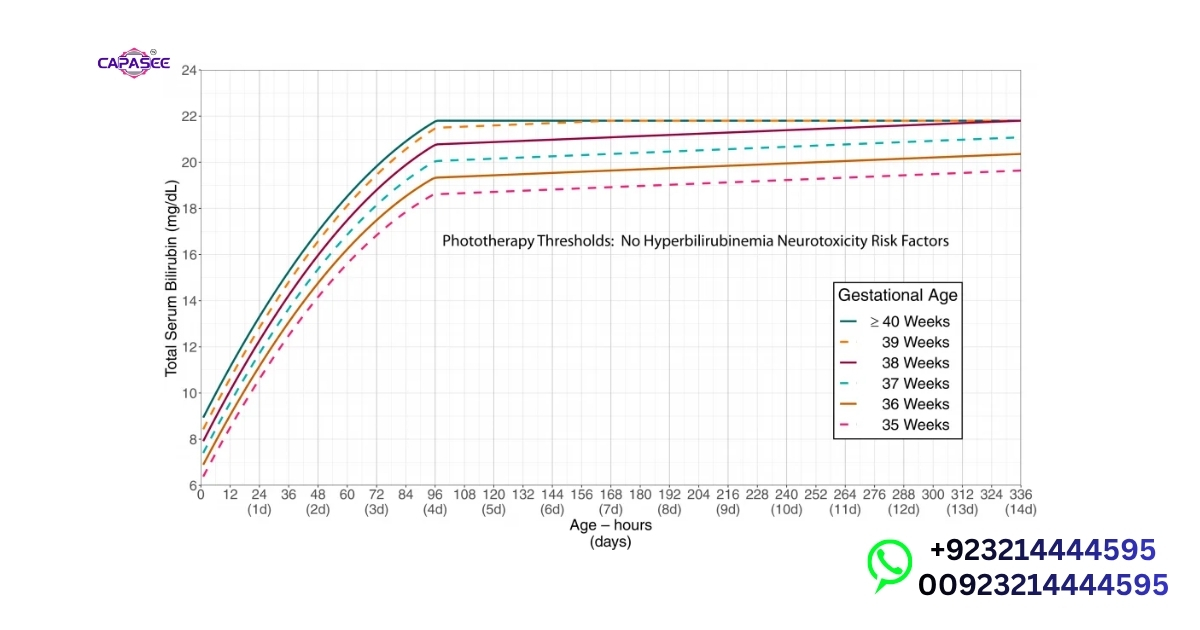
The Capasee phototherapy threshold chart assists physicians when they need to commence the light therapy. It also contains the Newborn bilirubin nomogram, the Bilirubin levels chart, and Jaundice risk zones to make safe decisions. The chart adheres to the Phototherapy treatment protocol and the Jaundice management chart to provide proper care in Pakistan.
It also monitors Serum bilirubin monitoring and Phototherapy effectiveness curve to keep track of the progress. Hospitals adhere to Light therapy dosage, Intensity measurement scale, and Wavelength exposure plan to ensure that newborns are safe and also lower the level of bilirubin.
Phototherapy threshold chart baby – when to start?
Possibly, doctors rely on the bilirubin threshold levels of the Capasee Electro Medical Engineering phototherapy threshold chart for the baby to initiate treatment. The indirect hyperbilirubinemia guide and the risk assessment nomogram are aimed at determining safe timing. The factors of neonatal light exposure and Dosage adjustment help to avoid complications in the treatment.
The monitors consist of a Treatment duration table, Phototherapy guidelines, and Hypocalcemia during therapy alerts. This makes therapy efficient as babies will be safe. In Pakistani hospitals, the monitoring of Hypobilirubinemia is enhanced by continuous Hypobilirubinemia monitoring.
Capasee Electro Medical Engineering chart‑based guidance
These Capasee Electro Medical Engineering chart based instructions incorporate technology as a way of ensuring the accuracy of the care given to the newborn. It is a combination of the Bilirubin levels chart, the Phototherapy effectiveness curve, and the Intensity measurement scale to monitor accurately. Adherence to this guide is consistent with the Phototherapy treatment procedure.
Physicians can regulate the dosage of Light therapy, Wavelength exposure scheme, and monitor Serum bilirubin. This is the systematic way that makes sure that the Jaundice management chart is adhered to, the outcomes are better, and risks in neonatal care are reduced in Pakistan.
Frequently Asked Questions
How do phototherapy charts work?
Phototherapy charts provide the safe levels of bilirubin and plan the light treatment to decrease jaundice in newborns.
How to calculate phototherapy range?
Age, weight, and bilirubin levels of the baby are used by doctors to determine the correct range of phototherapy using the chart.
At what bilirubin level should phototherapy start?
Phototherapy currently begins when bilirubin has attained a level that is indicated as being at high risk in the phototherapy chart of the baby.
What is a normal bilirubin level in a newborn?
Normal bilirubin is generally less than 12 mg/dL in healthy full term infants.
Is 12.5 jaundice high for a newborn baby?
A bilirubin level of 12.5 mg/dL may require observation or phototherapy, depending on the age and condition of the baby.
Conclusion
The phototherapy chart is a tool that is used to safely and effectively manage newborn jaundice. It assists physicians in monitoring the bilirubin chart, adhering to the Phototherapy regimen, and scheduling the Neonatal exposure to light accurately. The chart is necessary to achieve accurate Light therapy dosage, trace the level of Serum bilirubin, and avoid such complications during the therapy as Hypocalcemia. Knowing and adhering to a phototherapy chart, in the case of Pakistan parents and healthcare services, is a path to confidence, safety, and improved recovery in the babies. Adequate management reduces the complicated jaundice management to easy, manageable steps.