Blog
Neonatal Phototherapy Light in Pakistan


As a new parent in Pakistan, you may have observed the yellowish color of the skin or eyes of your baby. The condition is called neonatal jaundice and is present in more than half of all newborns worldwide and is particularly common in premature newborns. It may be shocking to see your baby being lit up in a hospital, but this is a normal and curable situation. In Pakistan, where not all people have access to healthcare, every parent must understand the available treatment options.
In this blog post, you will learn what type of neonatal phototherapy light in Pakistan is available, how effective they are, and how they can help your newborn recover quickly and safely. We will look at the different alternatives, including simple fluorescent lamps, high tech LEDs, and their advantages and limitations. By the time we are through, you will gain a better idea of how neonatal phototherapy functions and how it can be utilized to help your baby on its health journey.
Neonatal Phototherapy Light in Pakistan – A Lifesaving Solution for Newborn Jaundice
Neonatal jaundice is a universal disorder that occurs in children as a result of the yellowish colour of the skin and eyes caused by high levels of bilirubin. Proper and prompt treatment is essential in preventing complications like kernicterus in Pakistan. Neonatal phototherapy light in Pakistan is essential in the treatment of this condition. The most sophisticated phototherapy equipment is used at healthcare facilities all over the country to promote the health of newborns.
The application of LED phototherapy to babies has become more common in Pakistan. These machines produce blue light in the ideal wavelengths of 460-490 nm, which is effective in lowering the levels of serum bilirubin. Phototherapy with compact fluorescent lamps is also used in certain places. The two approaches aim to change the unconjugated bilirubin into a water soluble compound, which can be eliminated by stool and urine.
You May Also Read This Blog: Affordable Phototherapy Light in Pakistan: Clear Skin Guide
Understanding Neonatal Jaundice Treatment and Hyperbilirubinemia in Newborns
Neonatal phototherapy light in Pakistan remains the main way of treating, through which newborn babies are exposed to certain light wavelengths to help reduce the amount of bilirubin. The treatment of hyperbilirubinemia in Pakistan involves checking the level of bilirubin and offering suitable treatments. Serum bilirubin reduction machines are used to measure how effective the treatment is.
The decision to use conventional vs LED phototherapy depends on variables such as the cost, availability and the effectiveness of the treatment. Neonatal intensive care lamps are those lamps most frequently indicated in hospitals in order to deliver effective and consistent light therapy. Infants in Rawalpindi and other parts of the country can get access to light therapy that helps them get the care they need.
Why Bilirubin Level Reduction in Neonates is Critical for Health
Necessary steps to reduce bilirubin levels in neonates are to avoid serious health problems. There is the risk that high bilirubin might cause a brain injury called kernicterus. Pediatric phototherapy equipment, also used in Pakistan, successfully treats the infant by breaking down and removing bilirubin in the system.
Comparison studies conducted on bilirubin level phototherapy show that devices based on LED have some benefits over the traditional ones, such as energy consumption and life span. These innovations help to achieve better results in newborn care in Pakistan.
Types of Phototherapy Devices Used in Pakistan NICUs and Homes

In Pakistan, the treatment of neonatal jaundice relies on various phototherapy devices. Light Therapy LED is a common treatment that is done to babies in hospitals and neonatal intensive care units (NICUs). It is a technique that involves light to bring down the level of bilirubin in the jaundiced babies so that they can be treated effectively.
Another popular type of phototherapy in Pakistan is the compact fluorescent lamp. Another function of these devices is to lower the bilirubin by breaking down the bilirubin in the body of the baby by emitting blue light. NICUs need neonatal intensive care lamps to provide constant exposure to light to facilitate effective treatment.
LED Phototherapy Devices vs Compact Fluorescent Lamp Phototherapy
The use of LED phototherapy on infants is gaining popularity because it is an effective treatment. It makes use of LED light emitting diodes, which produce blue light to decompose excess bilirubin. The approach is more energy saving and lasts longer than the compact fluorescent lamp (CFL) devices that are more traditional.
CFL phototherapy has a long history of use in hospitals and continues to be an important treatment in the management of jaundice in newborns. Nevertheless, it is more inefficient than LED phototherapy devices and requires a longer treatment duration and more energy. Both approaches are found in homes and hospitals in Pakistan, depending on the facility.
Halogen Lamp Phototherapy and Fiber Optic Phototherapy for Infants
In Pakistan, phototherapy using the halogen lamp has also been used in the treatment of hyperbilirubinemia in newborns. These are lamps that produce light of high intensity that assists in breaking up bilirubin. Although they are effective, they are not widely used nowadays because of the development of LED technology.
Another new technology is fiber optic phototherapy, which involves direct light therapy to the baby through a fiber optic blanket. This type of treatment is not very invasive and can be performed at home. It is deemed to be safer in cases of mild jaundice among babies.
Home Phototherapy for Newborn Jaundice – Safe or Risky?
Newborns with jaundice are undergoing home phototherapy in Pakistan. In cities like Rawalpindi, medical providers provide light therapy to babies by providing portable phototherapy equipment, which they can use at home. This will enable the parents to take care of their babies in a comfortable environment.
There should be close observation of post treatment bilirubin levels. Promising results are observed in a randomized controlled trial of home phototherapy; however, hyperbilirubinemia is a condition that is best dealt with under medical guidance, as it may lead to complications like kernicterus. Parents are advised to meet the healthcare experts to guarantee the effectiveness and safety of home based treatment.
Blue Light Therapy for Infants – How It Works and Its Effectiveness in Pakistan
The use of neonatal phototherapy light in Pakistan has been mainly based on blue light therapy to treat newborn jaundice. In this approach, babies are exposed to light of 460 to 490 wavelengths, which essentially turns the unconjugated bilirubin into a water soluble form that is excreted. The light phototherapy on newborns has gained more popularity because it is effective and safe. This is one of the methods used in hospitals as well as homes to treat neonatal jaundice in Pakistan.
Research has shown that blue light therapy has a significant impact on lowering bilirubin levels in the serum of infants. As an example, a pilot study showed a 16.5% decrease in bilirubin levels with 24 hours of treatment with a low cost blue light emitting diode (LED) phototherapy device. This gives credence to the applicability of LED phototherapy on newborns to treat hyperbilirubinemia in Pakistan.
Light Spectrum for Phototherapy and Clinical Guidelines in Pakistan
Neonatal phototherapy light in Pakistan has been used successfully due to the type of light spectrum employed. The best light to decompose bilirubin in newborns is blue light with 460 to 490 nm. The American Academy of Pediatrics recommends that phototherapy units produce light within this range with an irradiance of at least 30 µW/cm2/nm in order to be effective. These guidelines are important to the management of hyperbilirubinemia in Pakistan.
Clinical practices are of international standards in Pakistan, with the use of LED phototherapy on newborns being the focus, since it has the best performance and safety profile. Pediatric phototherapy equipment with such specifications is installed in hospitals and clinics throughout the country so that infants can receive the best possible care. Such compliance with clinical standards emphasizes the focus on the delivery of high quality neonatal care in Pakistan.
Effectiveness of Phototherapy in Pakistan’s Neonatal Intensive Care Units (NICUs)
In Pakistan, high tech neonatal intensive care lamps are being installed in neonatal intensive care units (NICUs) to cure jaundice in their newborn babies. The main treatment option would be phototherapy and it is quite efficient in lowering the bilirubin level in the babies. Research has revealed that severe cases of hyperbilirubinemia can be effectively controlled using intensive phototherapy to reduce the number of exchange transfusions.
Modern pediatric phototherapy equipment integrated in NICUs throughout Pakistan has produced better results in infants with jaundice. These developments have ensured that the babies are getting the proper and prompt remedy, thus minimizing the chances of complications related to jaundice. The ongoing progress of the NICU facilities indicates the interest in developing the neonatal services in Pakistan.
Risks, Side Effects, and Complications of Neonatal Phototherapy
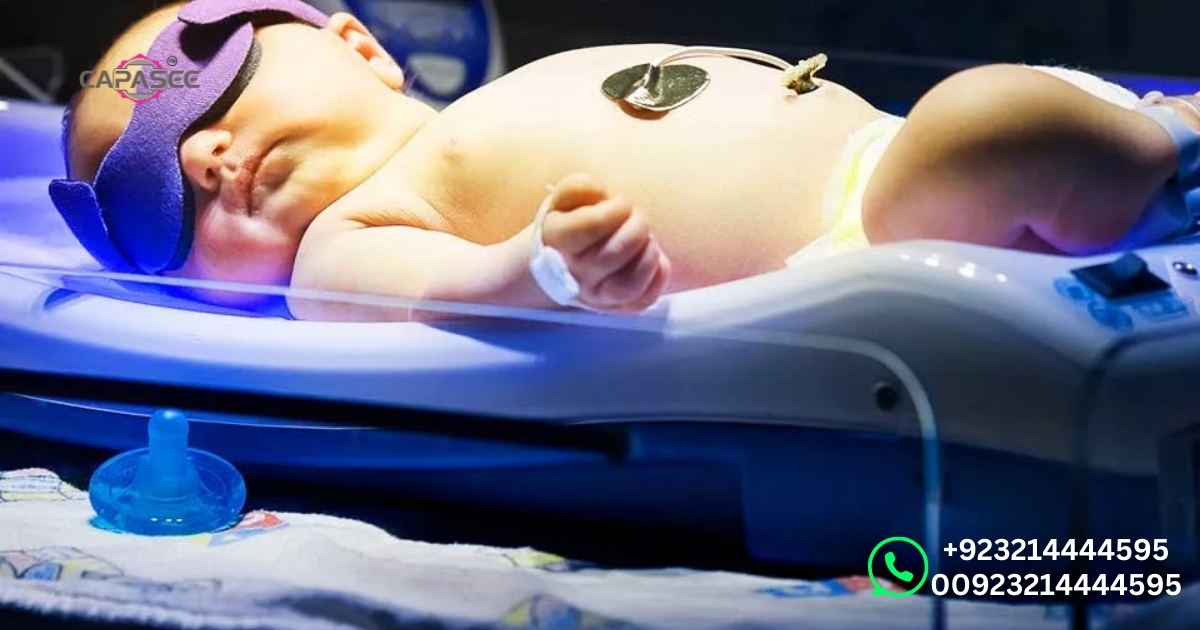
There is a common application of neonatal phototherapy light in Pakistan to reduce high levels of bilirubin in newborns suffering jaundice. Though it is effective, it can lead to side effects such as lack of water, diarrhea, and skin rashes. These risks need to be minimized through monitoring.
Other rare side effects of phototherapy include bronze baby syndrome, especially when used on babies with liver dysfunction. This disease leaves the skin gray brown in color. In Pakistan, health care professionals are equipped to handle these concerns as they arise.
Common Phototherapy Side Effects in Newborns
The preferred newborn phototherapy in the hospitals in Pakistan is LED. Side effects are likely to include dehydration, loose stools, and skin rashes. These tend to be acute and go away when treatment is discontinued. They are monitored regularly, which makes the baby comfortable and safe.
Phototherapy in certain cases can lead to an increase in body temperature, or it can lead to changes in feeding patterns. All of these effects are mild in nature and can be controlled through appropriate care. Such situations can be dealt with by healthcare providers in Pakistan.
Managing Neonatal Phototherapy Complications in Hospitals and at Home
Phototherapy has been introduced to Pakistan, which includes pediatric equipment that may be installed in the hospital or used at home. Medical practitioners also provide caregivers with information on how to establish and supervise at home phototherapy to promote safety. It is advisable that continuous follow ups are made to monitor the progress of the baby.
Neonatal intensive care lamps are strictly monitored in hospitals. Nurses are watching the baby’s temperature, hydration, and bilirubin. There is availability of immediate medical intervention upon the occurrence of complications. This multi dimensional treatment and safety are guaranteed.
Bilirubin Monitoring and Neonate Care in Pakistan’s Major Cities
Neonatal phototherapy light in Pakistan is commonly employed to cure newborn jaundice in Pakistan by reducing high bilirubin levels. Major cities such as Lahore, Karachi, and Islamabad have opened the Neonatal Intensive Care Units (NICUs) that are equipped with the best pediatric phototherapy facilities to effectively treat such conditions. These programs follow clinical practices and, therefore, the babies are given the best care.
It is important to monitor the level of bilirubin in such environments. Hospitals in Lahore, Karachi, and Islamabad use serum bilirubin reduction machines to measure the efficacy of the LED phototherapy on newborns. This will assist in early intervention and minimize the chances of complications related to untreated jaundice.
Lahore, Karachi, and Islamabad – NICU Facilities and Phototherapy Guidelines
In Lahore, some hospitals provide full NICU services, such as compact fluorescent lamp phototherapy to treat newborn jaundice, such as Shaikh Zayed Medical Complex or Shalamar Hospital. These hospitals have set standards that govern the effective management of neonatal jaundice.
The Liaquat National Hospital in Karachi is a NICU where phototherapy is done using neonatal intensive care lamps and in accordance with clinical phototherapy guidelines. Likewise, the Advanced International Hospital in Islamabad provides the best neonatal treatment facilities, including phototherapy facilities, in the management of hyperbilirubinemia.
Role of Pediatric Specialists in Jaundice Care Across Pakistan
The importance of the pediatric specialist in the treatment of neonatal phototherapy light in Pakistan cannot be overstated. These professionals manage the administration of LED phototherapy to newborns in Lahore, Karachi, and Islamabad, to ensure that the treatment is in accordance with the most recent clinical recommendations.
Their experience is key when it comes to evaluating the intensity of jaundice and deciding on the type of treatment to be administered. Close monitoring of bilirubin levels and adjusting therapy as necessary by pediatric specialists reduces the risk factors in neonatal jaundice that lead to kernicterus.
Expert Insights and Future of Neonatal Phototherapy in Pakistan

Jaundice in newborns has changed due to the application of neonatal phototherapy light in Pakistan. With the development of LED phototherapy to treat newborns, they have proven to have high efficiency in the management of hyperbilirubinemia in Pakistan. This has boosted the general success rate of treatment in the country hospitals.
In a prognosis, the future of the pediatric phototherapy equipment in Pakistan is bright. Increasing numbers of hospitals are implementing serum bilirubin reduction devices and high technology neonatal intensive care lamps. As these technologies become increasingly integrated, the treatment of neonatal jaundice in Pakistan will only get better, posing less risk to neonates and making it more accessible.
Advances in Phototherapy Technology and Neonate Care for Jaundice
Recent developments in neonatal phototherapy light in Pakistan have contributed a lot to treating neonatal jaundice. With the introduction of LED phototherapy to newborns, the management of hyperbilirubinemia in Pakistan has improved efficiency by providing specific illumination in the form of light therapy, which has proven to reduce bilirubin levels. These innovations are internationally aligned, meaning that they are more beneficial to neonates.
Also, the creation of solar driven phototherapy equipment has made it more accessible in rural Pakistan. These affordable measures allow 24/7 treatment, even in off grid areas and thus decrease the threat of complications of untreated jaundice. Huge technological advances like these are critical in meeting healthcare disparities in the nation.
Improving Access to Affordable Phototherapy Devices in Pakistan
Availability of pediatric phototherapy equipment in Pakistan is another challenge, especially in the undermined areas. There is an ongoing effort to establish low cost compact fluorescent lamp phototherapy units that would make treatment more affordable to needy families. These programs will reduce the cost burden and more babies will access quality care.
Frequently Asked Questions(FAQ’s)
Which light is used in phototherapy in newborns?
Light emitting diode (LED) and compact fluorescent lamps (CFL) are regularly used as newborn phototherapy to lower the bilirubin.
What are the lights for phototherapy in NICU?
Neonatal jaundice is easily treated in the NICU using neonatal intensive care lamps, one of which is LED phototherapy lights.
What is the cost of phototherapy for newborns?
It is not very expensive, but the price is between PKR 2,000 and PKR 5,000 per day, based on the hospital and location.
Do babies cry during phototherapy?
Phototherapy is usually safe and well tolerated and babies may cry because of discomfort.
How much does home phototherapy cost?
Home phototherapy can vary between PKR 3,000 to PKR 7,000 a day based on the equipment and location.
Final Thoughts
Neonatal phototherapy light in Pakistan is vital and effective in the treatment of newborn jaundice. As LED phototherapy in the case of newborns is advanced, as well as the equipment used to administer phototherapy to children, more children are receiving care in time. Home based solutions and hospitals are getting cheaper and better at managing hyperbilirubinemia in Pakistan. With the ongoing advancement of technology, the future of neonatal care is even more promising as it presents more effective and more convenient alternatives to families throughout the nation. This development is necessary to enhance the health of the neonate and minimize the complications associated with jaundice.