
Blog
What is The Last Stage of Jaundice

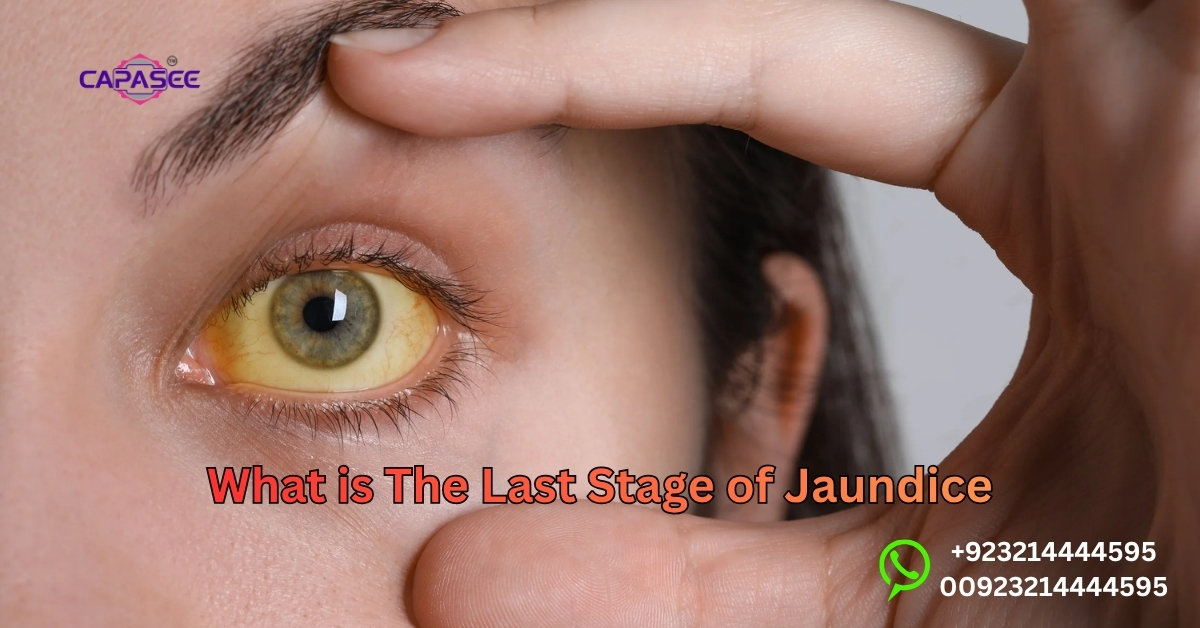
Do you ever find yourself concerned about your yellow eyes or skin and wonder whether it is something serious or not? Perhaps you have already applied home remedies in vain, and the yellow tint cannot be removed. It is puzzling and frightening, and it is even more so as you are not sure what to expect next. Other users want to know about the last stage of jaundice, but in their search, they hope to learn whether it is harmful or not or what happens in its course.
In this blog, we are going to deconstruct precisely what the last stage of jaundice is going to look like, what questions to look out for, and what should be done. You will receive straightforward and easy to understand answers without the medical terms. You will determine what to expect and how to behave by the end, therefore, you will be more in control of your health.
Icteric Phase Symptoms

The icteric phase brings about clear skin and yellowing of the eyes, dark urine and pale stool, which in most instances are the last stage of jaundice. Hepatic tenderness, elevated bilirubin concentrations, and hepatocyte damage are demonstrated in the liver function tests (LFTs), which support severe involvement.
Key Signs to Watch
Dark colored urine, light coloured stools, and constant fatigue are symptoms of jaundice that must be observed in the last stage of jaundice, along with malaise and liver swelling. These symptoms are indications of the change from its simple yellowing to advanced illness and are urgent.
You May Also Read This Blog: What is The Fastest Way To Cure Jaundice
Duration and Severity
The icteric stage is usually two to four weeks, but may take more depending on the cause, such as the prognosis of viral hepatitis or chronic or acute jaundice. More serious ones imply more hepatic tenderness, greater damage, a slower process of recovery and more intense monitoring during the last stage of jaundice.
Convalescent Phase Jaundice
As the convalescent period of jaundice sets in, the yellowing slowly disappears and the organism gets into the jaundice recovery phase. This stage is an indication of managing jaundice, whereby the liver begins to regenerate, the liver heals and the liver begins to show signs of recovery from the last stage of jaundice.
Recovery Process Explained
During this stage, you can still be tired or weak, yet the liver is beginning to heal and the liver tests are improving and the end of jaundice symptoms can be observed. Increasing bilirubin, decreasing hepatic tenderness are what the doctors see as you progress to health after the last stage of jaundice.
What It Means for Prognosis

In patients with hepatitis who need to cope with jaundice, the final jaundice symptoms subsiding represents a good sign and elevates the viral hepatitis prognosis, particularly in acute cases. In chronic vs acute jaundice, the presence of a smooth convalescent period implies that the chances of complete recovery from the last stage of jaundice and fewer complications are high.
Late Stage Jaundice Prognosis
At the extreme stage of jaundice, an individual experiences grave liver damage and has high bilirubin levels, dark colored urine and pale stool, indicating severe dysfunction of bile flow. This phase is usually characterized by hepatic tenderness, severe hepatic injury, and the inability to perform liver functional tests (LFTs), which indicate that the body has degenerated into the last stage of jaundice.
In Pakistan and other areas, the change into the end stage jaundice symptoms is the point where recovery hope turns to urgent care, in which the liver healing process is slowed to a crawl and the management of the last stage of jaundice becomes complicated.
Chronic Liver Disease Jaundice Symptoms
In the final phase of jaundice under the influence of chronic disease, the symptoms manifest themselves slowly, including persistent malaise, muscle catabolism, dark urine, pale stool, ascites, and yellowishness of the skin, which is caused by a large bilirubin level. At this stage, clear indicators of the lack of liver regeneration and the last stage of jaundice are at their most frightening.
Pakistani doctors are likely to identify jaundice differences in chronic vs acute jaundice through such signs and realize the fact that the prognosis of viral hepatitis largely relies on the degree to which this disease has developed, particularly in the last stage of jaundice.
Check More & Purchase: Our Products
Last Stage Liver Disease Jaundice Insights
During this critical period, the liver wound process can stall, and the duration of jaundice symptoms can be delayed and barely arrive at all, and the probability of complications such as bleeding and organ failure increases dramatically. It has been proven that once the liver has developed irreversible scarring, then recovery from the last stage of jaundice is unlikely without substantial intervention and this influences the final jaundice recovery outcome.
Clinicians stress the importance of early diagnosis and vigorous treatment of individuals with severe signs of liver failure to allow the indications of jaundice recovery an opportunity, and the time target of successful liver regeneration is not yet closed, even for those approaching the last stage of jaundice.
Frequently Asked Questions
What happens in the last stage of jaundice?
The final phase of jaundice presents itself under the condition that the liver is no longer able to eliminate bilirubin, which causes severe yellowing of the skin and eyes, dark urine, and accumulation of fluid in the body.
What is jaundice 4th stage?
In the 4th stage of liver disease, where jaundice occurs, the damage is not reversible and is severe; significant complications become evident and the prognosis is very low.
What is the danger stage of jaundice?
The jaundice stage of danger is observed when bleeding, kidney complications, and brain complications are caused by liver failure, as a sign of alarm that there is a need to provide it with immediate care.
What are the symptoms of jaundice at the end of life?
Late life symptoms are deep yellow skin, eyes, pale feces, swelling, and confusion, where the body stops functioning and the liver’s mending process cannot be achieved.
What are common symptoms in the last 48 hours of life?
During the last 48 hours, one can grow extremely weak, cease eating, lapse in and out of consciousness, and their skin turns a deep yellow, having no desire to eat.
Final Thoughts
When you type into the search engine what is the last Stage of Jaundice, you realize that this is because the liver in the body has reached an unknown limit in its ability to clear the level of bilirubin and liver regeneration and the ability to heal jaundice are no longer guaranteed. As a reader of Pakistani origin, there is panic with the early appearance of dark urine, pale stool, increasing hepatic tenderness, and poor performance on liver function tests (LFTs). In case such signs are observed, early medical assistance and special attention to jaundice are not without value.