Blog
Newborn Baby Jaundice Level Chart

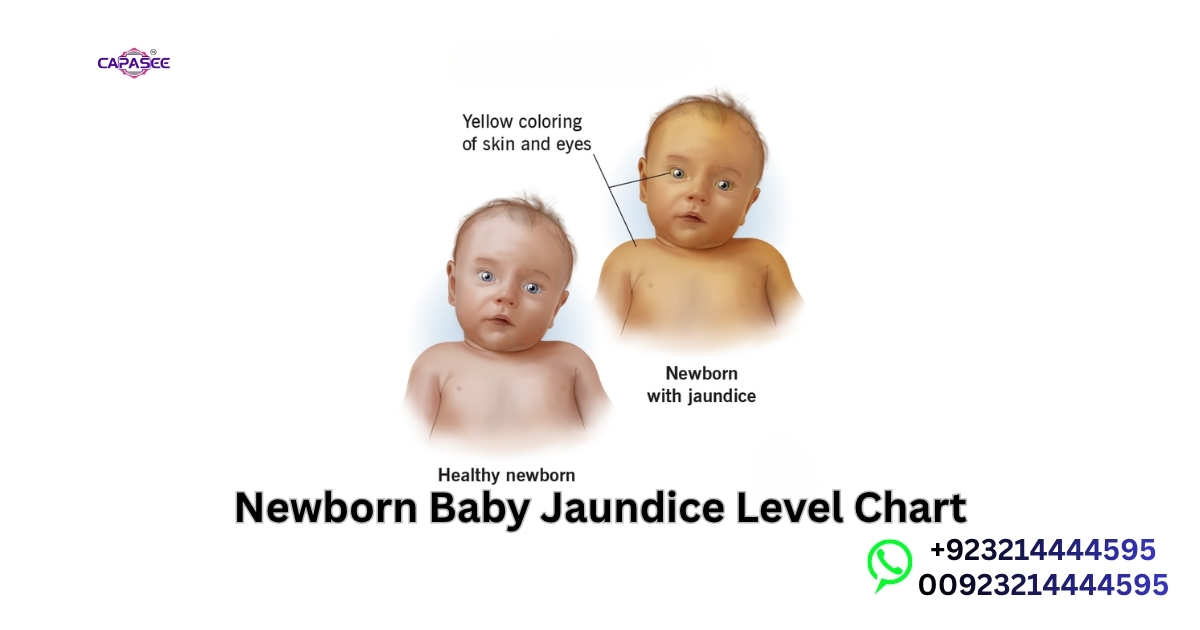
It is scary to look at the skin of your newborn and find it a bit yellow. You may even begin to research things late at night, attempting to make sense of what is normal and what is not. Most parents are puzzled upon learning about bilirubin levels and tests. That is where a newborn baby jaundice level chart comes in so handy, as you get to know what is actually happening using a newborn baby jaundice level chart.
In this guide, you will get to know how to read a baby’s jaundice level chart simply. We will separate the numbers, demonstrate what safe levels are supposed to be, and demonstrate when you ought to act with the help of a newborn baby jaundice level chart. You will also get clear tips that are usually given by physicians to new parents. At the end, you will be less nervous, better informed, and will be prepared to take care of your baby confidently.
Newborn Baby Jaundice Level Chart
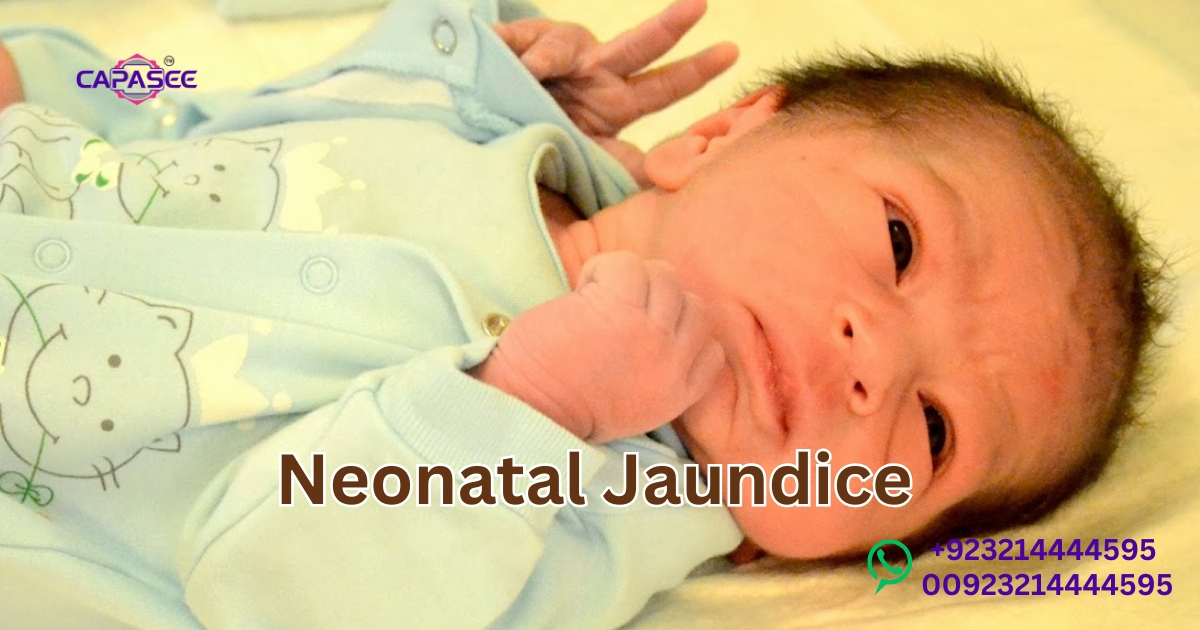
In Pakistan, newborns are known to have skin discoloration in the first days of their lives. Knowledge of a newborn baby’s jaundice level graph assists the parents in monitoring the bilirubin level carelessly with a newborn baby’s jaundice level chart. Physiological jaundice is mild and normally resolves in babies. To prevent the risk of kernicterus, pathological jaundice needs immediate treatment. It is also simple to observe an increase in total serum bilirubin (TSB), which is too excessive, using a chart.
An appropriate chart of a newborn baby’s jaundice level indicates safe levels of gestational age and birth weight. Readings of the transcutaneous bilirubinometer or lab serum bilirubin results can be used by parents with a newborn baby jaundice level chart. Follow ups on the jaundice onset day aid in the identification of early jaundice. The chart applies to preterm babies, low weight jaundice, and full term babies, which would guarantee improved infant survival.
Jaundice Levels in Newborns in Pakistan
Various hospitals in Pakistan have conventional bilirubin levels for neonatal jaundice. Acute neonatal jaundice is rare but severe. Physicians examine the sclera yellows and skin color to approximate the severity of jaundice. IMNCI classification helps in making decisions on treatment in a brief manner. The first week, symptoms of jaundice should be observed carefully in families to prevent the development of complications, such as the risk of kernicterus, using a newborn baby jaundice level chart.
With the help of such levels, parents and doctors will be able to deal with newborn hyperbilirubinemia efficiently. There are also charts of serum bilirubin normal range in preterm jaundice prevalence and physiological jaundice, which determine when to initiate the use of phototherapy with a newborn baby jaundice level chart. Early care enhances the outcomes in the neonates and avoids long term challenges.
Case Guide to Newborn Jaundice Charts
The Capasee Electro Medical Engineering guidelines in Pakistan provide explicit graphs of the bilirubin levels by birth weight and gestational age. They assist in the early detection of high bilirubin newborns. The bilirubin cutoffs are not the same in preterm and full term babies. The manual notably helps to identify early jaundice by the use of a transcutaneous bilirubinometer or lab tests, often supported by a newborn baby jaundice level chart.
Parents would be able to adhere to the Capasee charts in order to understand when phototherapy treatment is required. Follow up of the onset of jaundice day and jaundice sign 1st week decreases kernicterus. The charts contribute to securing neonatal results and help families grasp the concept of newborn hyperbilirubinemia through a newborn baby jaundice level chart.
You May Also Read This Blog: Phototherapy Machine
Bilirubin Levels for Newborns Chart
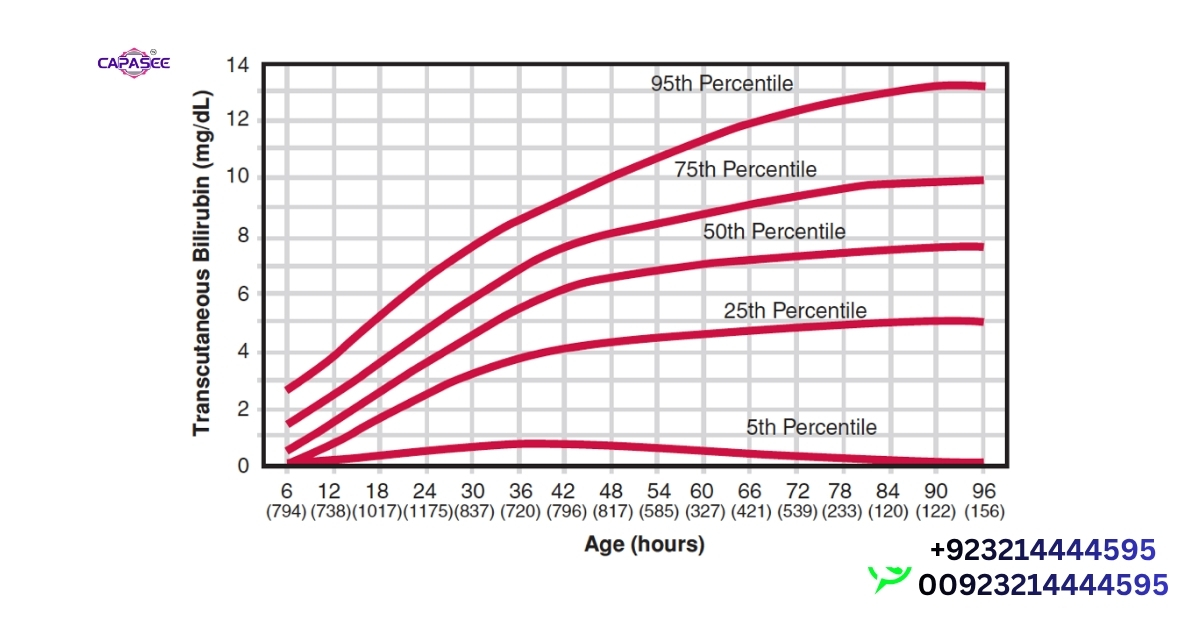
The bilirubin levels chart demonstrates the safe and dangerous levels of bilirubin among newborns. Parents will be able to read the total serum bilirubin (TSB) levels on the prevalence of preterm jaundice, low birth weight jaundice, or full term neonates with a newborn baby jaundice level chart. Serum bilirubin is monitored by the doctors to avoid severe neonatal jaundice. Charts are easier to use to determine the etiology of jaundice.
Gestational age, severity of jaundice, and birth weight are used as charts. They assist in early jaundice monitoring and setting the time of phototherapy. Transcutaneous bilirubinometer values tend to be similar to laboratory bilirubin. The implementation of the chart enhances the outcomes of neonatal safety using a newborn baby jaundice level chart.
Newborn Jaundice Bilirubin Chart Pakistan
The PNC jaundice bilirubin chart in Pakistan is used to make fast decisions in hospitals in Pakistan. Bilirubin babies require close attention. Physicians keep track of yellow skin discoloration, yellowing of the sclera, and the appearance of jaundice. Low birth weight jaundice is likely to be present in preterm babies; the chart corrects bilirubin levels with the help of a newborn baby jaundice level chart.
This chart assists in the direction of physiological jaundice treatment and pathological jaundice treatment. When charts are adhered to by parents and healthcare workers, the results regarding neonatal outcomes improve. Kernicterus is prevented by early phototherapy guided by a newborn baby jaundice level chart.
When to Start Treatment Using Capasee Standards
According to Capasee standards, the treatment begins when the bilirubin threshold is reached, and the level of jaundice or bilirubin is serious. The preterm infants possess lower safe levels as compared to full term infants. Transcutaneous bilirubinometer or lab serum bilirubin tests are used to make a decision by the doctors with support from a newborn baby jaundice level chart. There is instant treatment of phototherapy when levels become too high.
Monitoring the first week of jaundice and the day of onset of jaundice will provide timely intervention. Early treatment helps to avoid serious cases of neonatal jaundice and lessen the risk of kernicterus. After the Capasee Electro Medical Engineering guide ensures the safety and reliability of neonatal outcomes in babies in Pakistan, using a newborn baby jaundice level chart.
Table Example: Bilirubin Levels by Gestational Age (Pakistan Standard)
| Gestational Age | Low Risk (mg/dL) | Moderate Risk (mg/dL) | High Risk (mg/dL) |
| <35 weeks | 5–10 | 11–14 | >15 |
| 35–37 weeks | 6–12 | 13–16 | >17 |
| ≥38 weeks | 7–12 | 13–18 | >19 |
Newborn Jaundice Phototherapy Chart
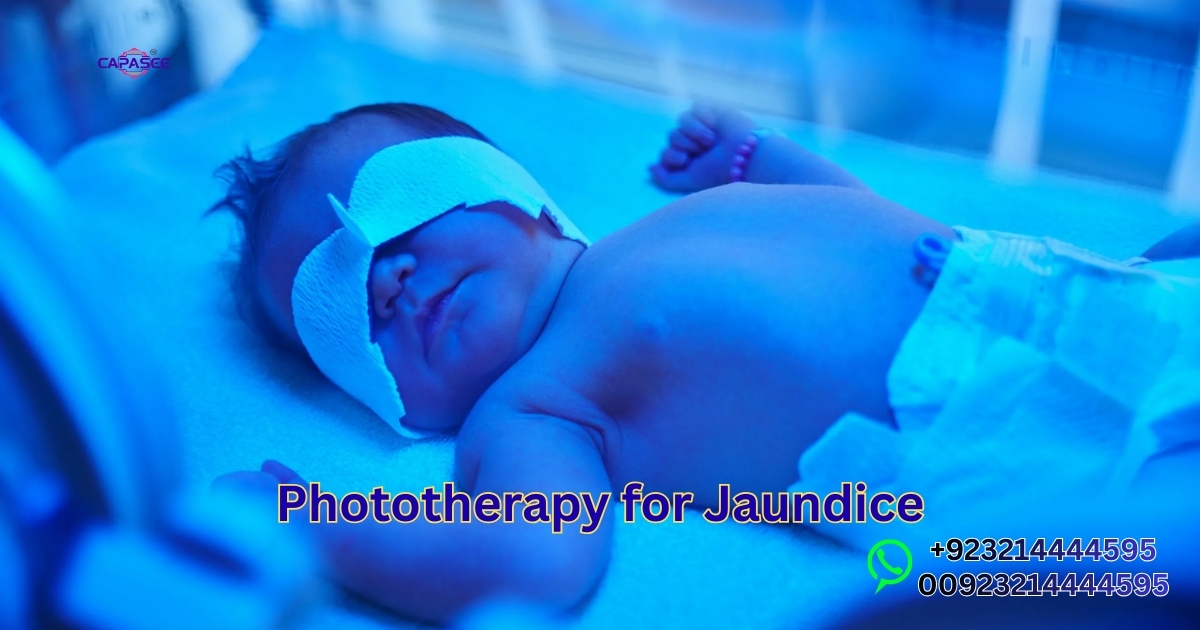
Yellow skin discoloration is common among Pakistani infants in the first week. Parents are concerned about high bilirubin babies. A chart on the level of jaundice in a newborn baby assists in monitoring the serum bilirubin level in a safe manner, especially a newborn baby jaundice level chart. It presents total serum bilirubin (TSB) values of preterm babies and standard term babies. Physicians apply it to measure the extent of jaundice and avoid the risk of kernicterus.
Phototherapy is based on the use of a newborn jaundice phototherapy chart. The parents will be able to follow the day of jaundice and the signs of sclera yellowing. Birth weight, gestational age, and prevalence of preterm jaundice are all included in charts. Early care enhances neonatal care and contributes to the successful management of pathological jaundice with a newborn baby jaundice level chart.
Capasee Phototherapy Threshold Chart
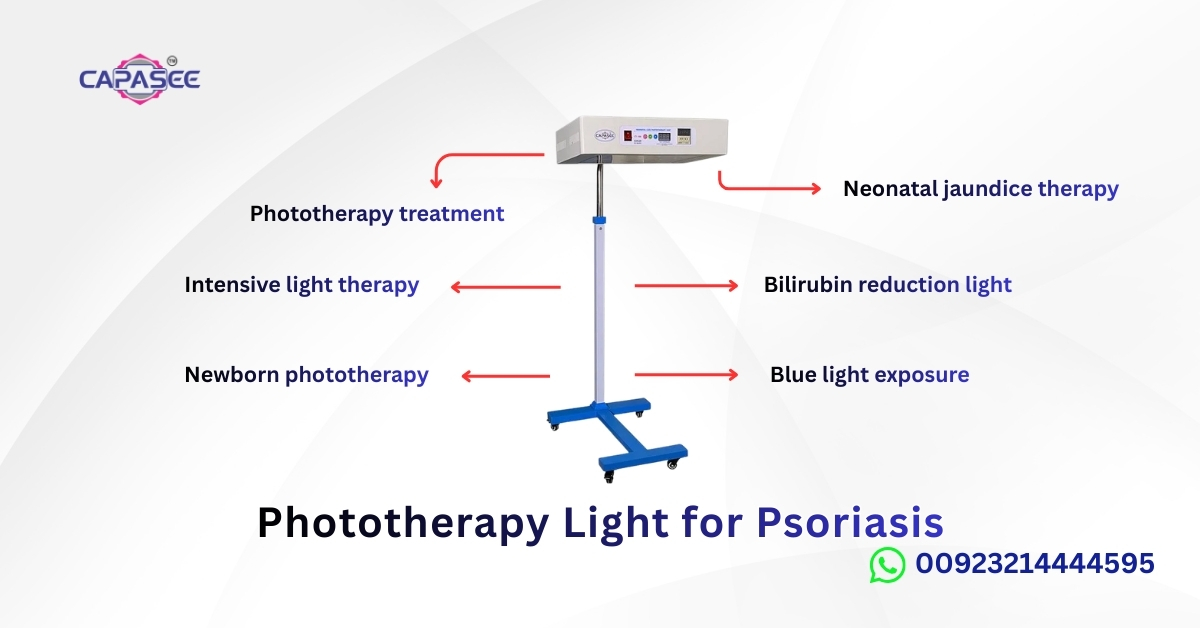
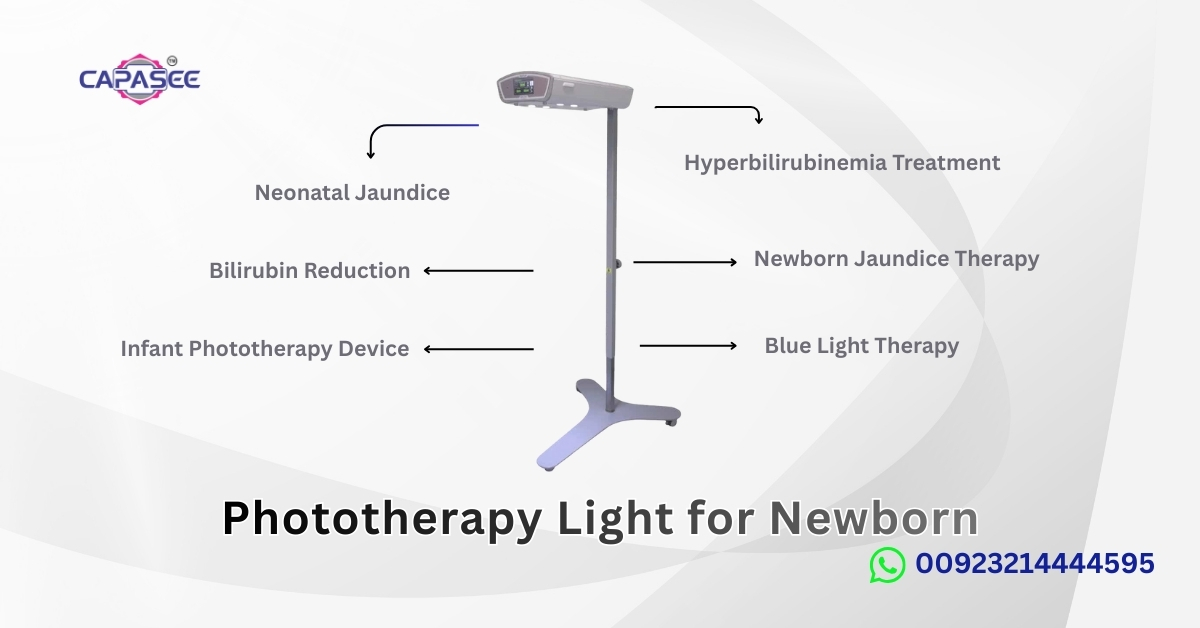
Capasee Electro Medical Engineering phototherapy threshold charts give levels of bilirubin in infants and align with the newborn baby jaundice level chart. Infants with low birth weight or preterm births also have low safe thresholds as compared to full term infants. Charts take into consideration physiological jaundice and pathological jaundice.
The chart is used by parents and doctors to plan phototherapy treatment using the bilirubin threshold and the newborn baby jaundice level chart. Follow up of jaundice in the first week and the day of jaundice decreases the risk of kernicterus. Adherence to Capasee standards provides safe neonatal outcomes in Pakistan.
Jaundice Meter for Baby Pakistan Recommendations
A transcutaneous bilirubinometer is used to measure high bilirubin levels in newborns within a short time in Pakistan. Reading is comparable to the newborn baby jaundice level chart. This assists in the early detection of jaundice and safe treatment of phototherapy.
The total serum bilirubin (TSB) is indicated in jaundice meters to demonstrate the prevalence of preterm jaundice, low birth weight jaundice, and full term neonates. Their use helps to prevent severe neonatal jaundice as well as to improve neonatal outcomes. Yellow skin discoloration and yellowing of the sclera can be followed at home using instructions with reference to a newborn baby jaundice level chart.
Check More & Purchase: Our Products
Using Charts with Bilirubin Meters
The use of a bilirubin meter and a newborn baby jaundice level chart will be used to monitor newborn hyperbilirubinemia. Parents are able to observe whether serum bilirubin is above the bilirubin threshold or not. Gestational age, birth weight, and jaundice severity are charted to ensure that there is accuracy in the reading according to the newborn baby jaundice level chart.
Such practice will enable the detection of jaundice in the infants early enough in preterm babies and full term babies. The symptoms of jaundice during the first week, yellow sclera, and the day of jaundice onset could inform treatment using phototherapy to decrease kernicterus risks with the help of a newborn baby jaundice level chart.
How Capasee Jaundice Meters Read Charts
Phototherapy charts give readings that are similar to capasee jaundice meters and the newborn baby jaundice level chart. The bilirubin level of the serum is observed immediately. Parents are able to contrast outcomes with the newborn baby’s jaundice degree to understand the level of risk.
Doctors use readings to design phototherapy, detect serious neonatal jaundice, and guarantee safe neonatal outcomes. This aids in controlling the preterm jaundice prevalence, low birth weight jaundice, and the jaundice etiology using the newborn baby jaundice level chart.
Home vs Hospital Bilirubin Tracking in Pakistan
A transcutaneous bilirubinometer allows the parents to monitor the bilirubin concentration at home; however, the lab serum bilirubin confirmation is only done in hospitals. The promptness of phototherapy is achieved by detecting jaundice at an early stage in hospitals using the newborn baby jaundice level chart.
Home monitoring is used to identify yellow skin discoloration, yellow sclera, and high bilirubin in infants in their early stages. The Hospitals use the Capasee Electro Medical Engineering phototherapy threshold chart to treat preterm babies as well as full term newborns, and to enhance their outcomes safely with the newborn baby jaundice level chart.
Frequently Asked Questions(FAQ’s)
What is a normal jaundice level for a newborn?
The normal level of newborn jaundice is normally less than 12 mg/dL in full term babies, but lower levels are safe in preterm infants.
How to flush out jaundice in newborn?
Phototherapy, which is administered on the doctor’s recommendation, reduces the bilirubin levels in a safe manner, and regular feeding also removes bilirubin.
What color is a baby’s poop with jaundice?
Jaundiced infants do not always have yellow or green feces, but rather have pale or clay colored feces.
What is breast milk jaundice?
Breast milk jaundice refers to the light yellowish colored skin of the baby due to milk substances, which become noticeable in the first week of infancy.
How long does breastmilk jaundice take to clear?
This typically resolves within 2 to 3 weeks without the need to stop breastfeeding, and the bilirubin level recovers slowly but surely.
Final Thoughts
A newborn baby jaundice level chart is a necessary instrument for both the parents and the doctors in Pakistan to track bilirubin levels safely. It assists in monitoring the day of jaundice development, yellowing of the sclera, and yellow skin discoloration to correct timely phototherapy and avoid the risks of kernicterus. In neonatal care, the application of the chart with the transcutaneous bilirubinometer results or the lab serum bilirubin will guarantee the early identification of severe neonatal jaundice, and the results will be better. With the interpretation of the chart, a family will be assured of proper care for preterm infants, low weight jaundice at birth, or full term babies, and ensure that their newborn is healthy and safe.